70-3000A automatic transfer switch with single-solenoid double-throw operation. UL 1008 (70-400A) / UL 891 (600-3000A), 600V max, single or three phase, service-entrance option.
The ASCO 300 Series is one of the most widely-deployed automatic transfer switches in North America. ASCO (now part of Schneider Electric) introduced the line as the cost-efficient counterpart to the higher-feature 4000 and 7000 Series, positioning it for standard commercial and light-industrial backup applications.
For any single-genset standby installation in the 70-3000A range that doesn't require closed-transition, soft-load, or bypass-isolation features, the 300 Series is the default specification.
Cost vs reliability ratio. The 300 Series uses the same mechanical switching elements as ASCO's higher lines but with simpler controllers and fewer options. For backup that runs 50-200 hours per year, the feature gap doesn't matter.
NFPA 110 compatibility. Properly specified, the 300 Series passes Level 1 emergency-system requirements for most occupancies.
Distributor depth. Every electrical wholesaler in the US can source a 300 Series. Lead times are short. Replacement parts are everywhere.
Service-entrance variant. The 300SE eliminates a main breaker on smaller-scale commercial installs, simplifying installation and reducing cost.
ATS amperage must match (or exceed) the largest of: utility service amps, genset full-load amps, or distribution panel feeder amps. The 300 Series scales to most commercial loads:
70-200A: light commercial, small office, restaurants, multi-family residential common loads
400-600A: mid-size commercial, larger restaurants, retail strips, small data closets
Year 15-20: Group G controller electrolytic capacitors. Symptom is intermittent failures to transfer or controller resets. Fix is a controller replacement with the latest Group G revision.
Year 5-10: lug torque drift on busbar connections, especially on larger frames. Annual torque inspection catches this before a hot connection cascades.
Year 1-3: programming errors. Often the time-delay settings (engine start delay, transfer delay, retransfer delay, cooldown delay) get mis-set during commissioning and never corrected. Symptom is "ATS works but feels weird." Fix is a Group G config review.
We service ASCO 300 Series across the central California coast and inland Bay Area. Common service intervals: monthly exercise (per NFPA 110), annual load-bank test, biannual contactor inspection on units with >100 transfer operations per year. We stock common Group G controllers and the lug hardware for the most common amperage frames (200A, 400A, 800A).
Frequently Asked Questions
What is the ASCO 300 Series amperage range?
70 to 3000 amps. The 70-400A bracket uses contactor-style switching listed to UL 1008. The 600-3000A bracket uses power-frame switching listed to UL 891. Voltage rating is 600 VAC max, 50 or 60 Hz, single or three phase.
What is the difference between the ASCO 300 Series and 7000 Series?
Both are open-transition transfer switches. The 7000 Series is ASCO's current premium / mission-critical line with closed-transition, soft-load, and bypass-isolation options, plus the QuickConnect feature for hot-plug servicing. The 300 Series is the cost-optimized commercial line — same base reliability, fewer optional features. For data centers, hospitals, and other code-driven mission-critical loads, spec the 7000. For standard commercial backup, the 300 Series is more than adequate.
Is the 300 Series service-entrance rated?
Yes — the 300SE variant is UL 1008 service-entrance rated, allowing the ATS to function as the main service disconnect. This eliminates a separate main breaker upstream and is common in light-commercial and small-multi-family installs where panelboard simplicity matters.
Does the 300 Series do closed-transition transfer?
No — the 300 Series is open-transition only. Closed-transition (paralleling utility and genset for sub-100ms during transfer to avoid load interruption) is available on the ASCO 7000 Series. If your load cannot tolerate even a brief interruption during retransfer, you need a 7000-series unit or a UPS bridge.
What gensets typically pair with the ASCO 300 Series?
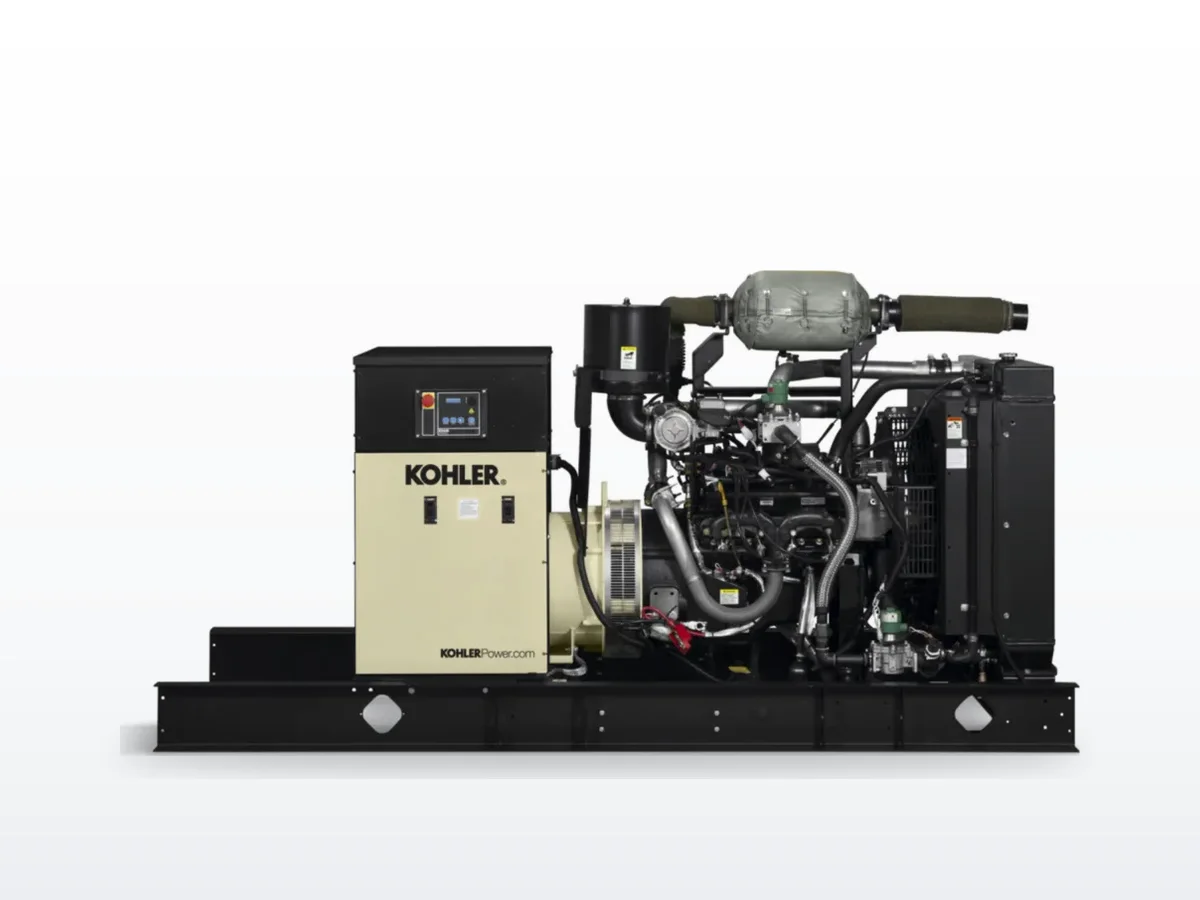
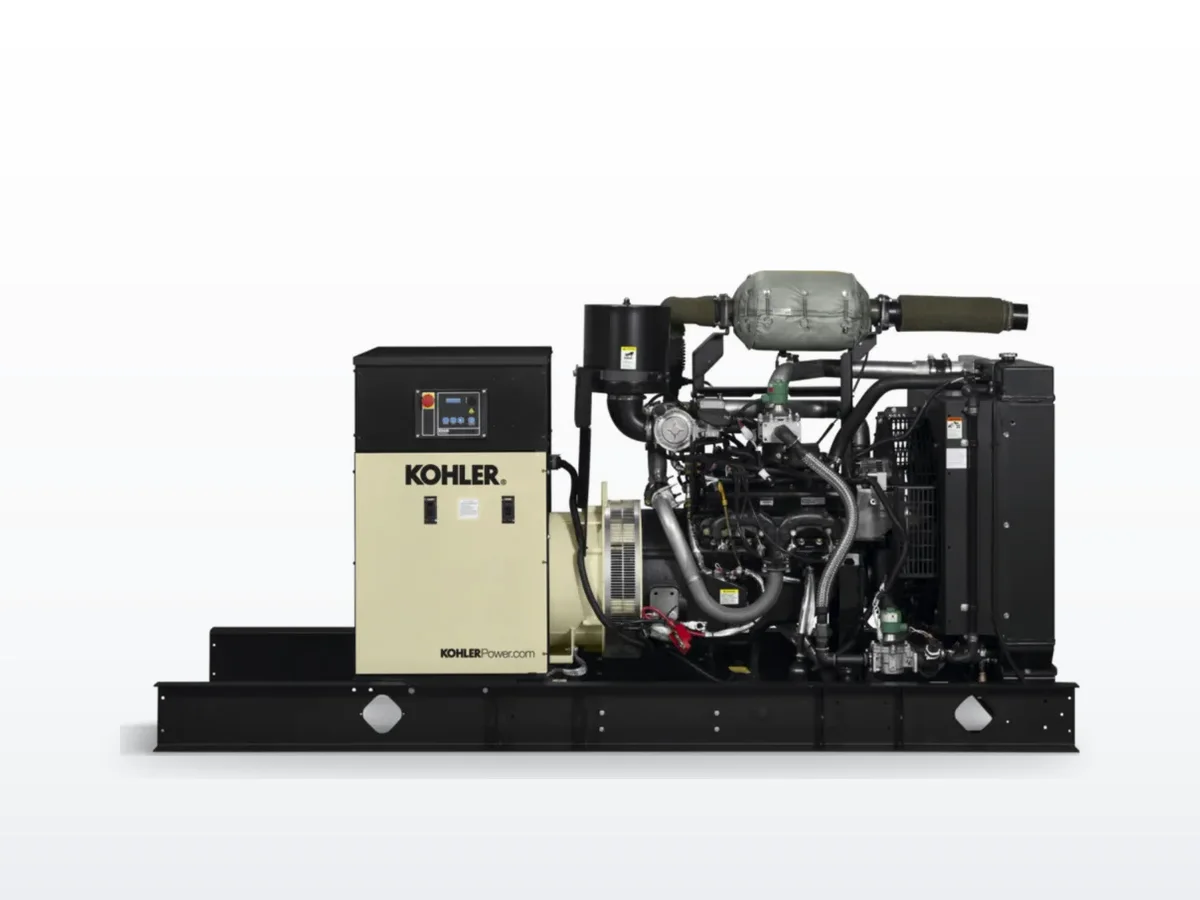
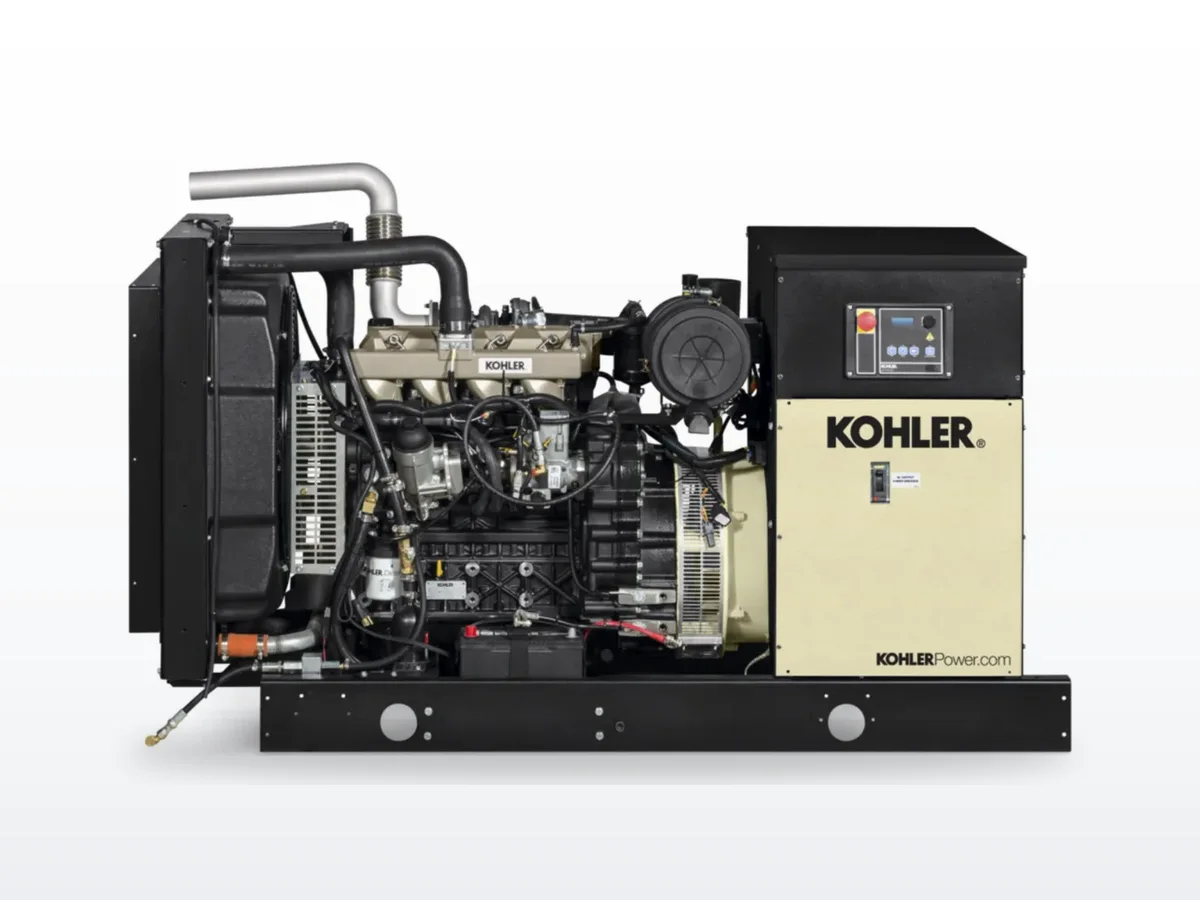
Any genset with auto-start signaling. At smaller amperages (70-200A), it's commonly paired with 30-150 kW gensets like the Kohler KG60, Cummins QSB7-based DSGAA-DSGAE, and Generac Industrial SG080. At larger amperages (600-3000A), it pairs with mid-to-large diesel platforms (Cummins QSL/QSX, Caterpillar C9-C32). The 300 Series can also be specified as a downstream ATS in a multi-tier transfer scheme.
What controller does the ASCO 300 Series use?
Standard is the ASCO Group G controller — a fixed-function microprocessor controller covering all common AMF features (timers, alarms, exerciser, retransfer logic). For more advanced needs (programmability, expanded comms, color HMI), the 4000 Series moves to the Group 5 controller, and the 7000 Series uses Group 7.
What's the typical lifespan of an ASCO 300 Series ATS?
30+ years of service life with proper maintenance. The contactor mechanism is mechanically robust; the most common service item is the controller (some early Group G units had electrolytic capacitor failures around year 15-20). Annual exercise and load-bank testing identify wear long before failure.
Service Specifications
Service
Frequency
Notes
Annual exercise
Monthly under load (NFPA 110)
30+ minutes of runtime monthly; load transfer included
Connection torque inspection
Annually
Lugs loosen with thermal cycling; retorque per ASCO spec
Contact inspection
Every 5 years or 1,000 operations
Open the switch, inspect main contacts for pitting/erosion; replace as a set if worn
Controller battery
Every 5 years
Group G controller has internal battery for clock/event log; replace before failure
Load bank test
Annually
Verify transfer under realistic load; not just no-load exercise
Key Terms
Open-transition transfer
Brief (typically 100-500ms) interruption between disconnect from one source and connect to the other. Standard for commercial backup.
Closed-transition transfer
Brief (typically <100ms) parallel of utility and genset during transfer, eliminating load interruption. Requires utility coordination and genset paralleling capability.
Service-entrance rated (SE / 300SE)
ATS approved by UL to function as the main service disconnect for a building, eliminating the need for a separate main breaker upstream.
Contactor switching vs power-frame
70-400A units use electromagnetic contactor switching (fast, simple). 600-3000A units use mechanically-held power-frame switches (more robust at high current).
Found in these gensets
Generator models that ship with or are commonly paired with the ASCO 300 Series ATS.
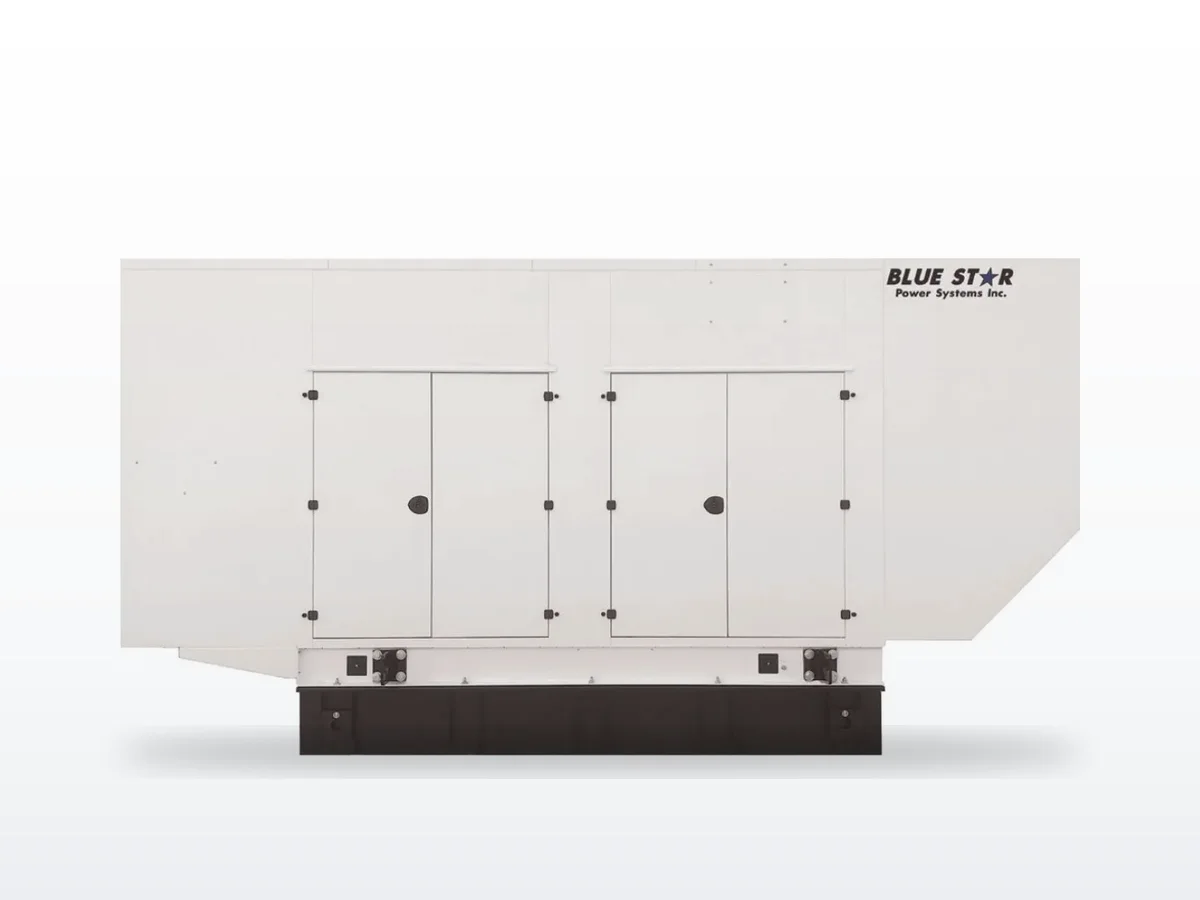
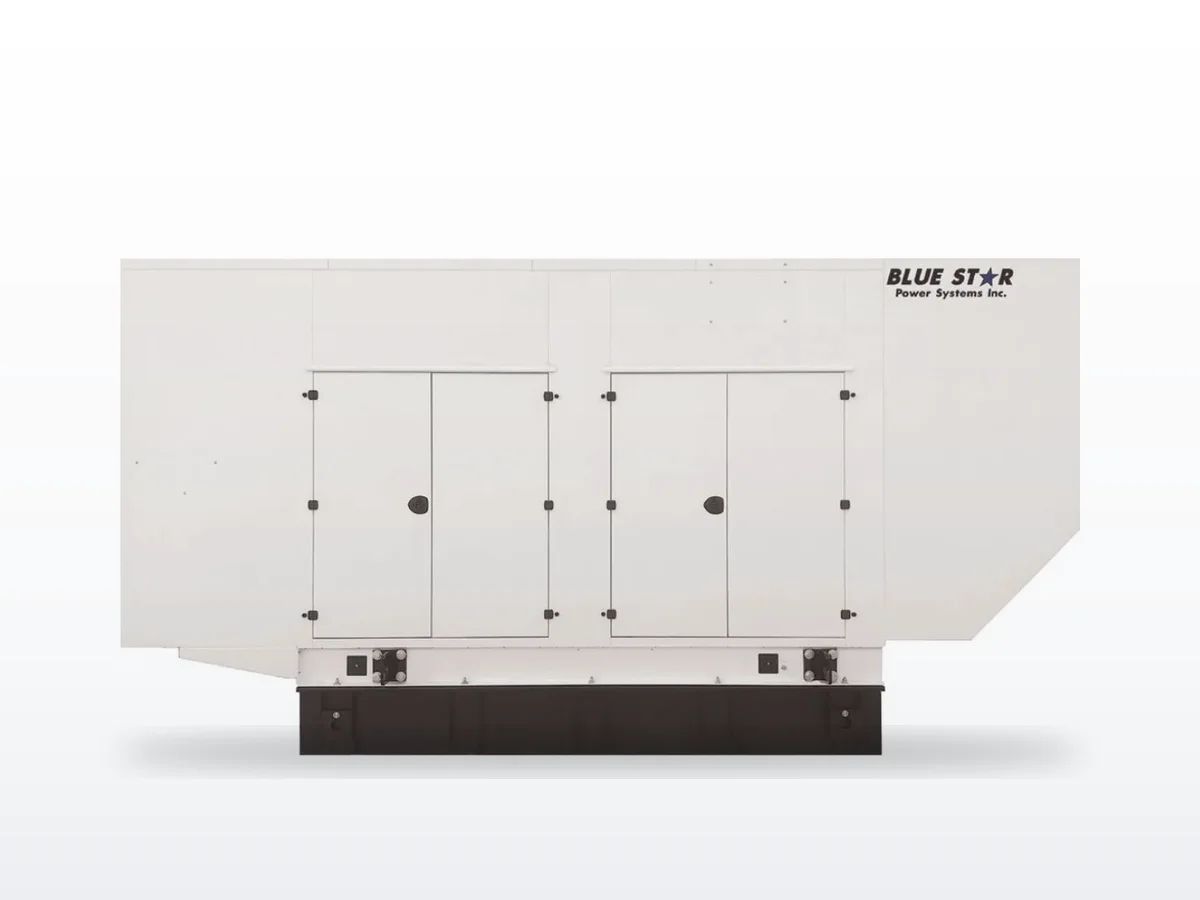
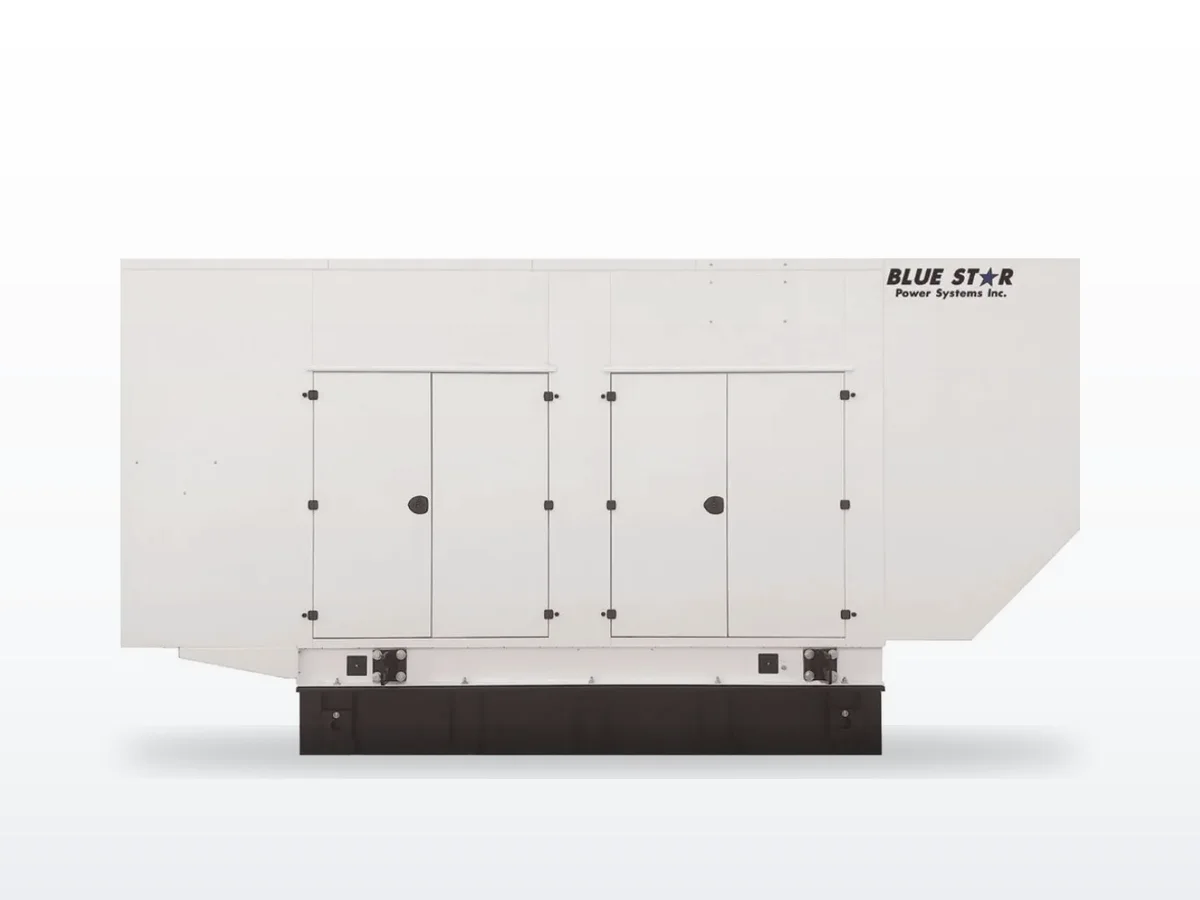
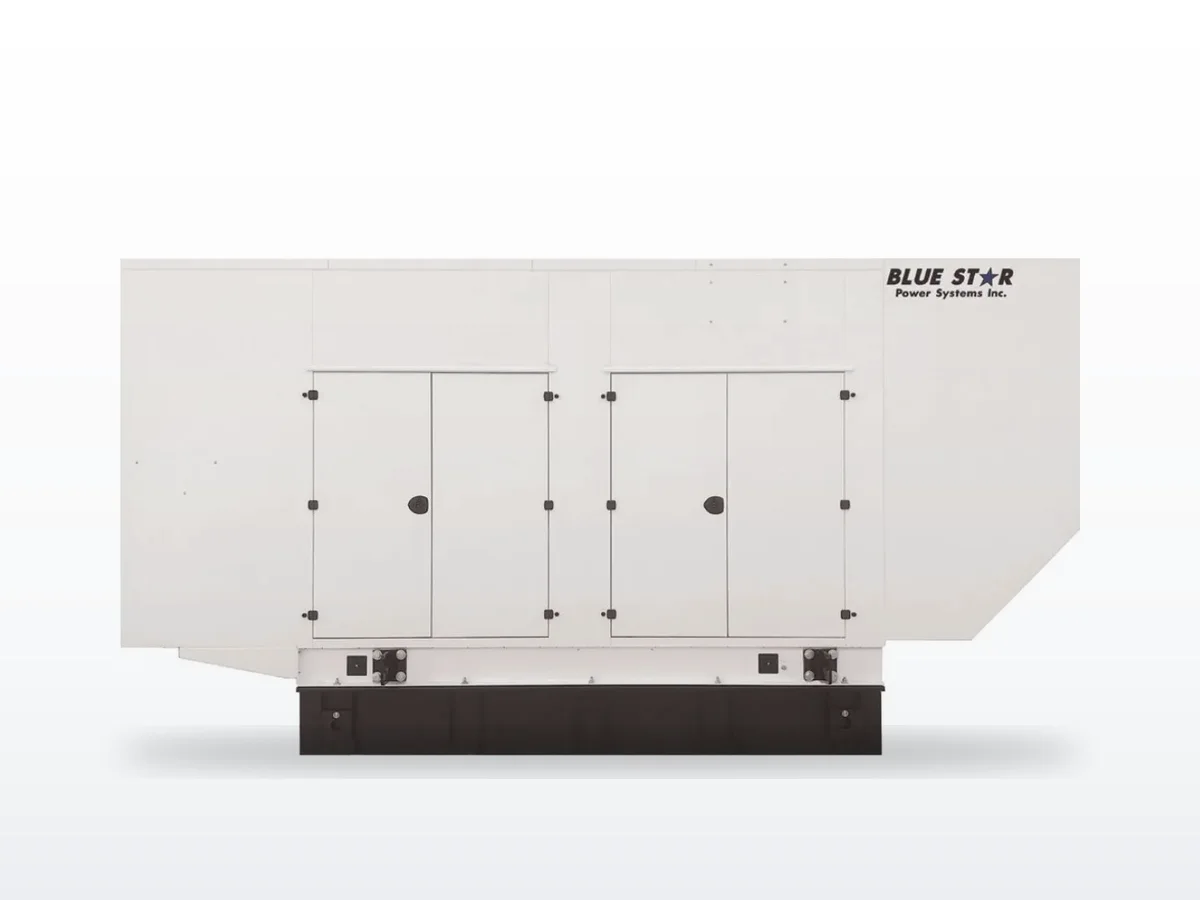
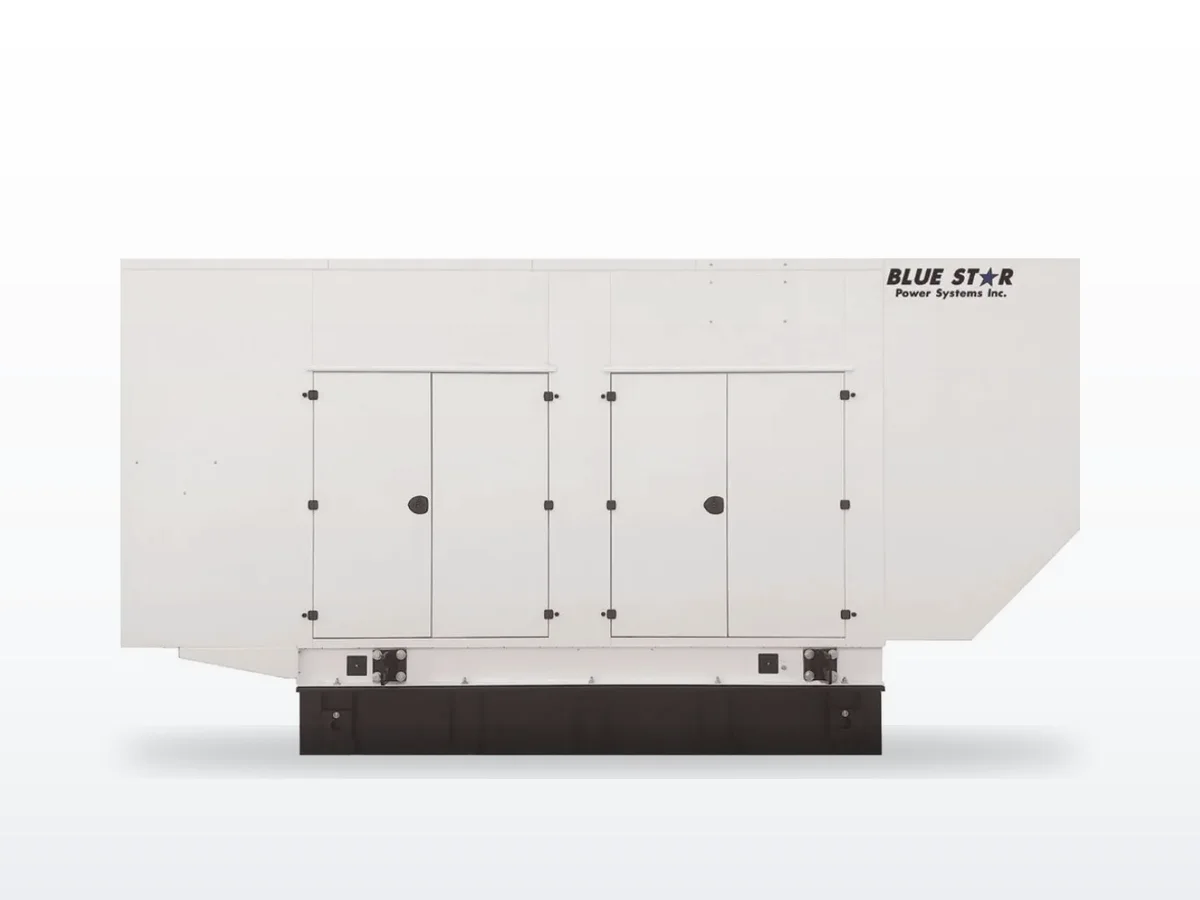
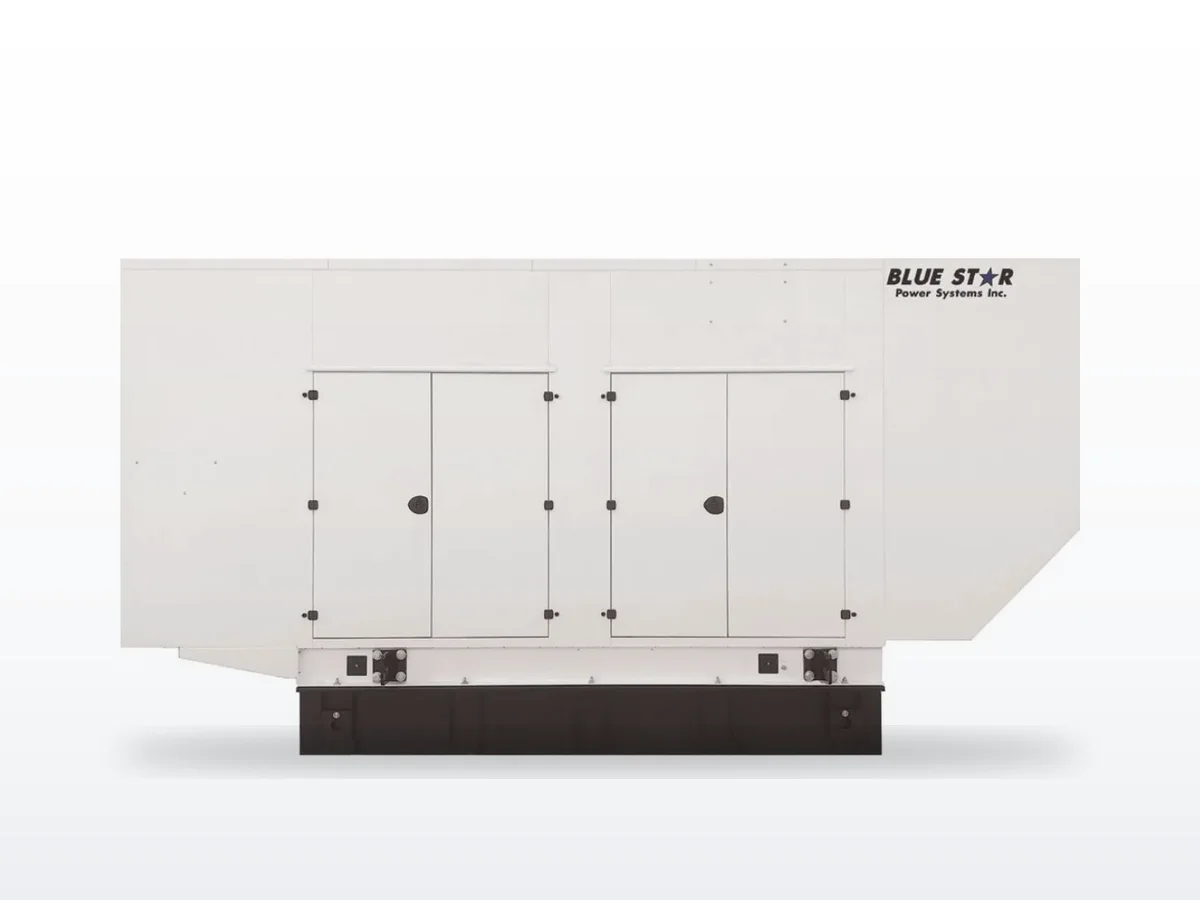
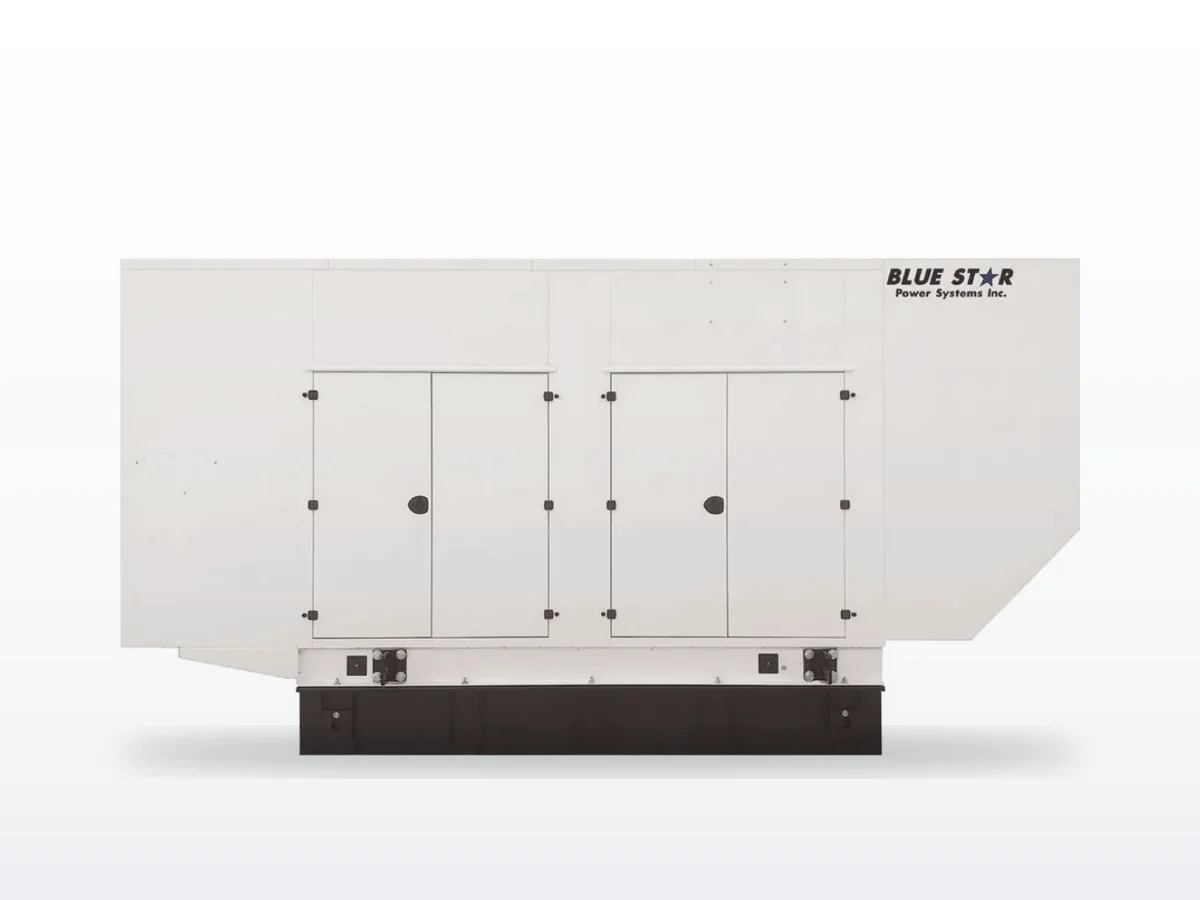
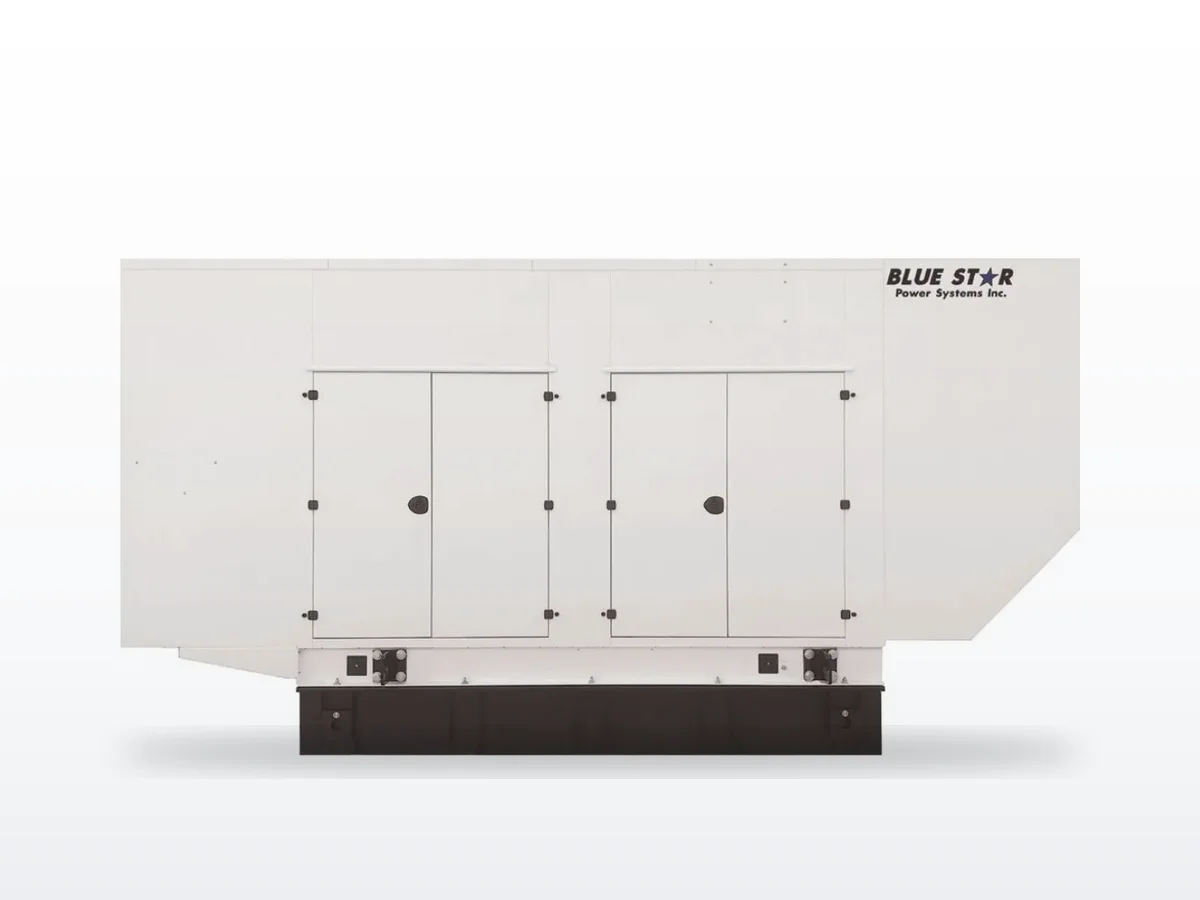
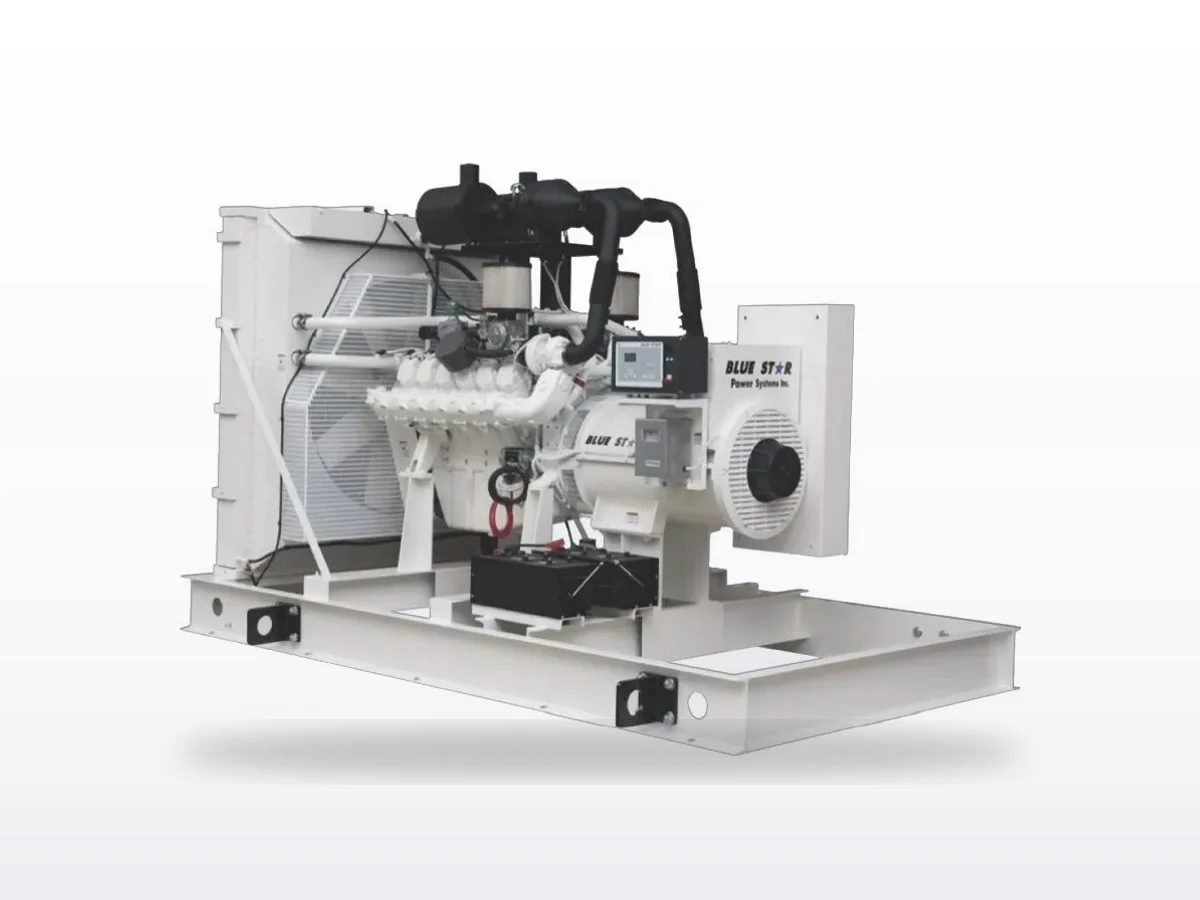
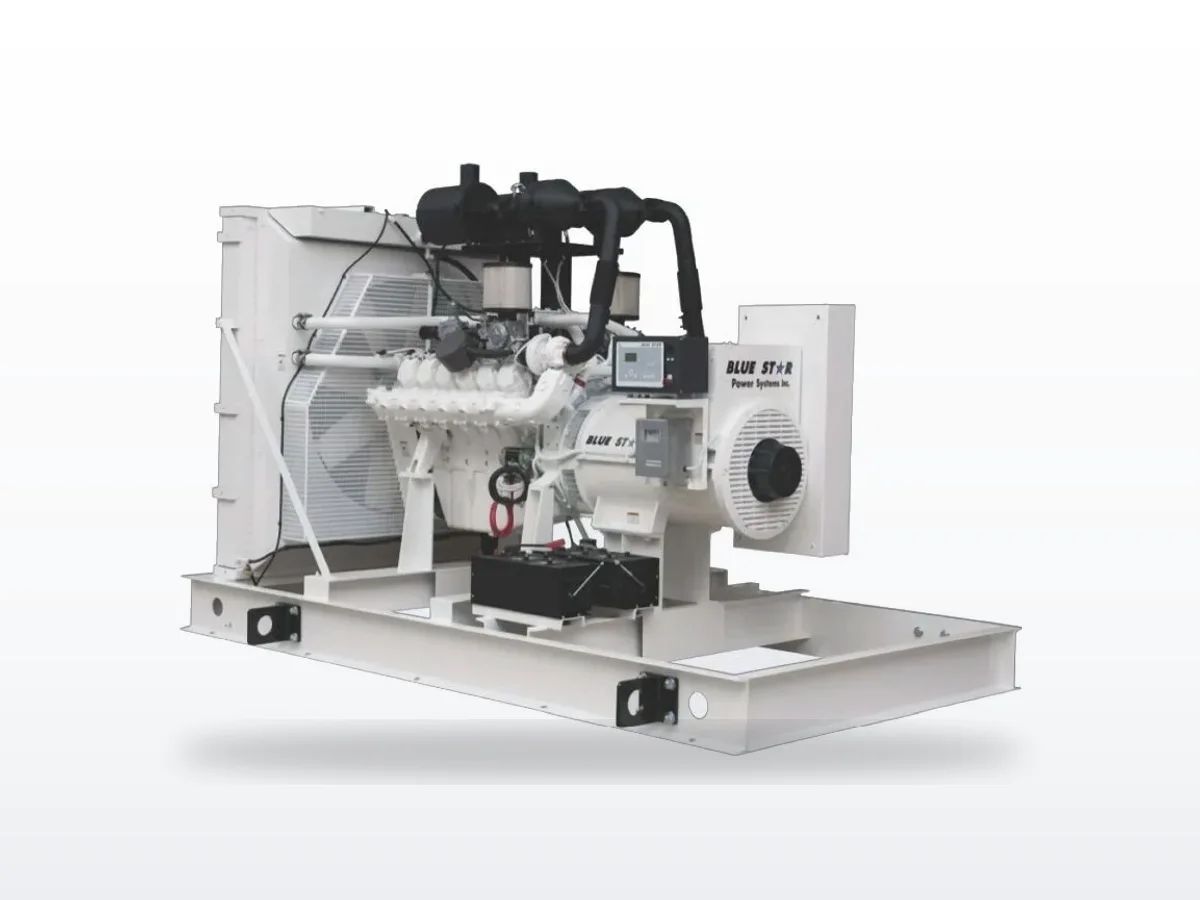
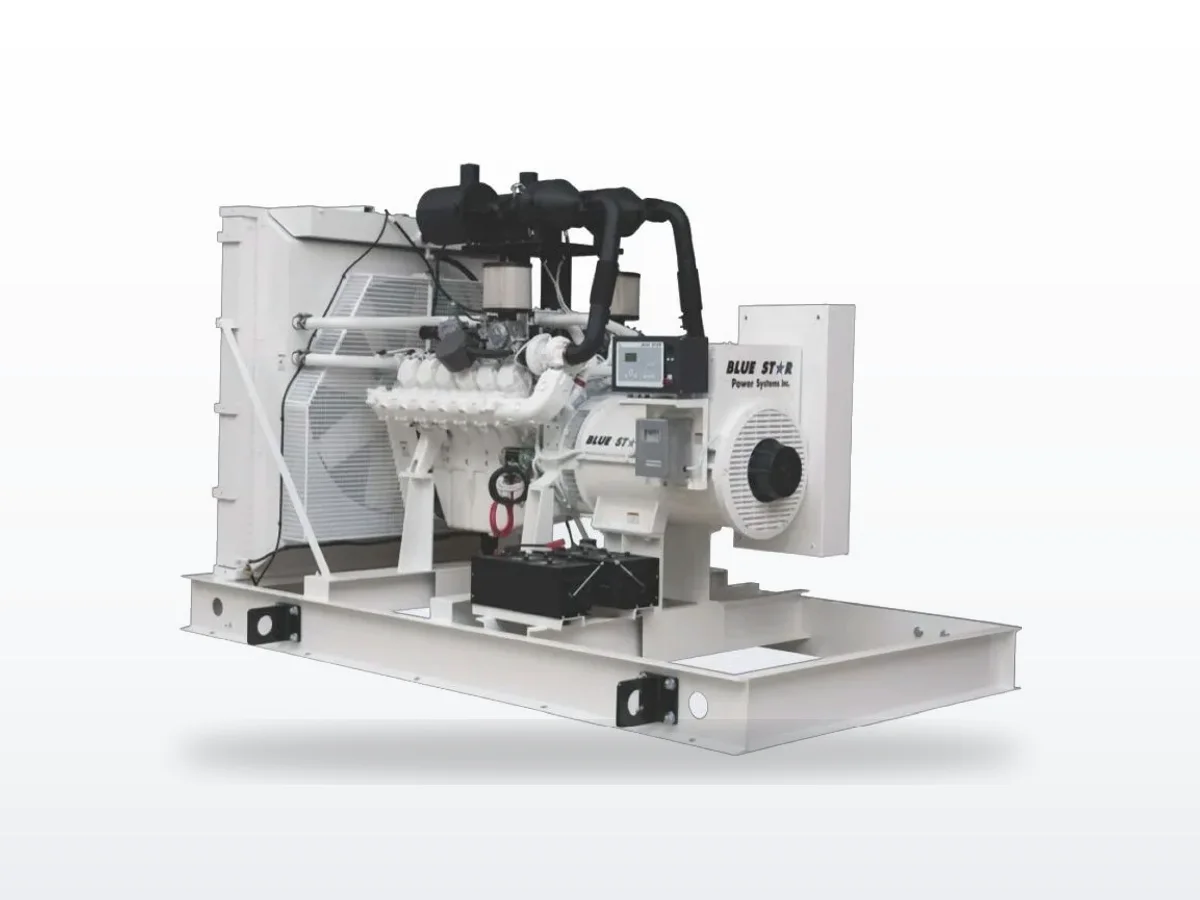
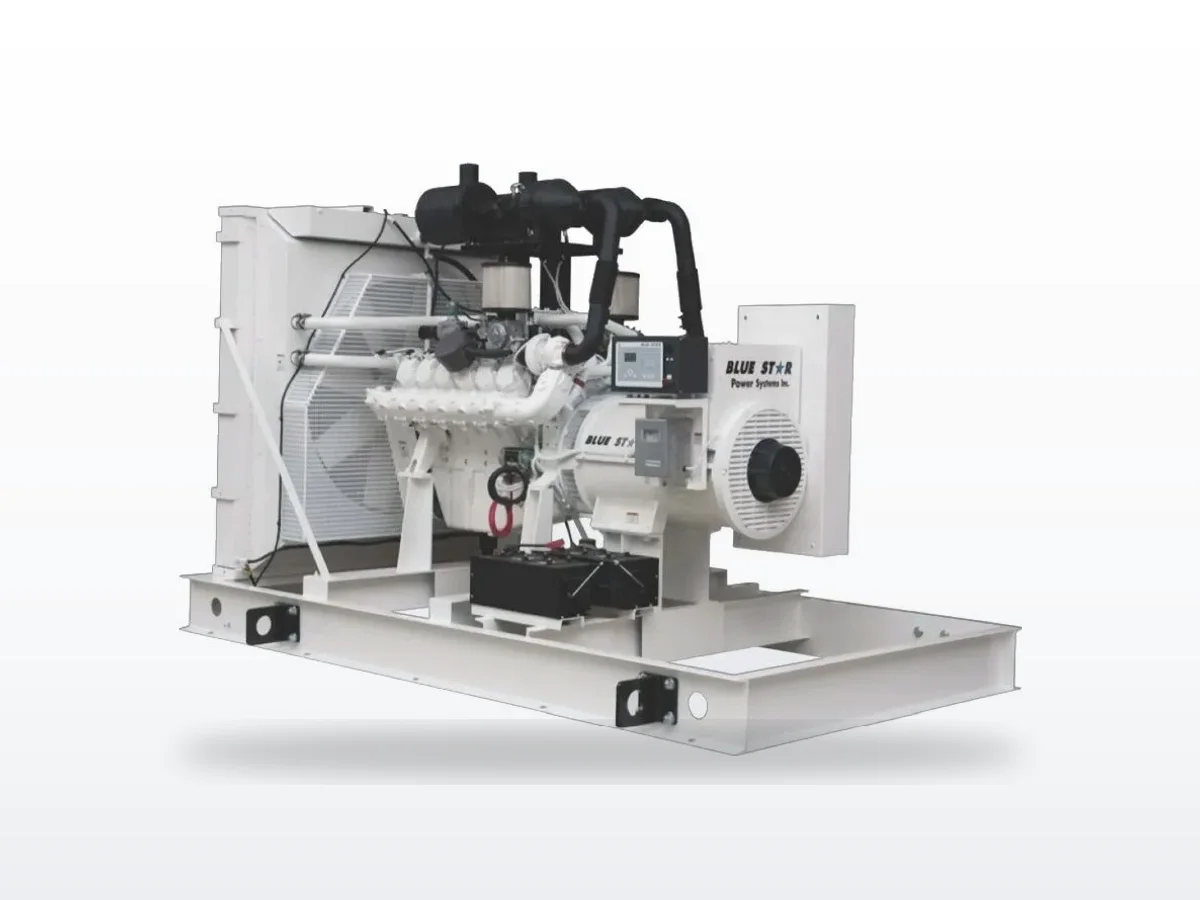
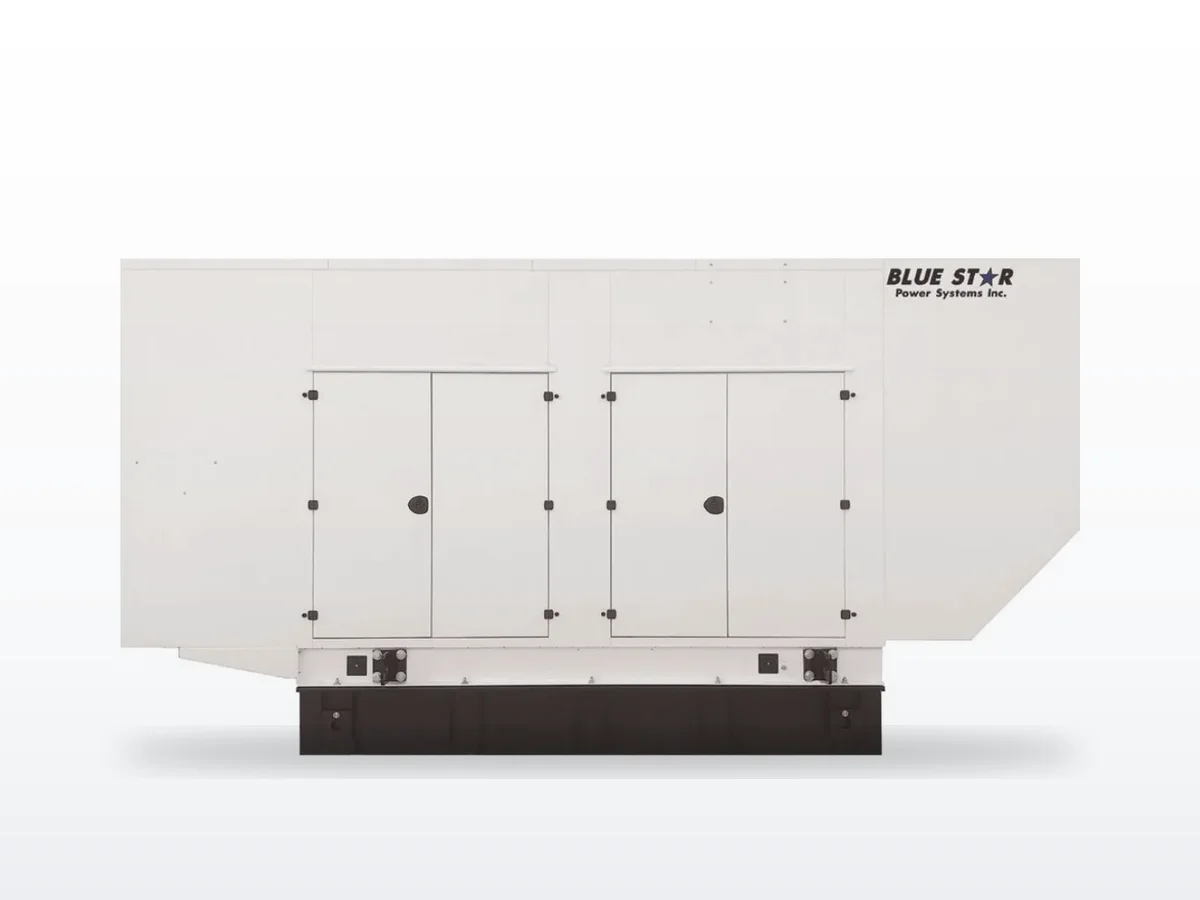
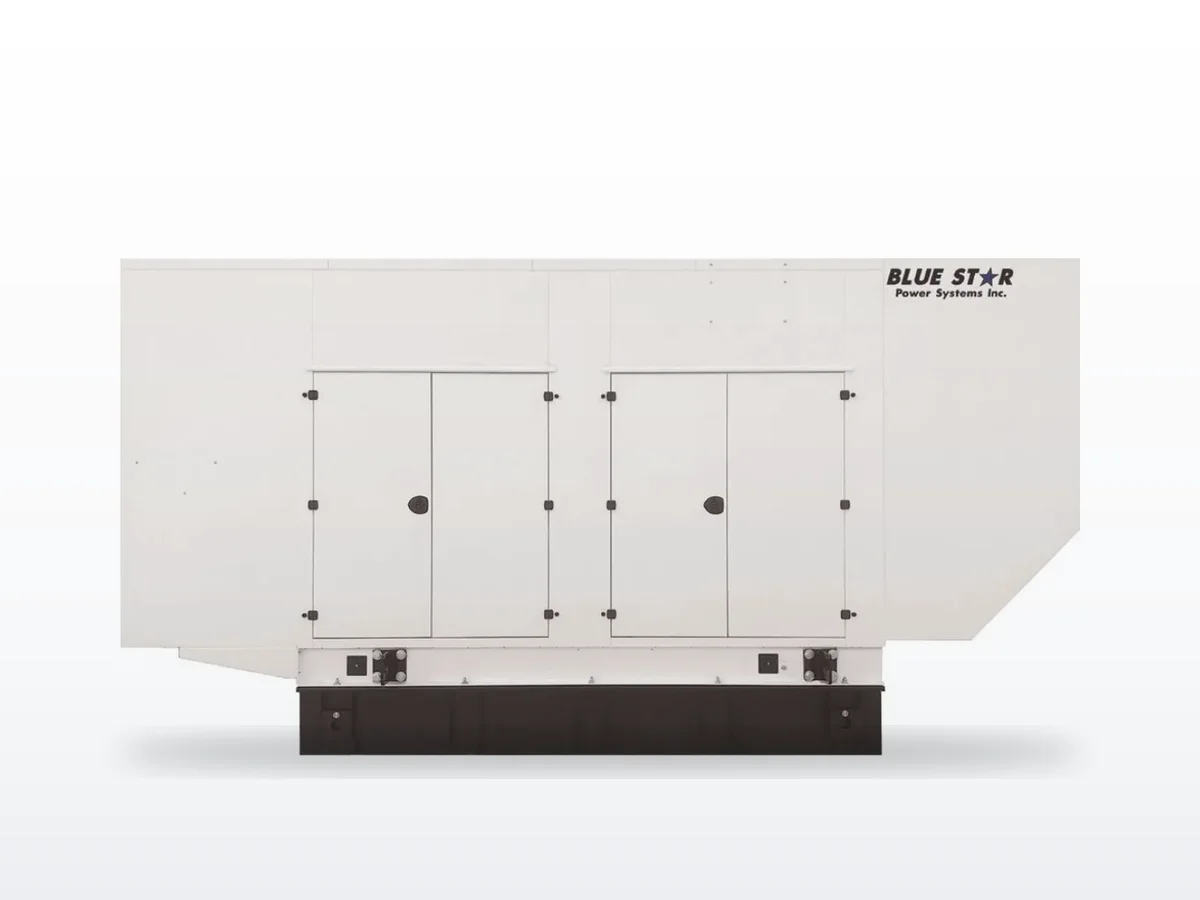
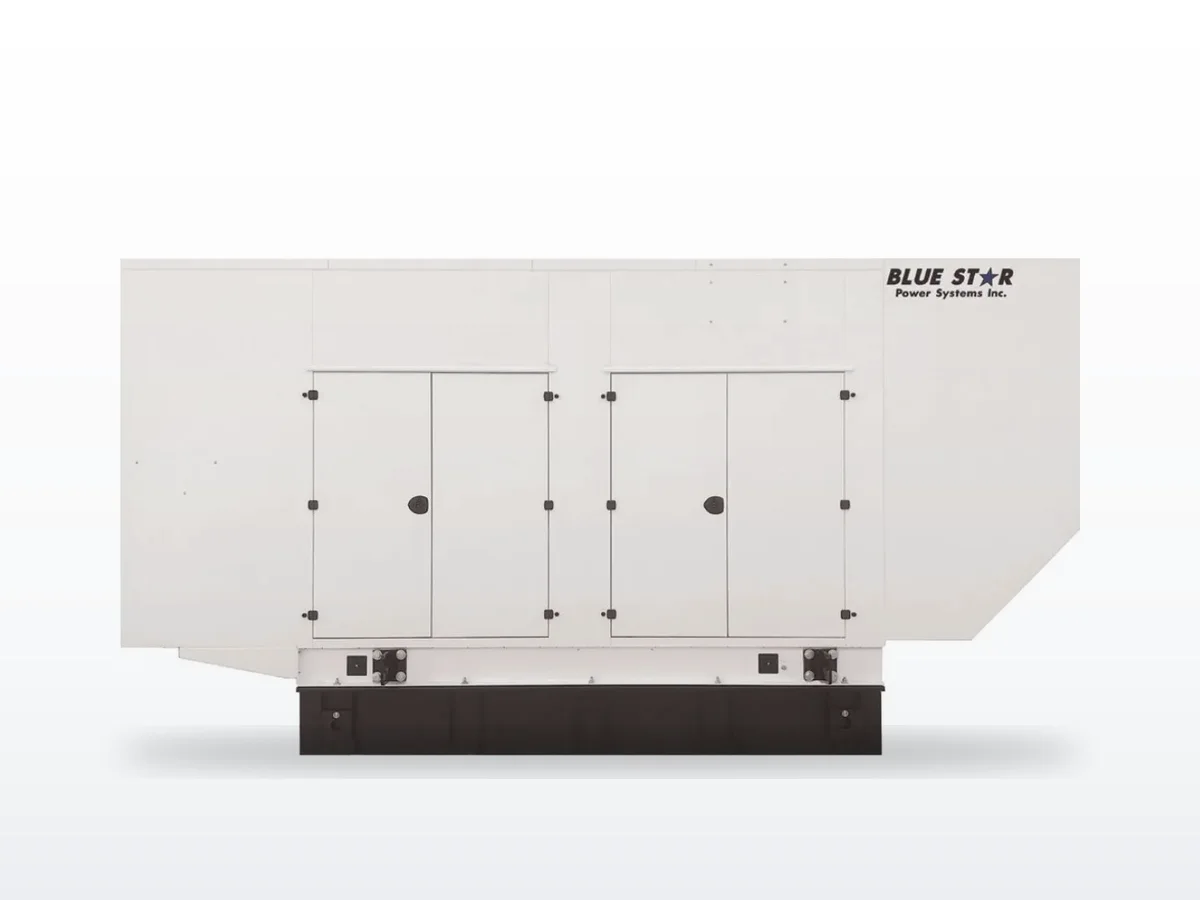
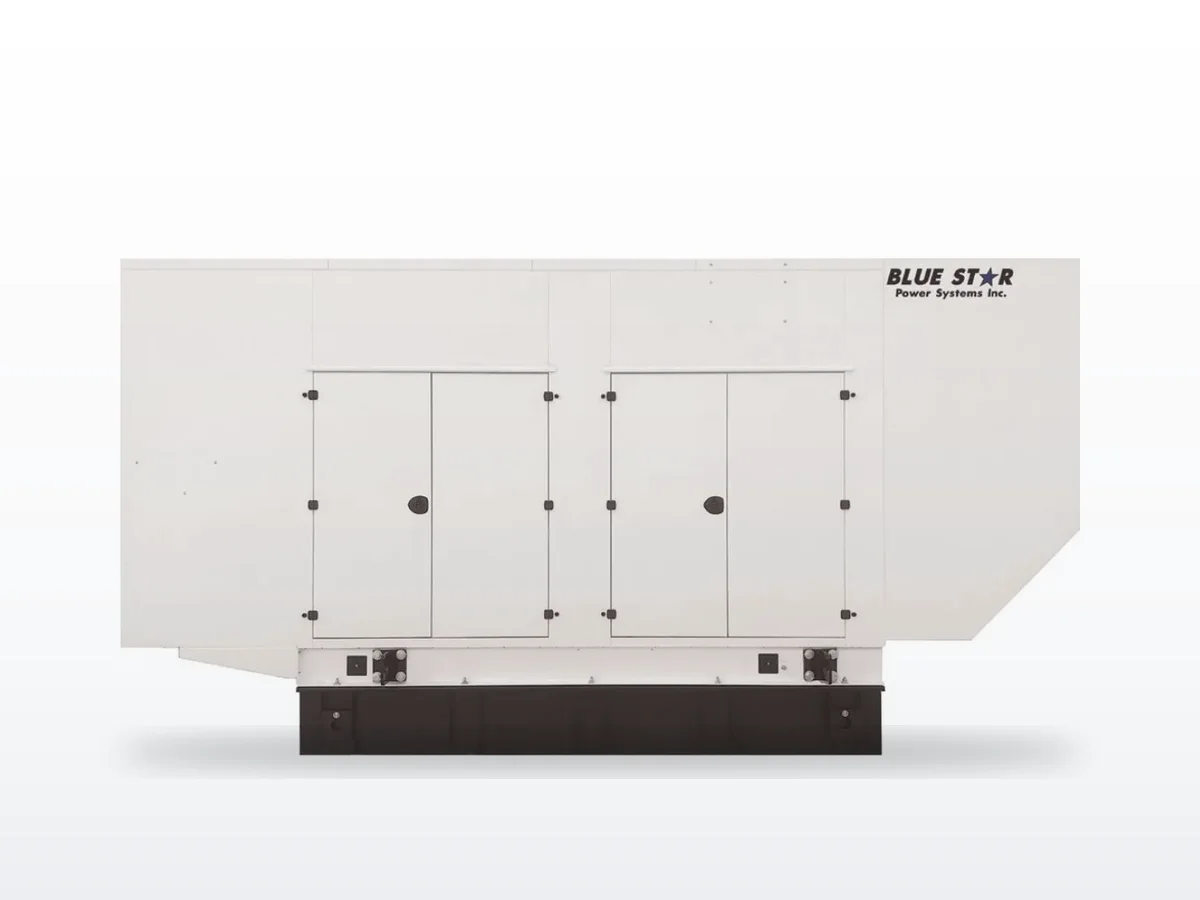
Blue Star Power Systems
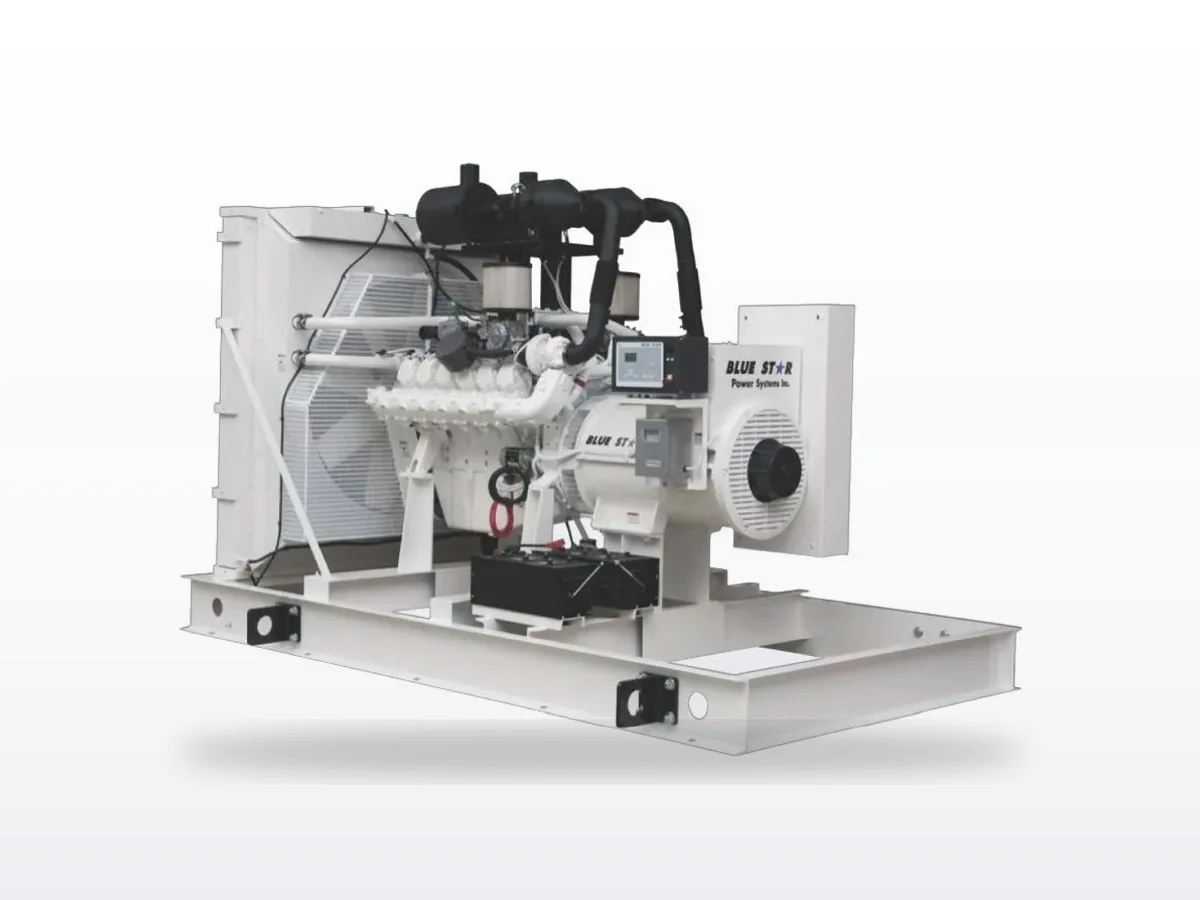
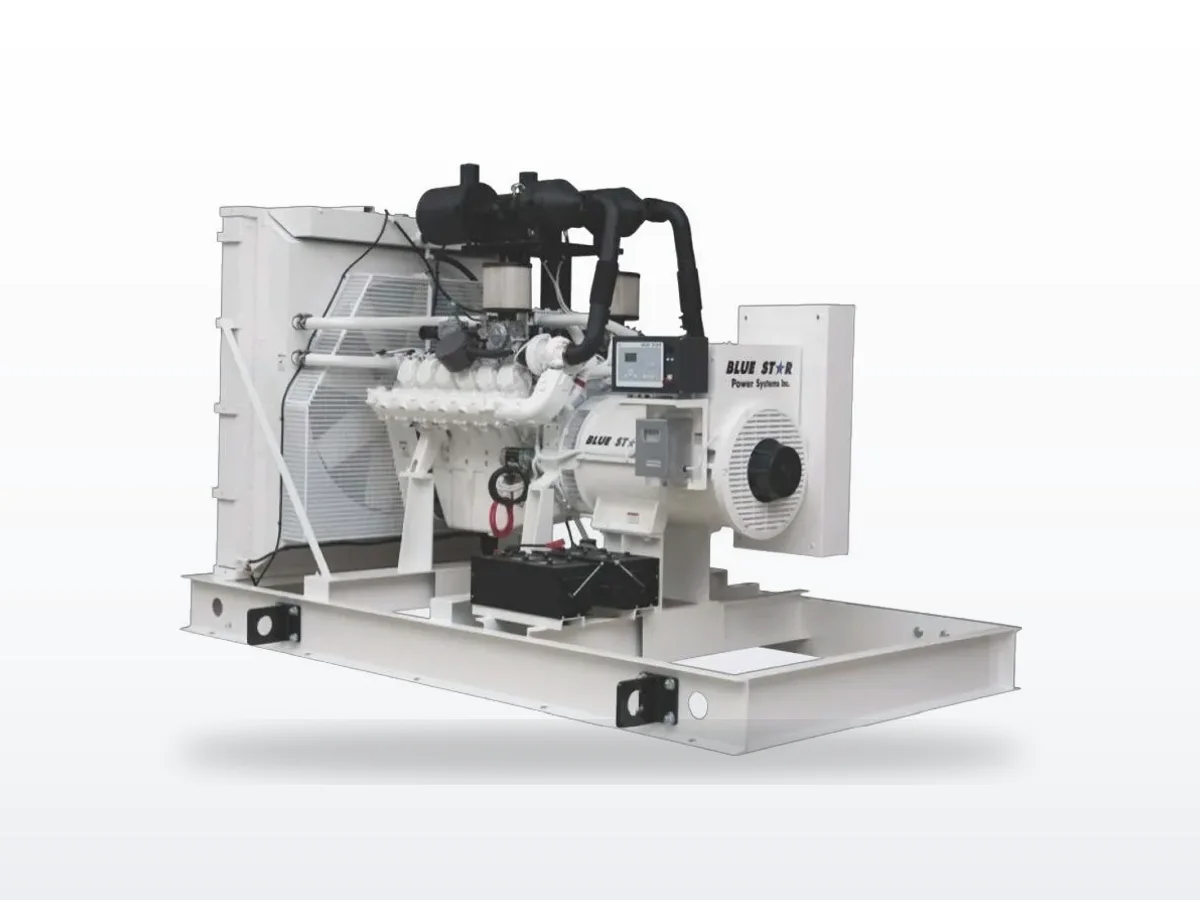
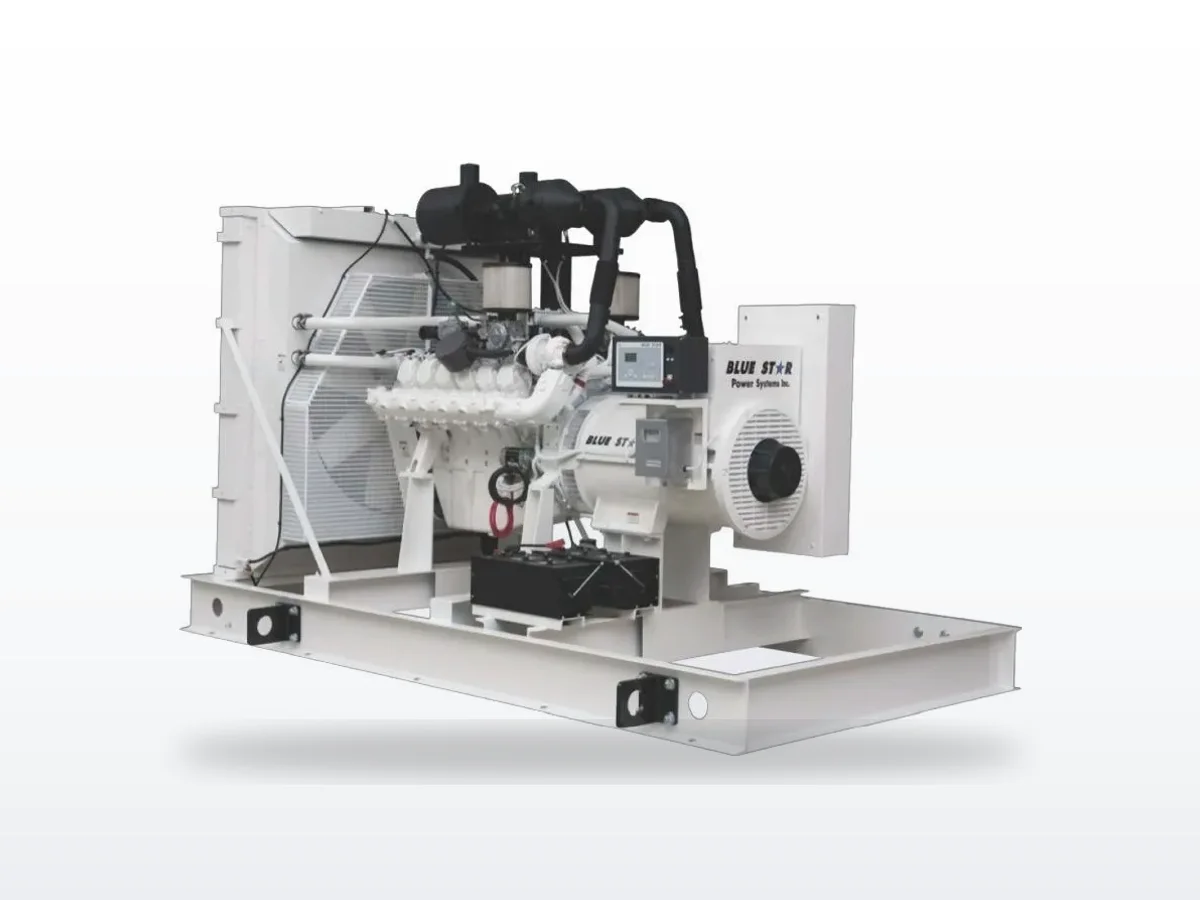
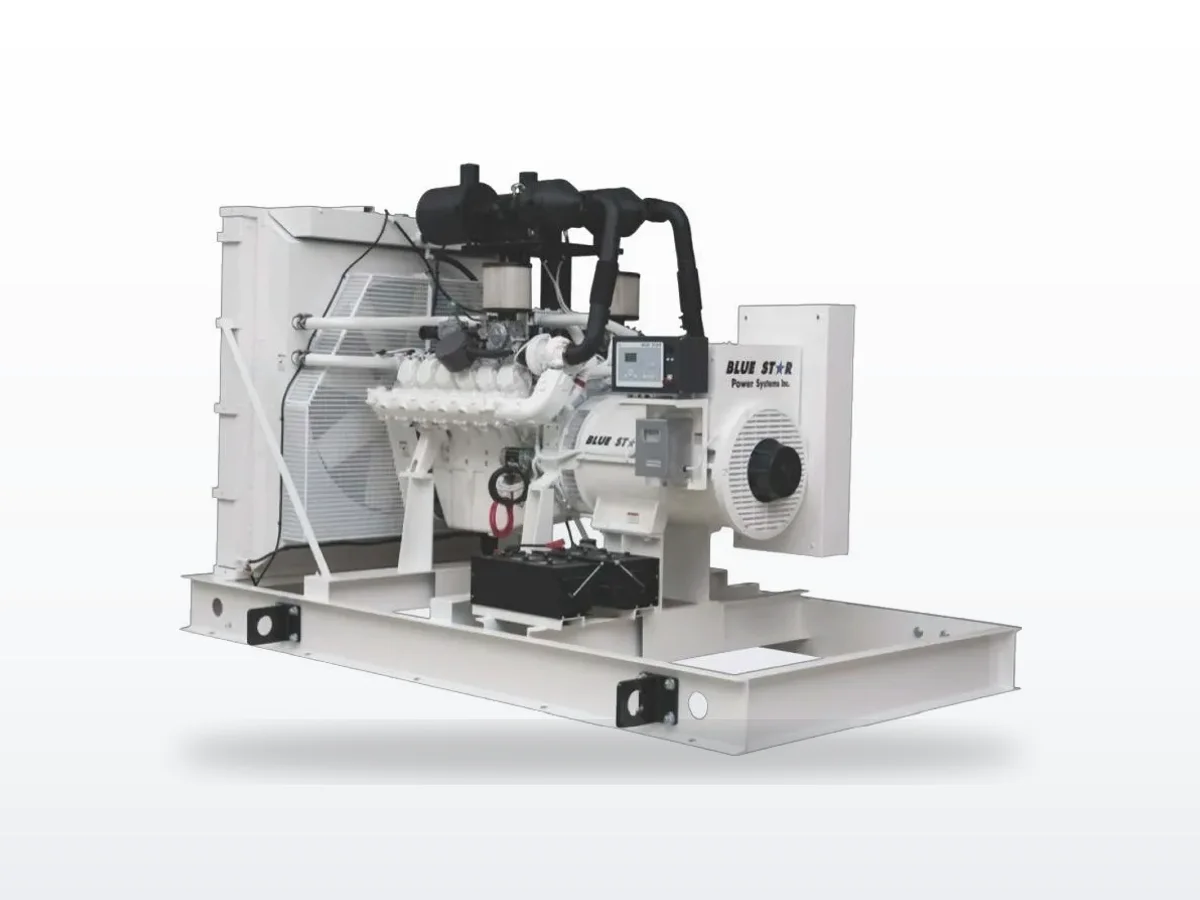
Blue Star GM100-03
Open Basler controller + PSI engine + Stamford alternator — no proprietary lock-in. Non-proprietary components serviceable by any qualified tech.
100 kW standby · Natural Gas / LPG · Liquid-cooled
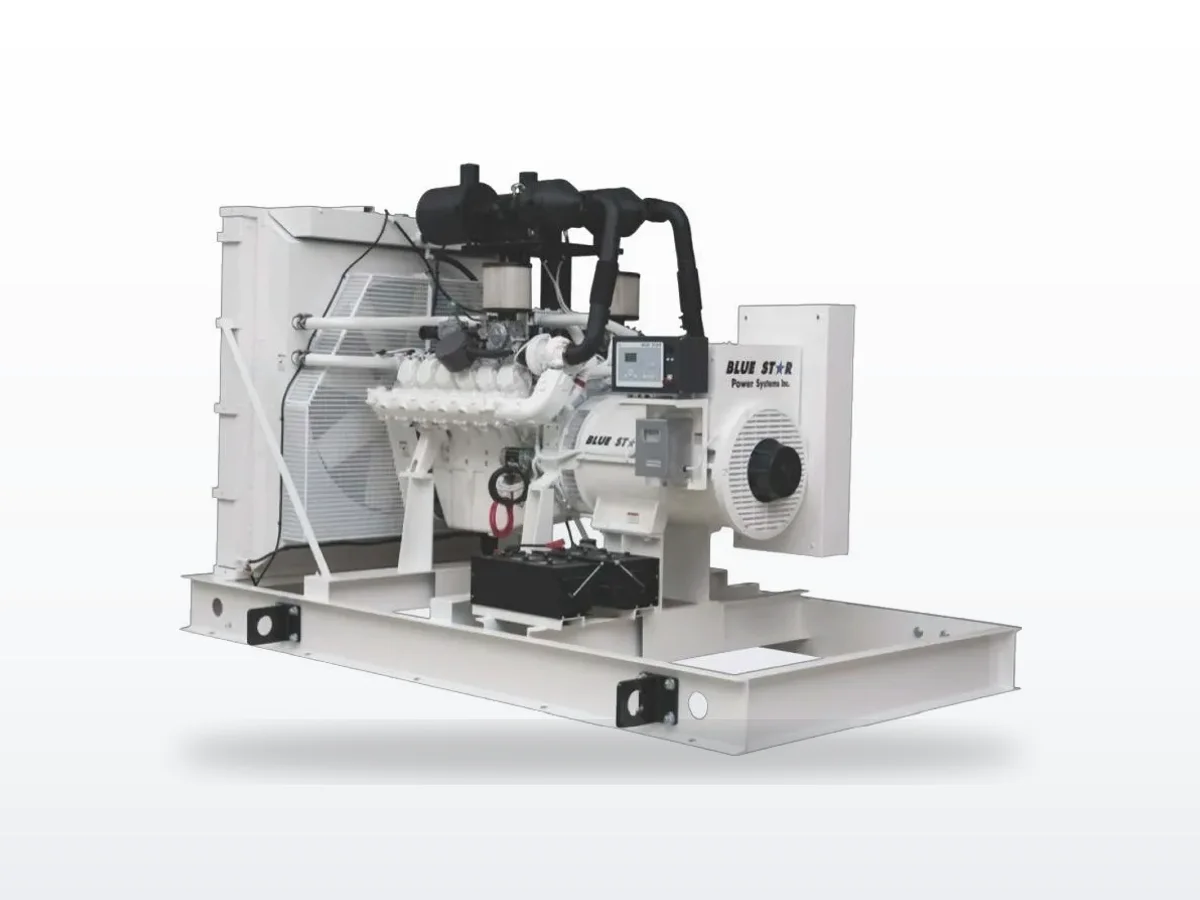
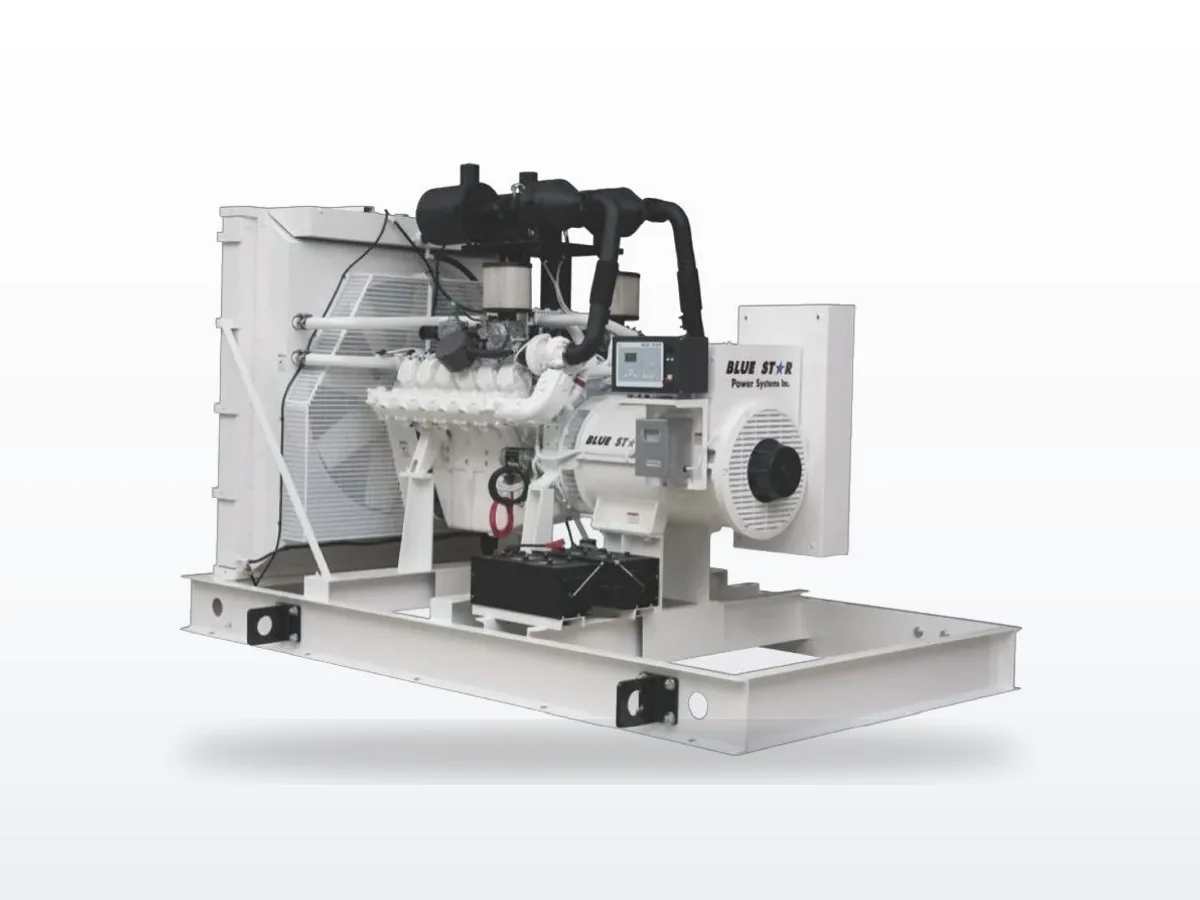
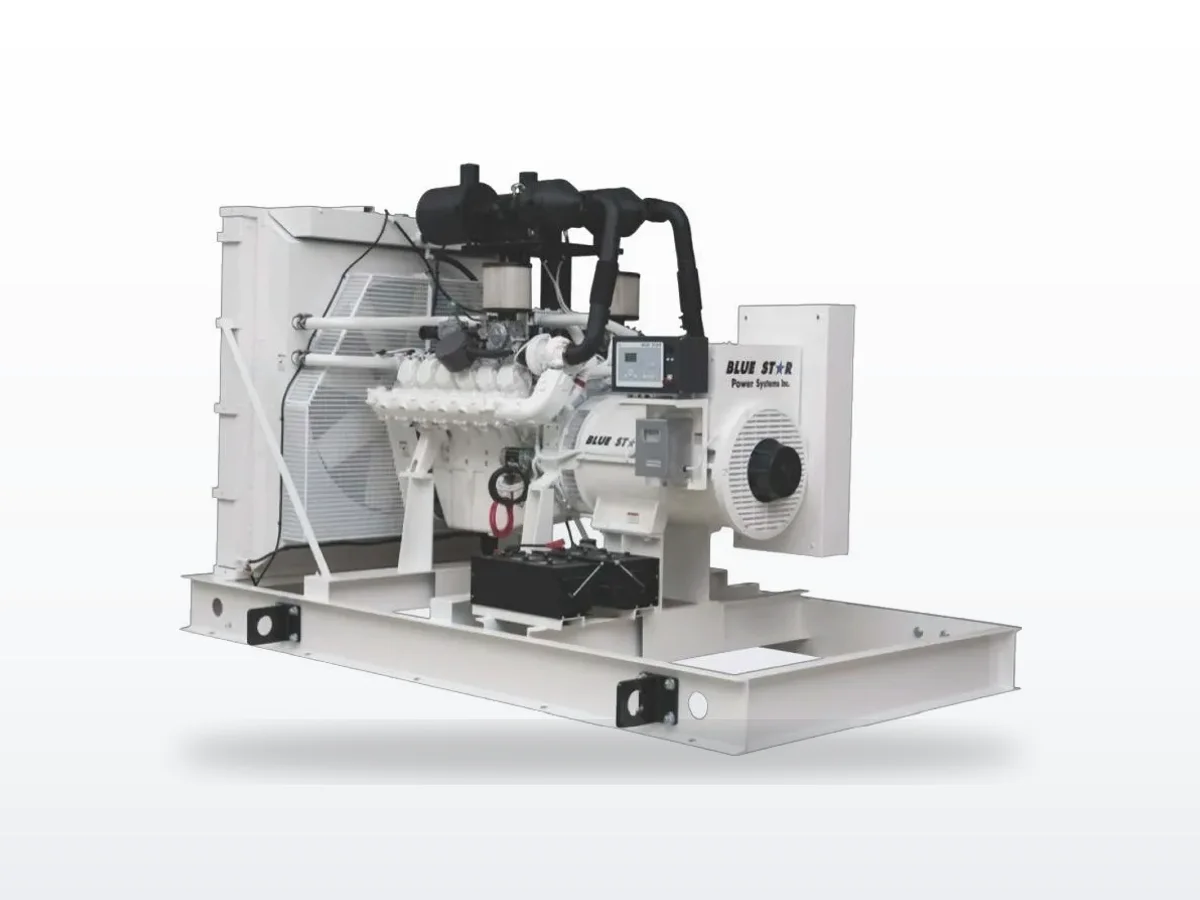
100 kW natural gas standby for commercial, school, and multi-family buildings where gas-fueled backup and component independence matter.
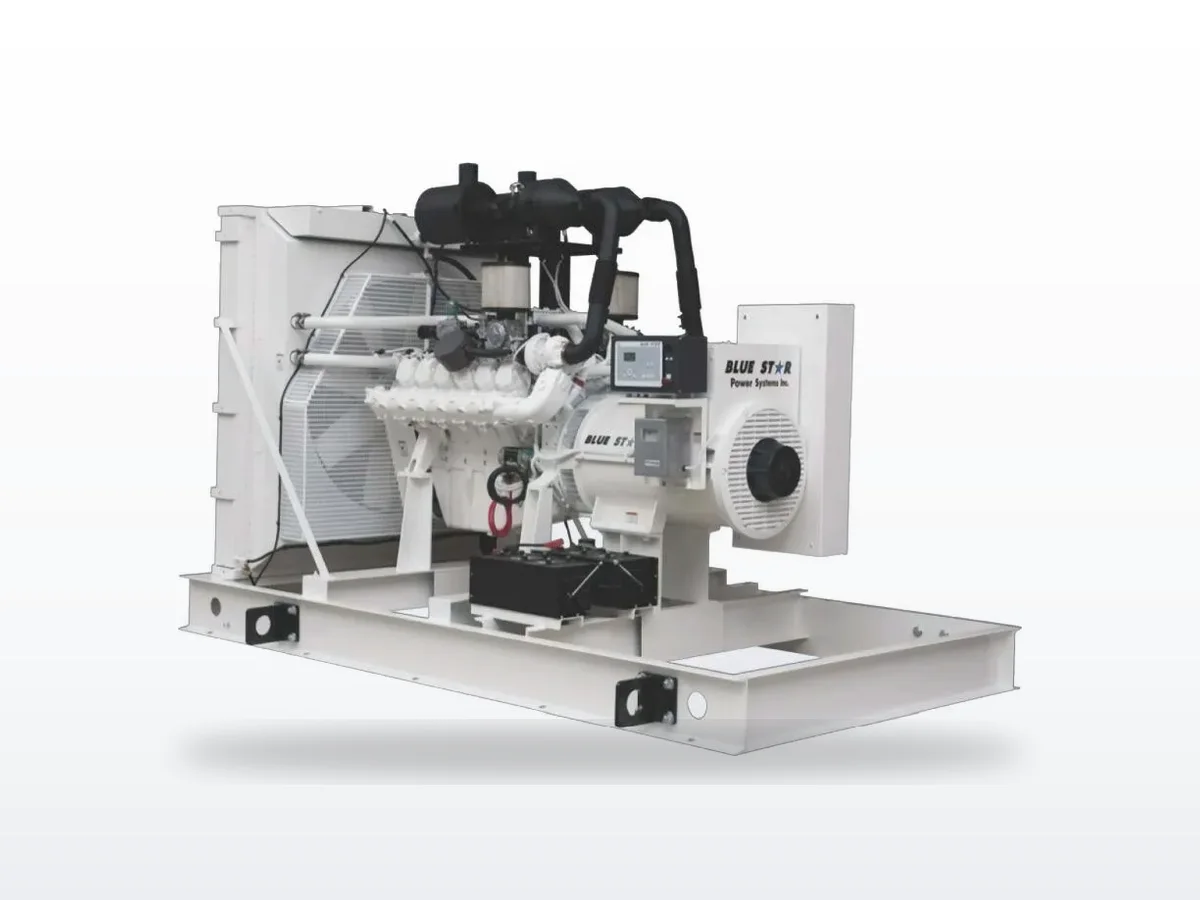
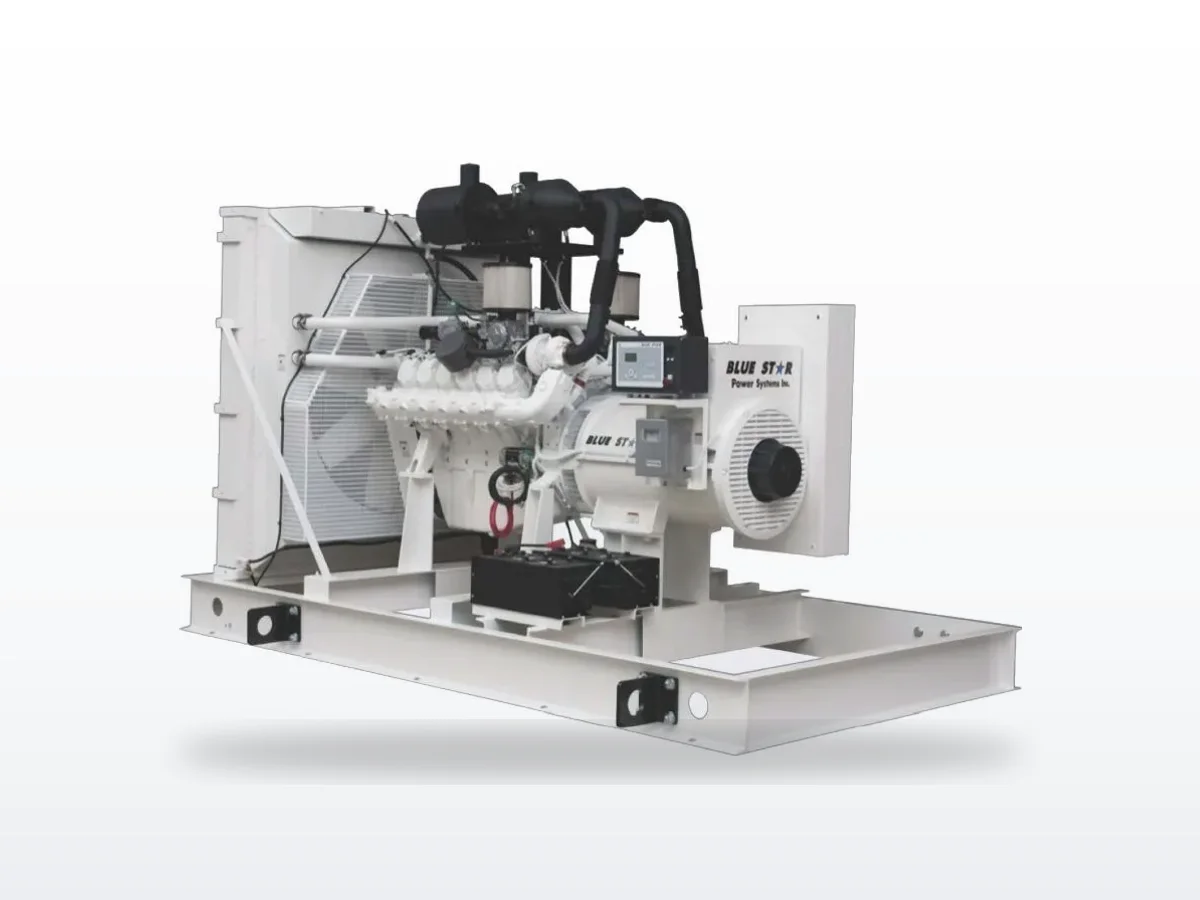
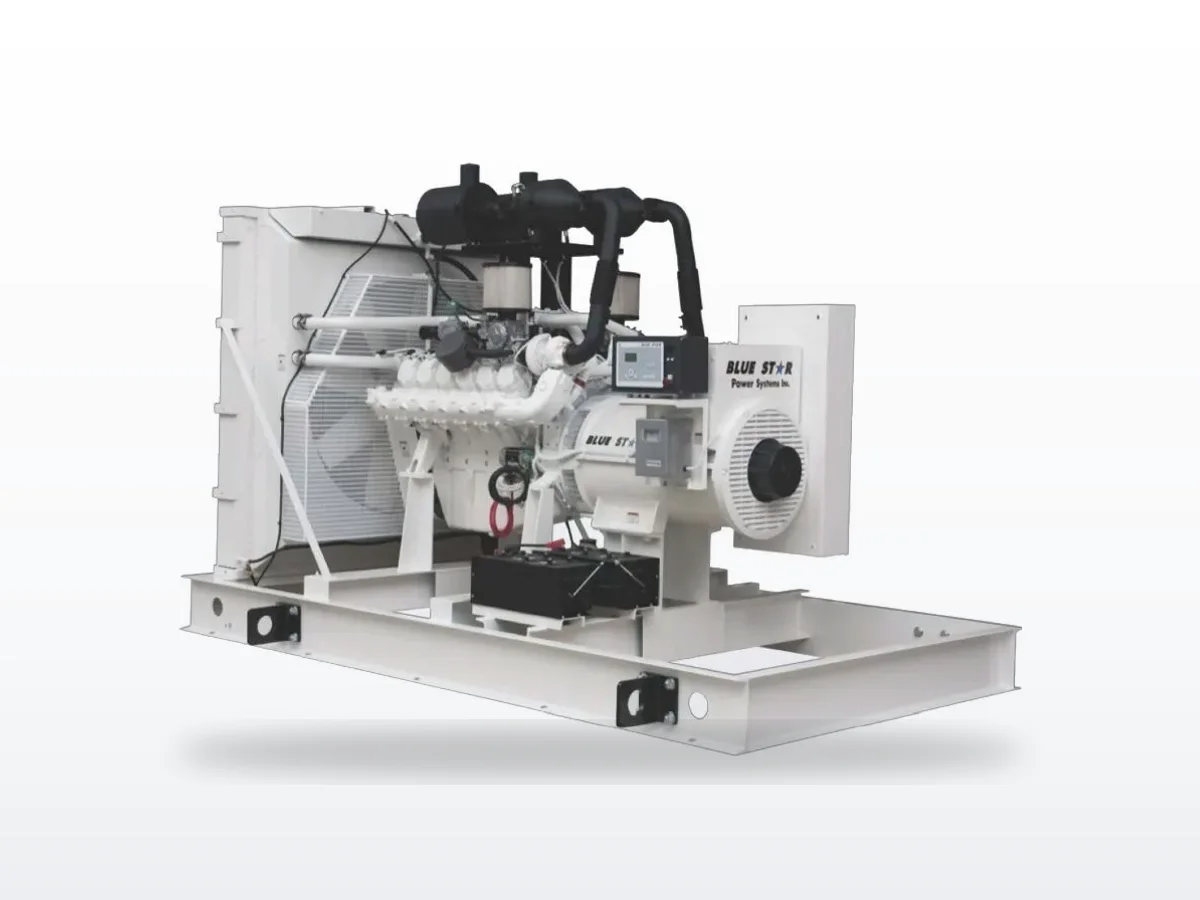
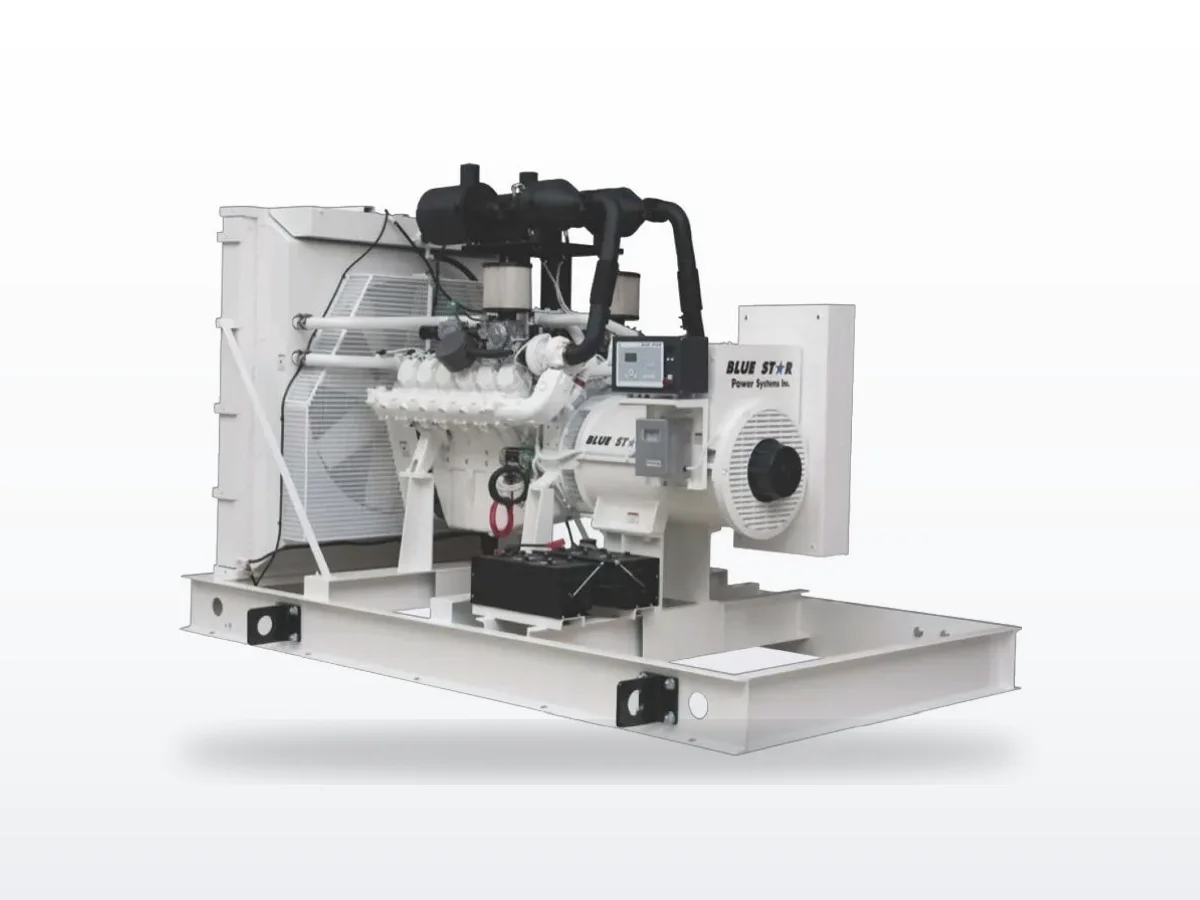
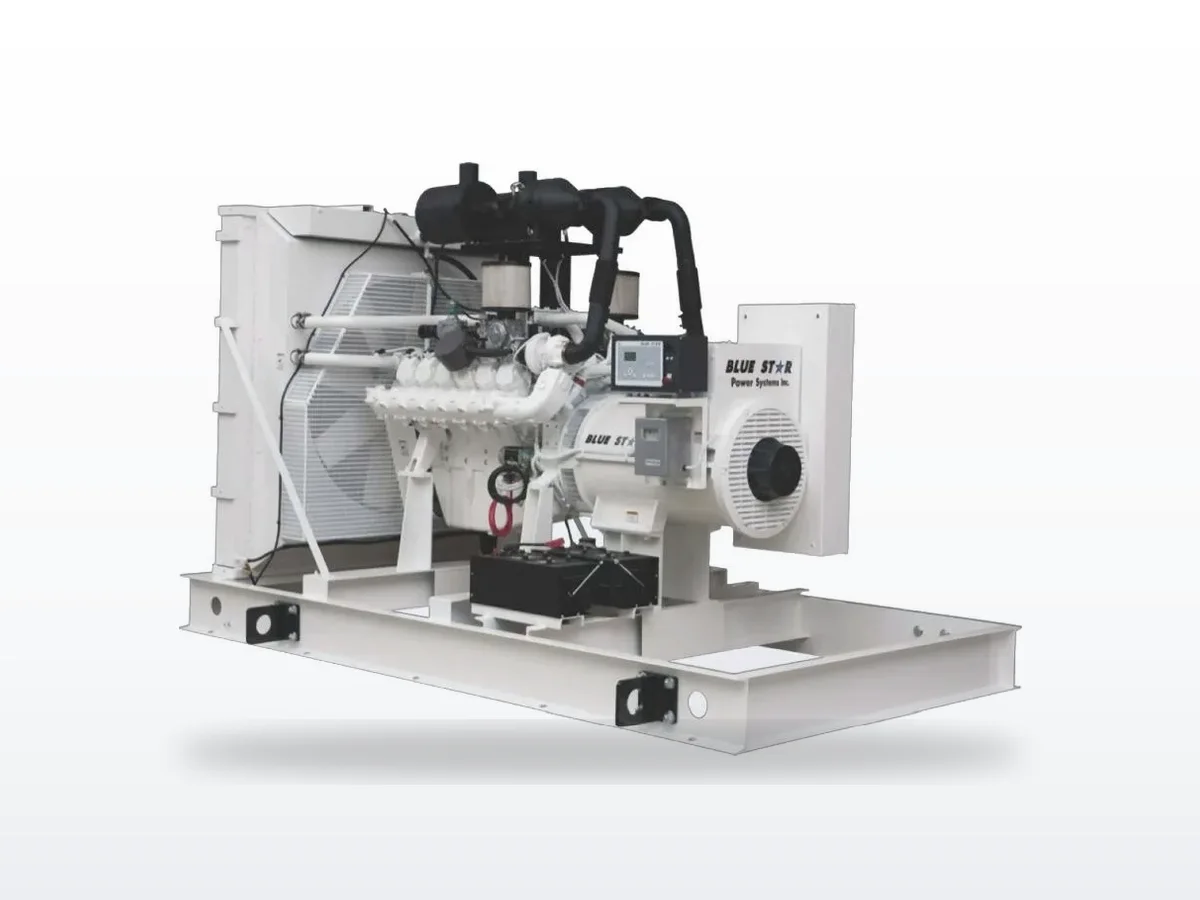
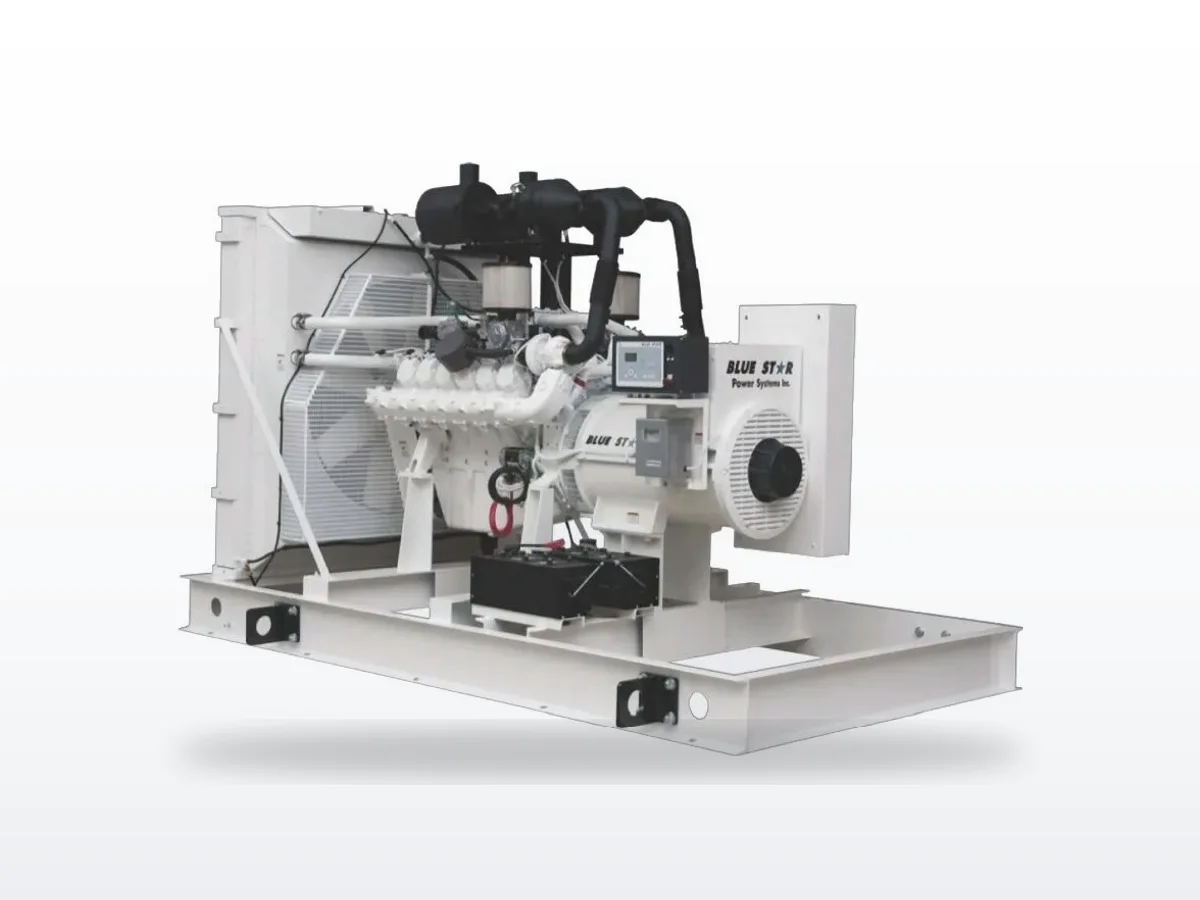
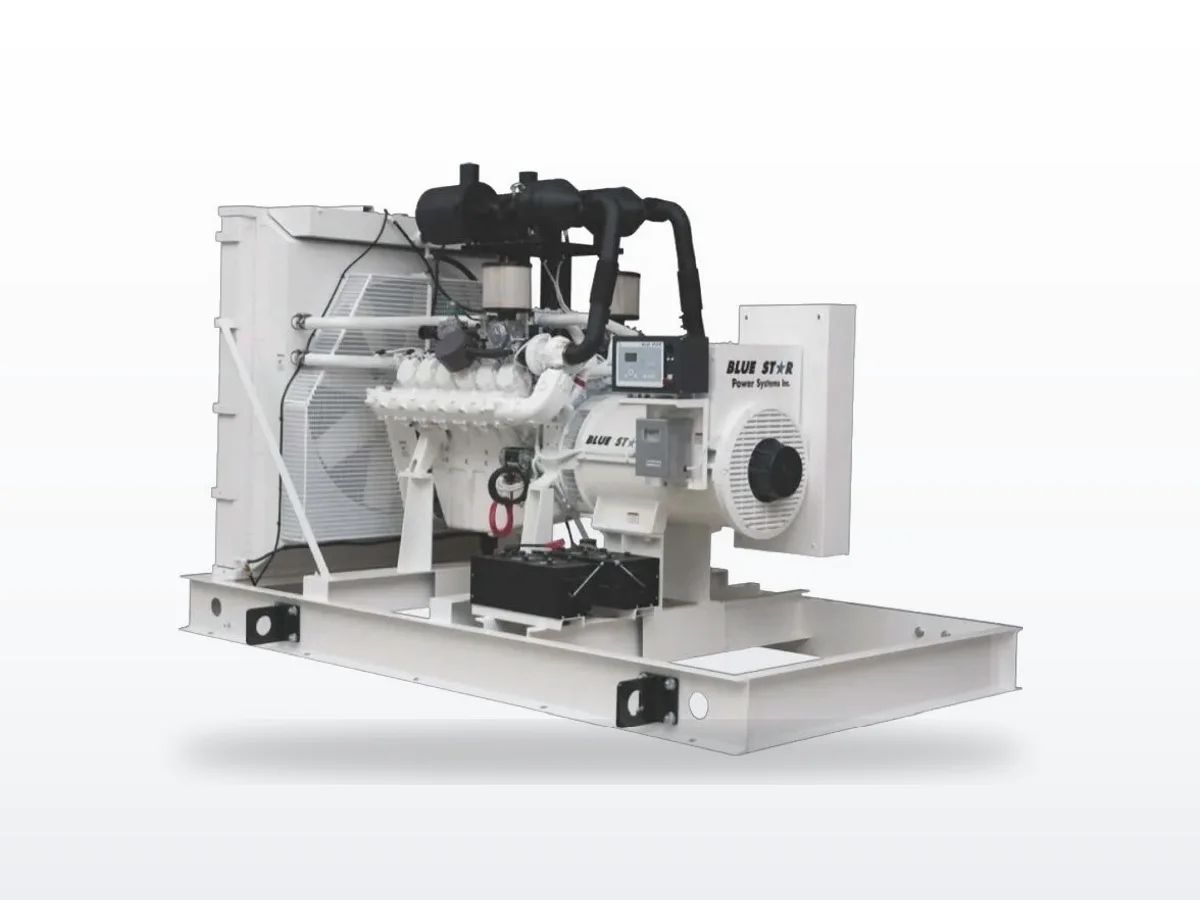
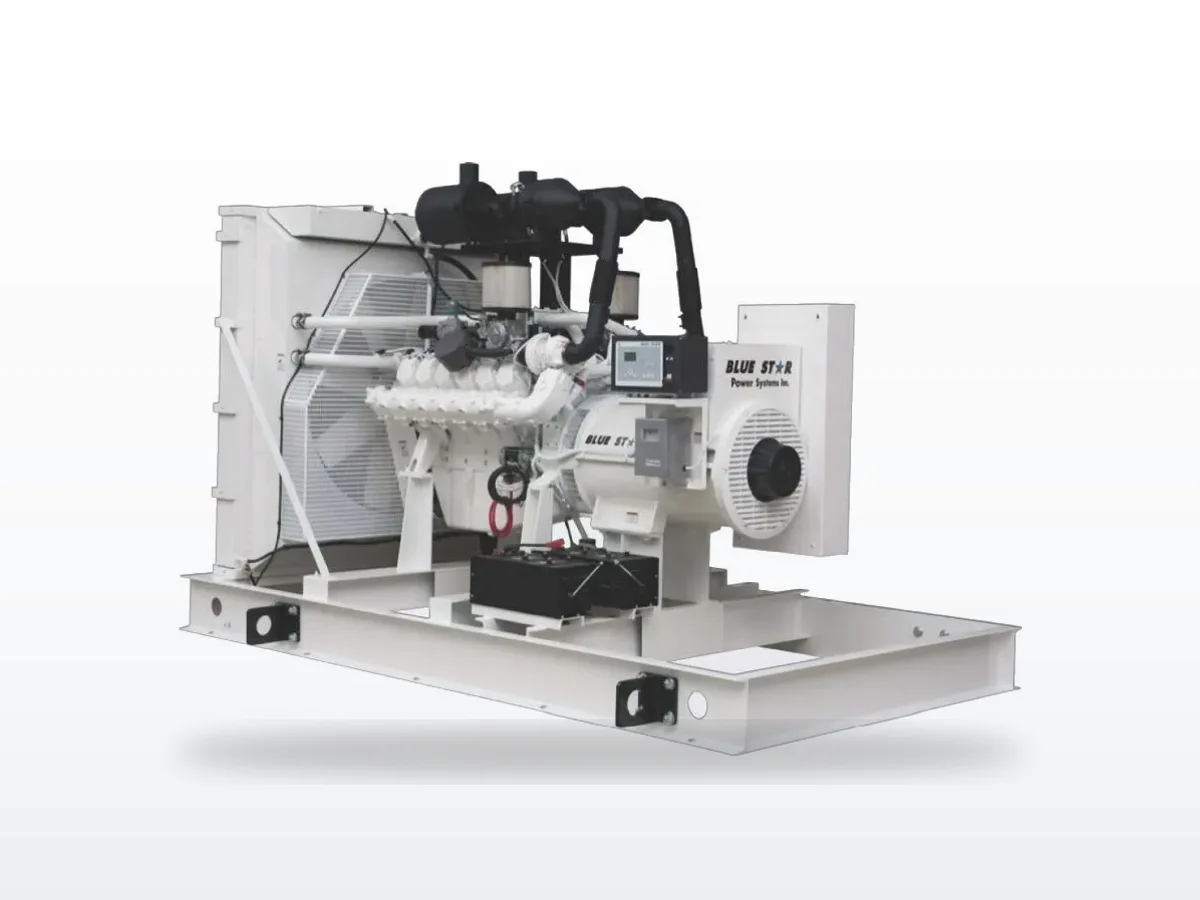
100 kW natural gas standby generator (80 kW on LP) from Blue Star Power Systems. PSI 5.7LTCAC turbocharged charge-air-cooled V8, Stamford UCI274C alternator, DSE DCP7310 controller, 208-600V output.
Open Basler controller + PSI engine + Stamford alternator — prime-rated, no proprietary lock-in. Serviceable by any qualified tech.
60 kW standby · Natural Gas / LPG · Liquid-cooled
55 kW prime natural gas for continuous-duty commercial applications, cogeneration sites, and facilities needing 24/7 gas-fueled power.
55 kW prime / 60 kW standby natural gas / LP generator from Blue Star Power Systems. PSI 5.7L eight-cylinder V8 with catalyst/silencer, Stamford UCI224E alternator, DSE DCP7310 controller, 208-600V output.
Open Basler controller + John Deere 4045 engine + Stamford alternator — no proprietary lock-in. Serviceable by any qualified tech, not just the dealer.
100 kW standby · Diesel · Liquid-cooled
100 kW diesel standby for commercial, multi-family, and municipal facilities where value engineering and service-tech independence matter.
100 kW Tier 3 diesel standby generator built by Blue Star Power Systems. John Deere 4045HF285 engine with charge air cooling, Stamford UCI274 alternator, DSE DCP7310 controller.
Tier 33-phaselight-commercialcommercial
Blue Star Power Systems
Blue Star JD150-01
Open Basler controller + John Deere 6068 engine + Stamford alternator — no proprietary lock-in. Serviceable by any qualified tech, not just the dealer.
150 kW standby · Diesel · Liquid-cooled
150 kW diesel standby for commercial, institutional, and municipal facilities where value engineering and component independence matter.
150 kW Tier 3 diesel standby generator built by Blue Star Power Systems. John Deere 6068HF285 6-cylinder engine, Stamford UCI274/UCDI274 alternator, DSE DCP7310 controller.
Tier 33-phaselight-commercialcommercial
Blue Star Power Systems
Blue Star JD200-01
Open Basler controller + John Deere 6068 engine + Stamford alternator — no proprietary lock-in. Serviceable by any qualified tech, not just the dealer.
200 kW standby · Diesel · Liquid-cooled
200 kW diesel standby for value-engineering projects, municipal facilities, and service-savvy buyers who prioritize component independence.
200 kW Tier 3 diesel standby generator built by Blue Star Power Systems. John Deere 6068HFG85 6-cylinder engine, Stamford S4L1S/UCDI274 alternator, DSE DCP7310 controller.
Tier 33-phasecommerciallight-industrial
Blue Star Power Systems
Blue Star JD250-02
Open Basler controller + John Deere 6090 engine + Stamford alternator — no proprietary lock-in. Serviceable by any qualified tech, not just the dealer.
250 kW standby · Diesel · Liquid-cooled
250 kW diesel standby for commercial, institutional, and campus facilities where value engineering and non-proprietary component access matter.
250 kW Tier 3 diesel standby generator built by Blue Star Power Systems. John Deere 6090HF484 9.0L 6-cylinder engine, Stamford S4L1S/S4L1D alternator, DSE DCP7310 controller.
Tier 33-phasecommerciallight-industrial
Blue Star Power Systems
Blue Star JD275-02
Open Basler controller + John Deere 6090 engine + Stamford alternator — no proprietary lock-in. Serviceable by any qualified tech, not just the dealer.
275 kW standby · Diesel · Liquid-cooled
275 kW diesel standby for commercial, campus, and institutional facilities where value engineering and non-proprietary component access matter.
275 kW Tier 3 diesel standby generator built by Blue Star Power Systems. John Deere 6090HF484 9.0L 6-cylinder engine, Stamford S4L1S alternator, DSE DCP7310 controller. Three-phase only.
Tier 33-phasecommerciallight-industrial
Blue Star Power Systems
Blue Star JD30-03IT4
Open Basler controller + John Deere engine + Stamford alternator — no proprietary lock-in. Serviceable by any qualified tech, not just the dealer.
30 kW standby · Diesel · Liquid-cooled
30 kW diesel standby for small commercial, retail, and light-duty applications where component independence and easy serviceability matter.
30 kW Tier 4 Interim diesel standby generator built by Blue Star Power Systems. John Deere 3029TFG89 engine, Stamford S1L2 alternator, DSE DCP7310 controller.
Tier 4 Interim3-phaselight-commercialsmall-office
Blue Star Power Systems
Blue Star JD300-02
Open Basler controller + John Deere 6090 engine + Stamford alternator — no proprietary lock-in. Serviceable by any qualified tech, not just the dealer.
300 kW standby · Diesel · Liquid-cooled
300 kW diesel standby for large commercial, campus, and municipal facilities where value engineering and non-proprietary component access matter.
300 kW Tier 3 diesel standby generator built by Blue Star Power Systems. John Deere 6090HFG86 9.0L 6-cylinder engine, Stamford S4L1D alternator, DSE DCP7310 controller. Three-phase only.
Tier 33-phasecommerciallight-industrial
Blue Star Power Systems
Blue Star JD40-03
Open Basler controller + John Deere 4045 engine + Stamford alternator — no proprietary lock-in. Serviceable by any qualified tech, not just the dealer.
40 kW standby · Diesel · Liquid-cooled
40 kW diesel standby for small commercial, retail, and light-duty facilities where component independence and value engineering matter.
40 kW Tier 3 diesel standby generator built by Blue Star Power Systems. John Deere 4045TF280 engine, Stamford UCI224 alternator, DSE DCP7310 controller.
Tier 33-phaselight-commercialsmall-office
Blue Star Power Systems
Blue Star JD40-05FT4
Open Basler controller + John Deere engine + Stamford alternator — no proprietary lock-in. Tier 4 Final compliant, serviceable by any qualified tech.
40 kW standby · Diesel · Liquid-cooled
40 kW Tier 4 Final diesel standby for small commercial and light-duty facilities requiring current emissions compliance.
40 kW Tier 4 Final diesel standby/prime generator from Blue Star Power Systems. John Deere 3029HG530 2.9L inline-three with DOC/DPF, DSE DCP7310 controller, 208-600V.
Tier 4 Final3-phasecommercialsmall-commercial
Blue Star Power Systems
Blue Star JD40-05FT4MP
Open Basler controller + John Deere engine + Stamford alternator — trailer-mounted, no proprietary lock-in. Serviceable by any qualified tech.
40 kW standby · Diesel · Liquid-cooled
40 kW Tier 4 Final mobile diesel for construction sites, emergency response, and temporary power where portability and clean emissions matter.
40 kW Tier 4 Final mobile trailer diesel generator built by Blue Star Power Systems. John Deere 3029HG530 three-cylinder engine, Stamford UCI224D alternator, DSE DCP7310 controller, 130-gallon integrated fuel tank.
Tier 4 Final3-phaseconstructiontemporary-power
Blue Star Power Systems
Blue Star JD50-03
Open Basler controller + John Deere 4045 engine + Stamford alternator — no proprietary lock-in. Serviceable by any qualified tech, not just the dealer.
50 kW standby · Diesel · Liquid-cooled
50 kW diesel standby for small commercial, retail, worship, and light-industrial sites prioritizing component independence over brand premium.
50 kW Tier 3 diesel standby generator built by Blue Star Power Systems. John Deere 4045TF280 engine, Stamford UCI224 alternator, DSE DCP7310 controller.
Tier 33-phaselight-commercialsmall-office
Blue Star Power Systems
Blue Star JD60-02
Open Basler controller + John Deere 4045 engine + Stamford alternator — no proprietary lock-in. Serviceable by any qualified tech, not just the dealer.
60 kW standby · Diesel · Liquid-cooled
60 kW diesel standby for light commercial, retail, multi-family, and telecom sites where value engineering and open-source components matter.
60 kW Tier 3 diesel standby generator built by Blue Star Power Systems. John Deere 4045TF280 engine, Stamford UCI224 alternator, DSE DCP7310 controller.
Tier 33-phaselight-commercialsmall-office
Blue Star Power Systems
Blue Star JD60-04FT4
Open Basler controller + John Deere engine + Stamford alternator — Tier 4 Final compliant, no proprietary lock-in. Serviceable by any qualified tech.
60 kW standby · Diesel · Liquid-cooled
60 kW Tier 4 Final diesel standby for commercial and light-industrial facilities requiring current emissions compliance and component independence.
60 kW Tier 4 Final diesel standby/prime generator from Blue Star Power Systems. John Deere 4045HFG04 4.5L inline-four with SCR/DOC, DSE DCP7310 controller, 208-600V.
Tier 4 Final3-phasecommercialsmall-commercial
Blue Star Power Systems
Blue Star JD60-04FT4MP
Open Basler controller + John Deere engine + Stamford alternator — trailer-mounted, no proprietary lock-in. Serviceable by any qualified tech.
60 kW standby · Diesel · Liquid-cooled
60 kW Tier 4 Final mobile diesel for construction sites, emergency response, and temporary power where portability and clean emissions matter.
60 kW Tier 4 Final mobile trailer diesel generator built by Blue Star Power Systems. John Deere 4045HFG04 four-cylinder engine, Stamford UCI224F alternator, DSE DCP7310 controller, 250-gallon integrated fuel tank.
Tier 4 Final3-phaseconstructiontemporary-power
Blue Star Power Systems
Blue Star JD80-02
Open Basler controller + John Deere 4045 engine + Stamford alternator — no proprietary lock-in. Serviceable by any qualified tech, not just the dealer.
80 kW standby · Diesel · Liquid-cooled
80 kW diesel standby for commercial, multi-family, and municipal facilities where value engineering and service-tech independence matter.
80 kW Tier 3 diesel standby generator built by Blue Star Power Systems. John Deere 4045HF285 engine with charge air cooling, Stamford UCI274/UCI224 alternator, DSE DCP7310 controller.
Tier 33-phaselight-commercialcommercial
Blue Star Power Systems
Blue Star JD80-03FT4
Open Basler controller + John Deere engine + Stamford alternator — Tier 4 Final compliant, no proprietary lock-in. Serviceable by any qualified tech.
80 kW standby · Diesel · Liquid-cooled
80 kW Tier 4 Final diesel standby for commercial, multi-family, and institutional facilities requiring current emissions and component independence.
80 kW Tier 4 Final diesel standby/prime generator from Blue Star Power Systems. John Deere 4045HFG04 4.5L inline-four with SCR/DOC, DSE DCP7310 controller, 208-600V.
Tier 4 Final3-phasecommercialsmall-commercial
Blue Star Power Systems
Blue Star JD80-03FT4MP
Open Basler controller + John Deere engine + Stamford alternator — trailer-mounted, no proprietary lock-in. Serviceable by any qualified tech.
80 kW standby · Diesel · Liquid-cooled
80 kW Tier 4 Final mobile diesel for construction, emergency response, and planned outage support where portability and clean emissions matter.
80 kW Tier 4 Final mobile trailer diesel generator built by Blue Star Power Systems. John Deere 4045HFG04 four-cylinder engine, Stamford UCI274C alternator, DSE DCP7310 controller, 250-gallon integrated fuel tank.
Tier 4 Final3-phaseconstructiontemporary-power
Blue Star Power Systems
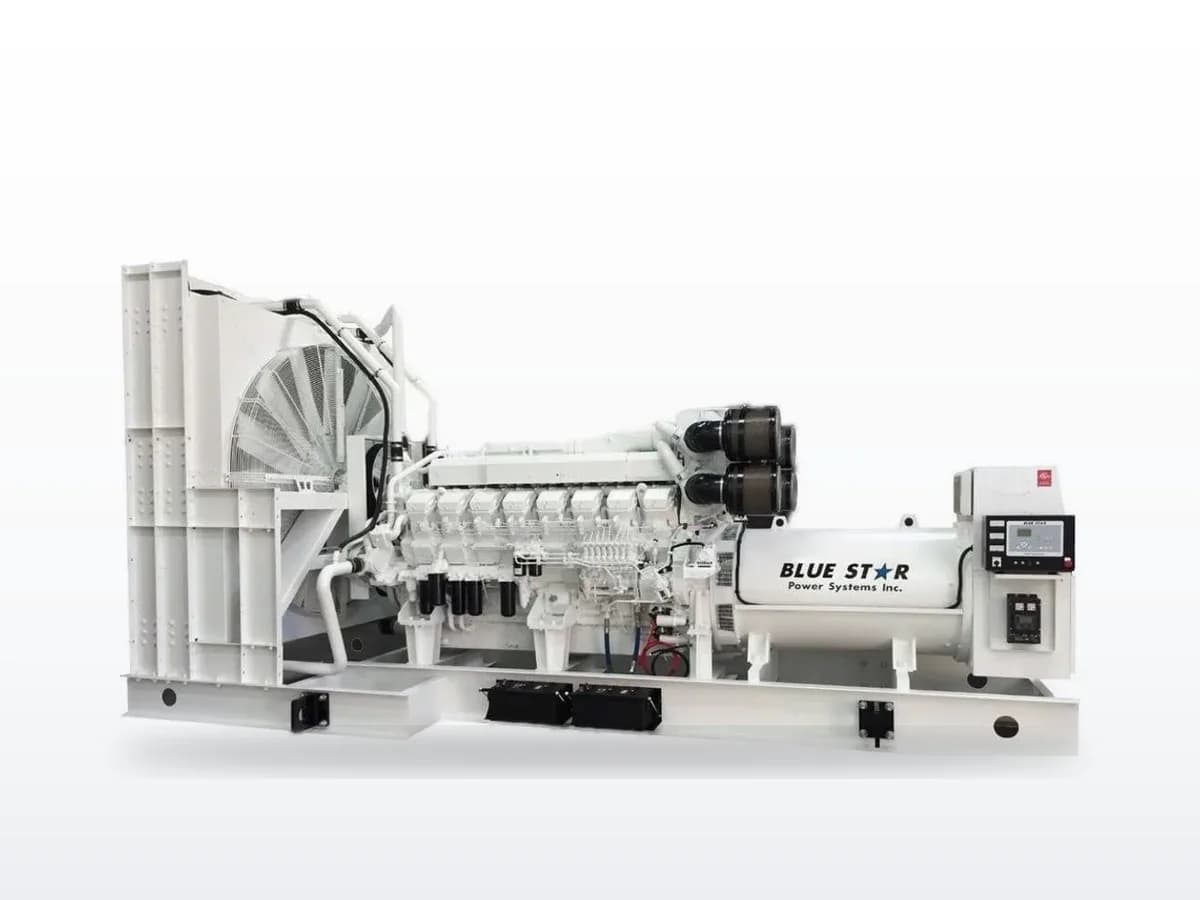
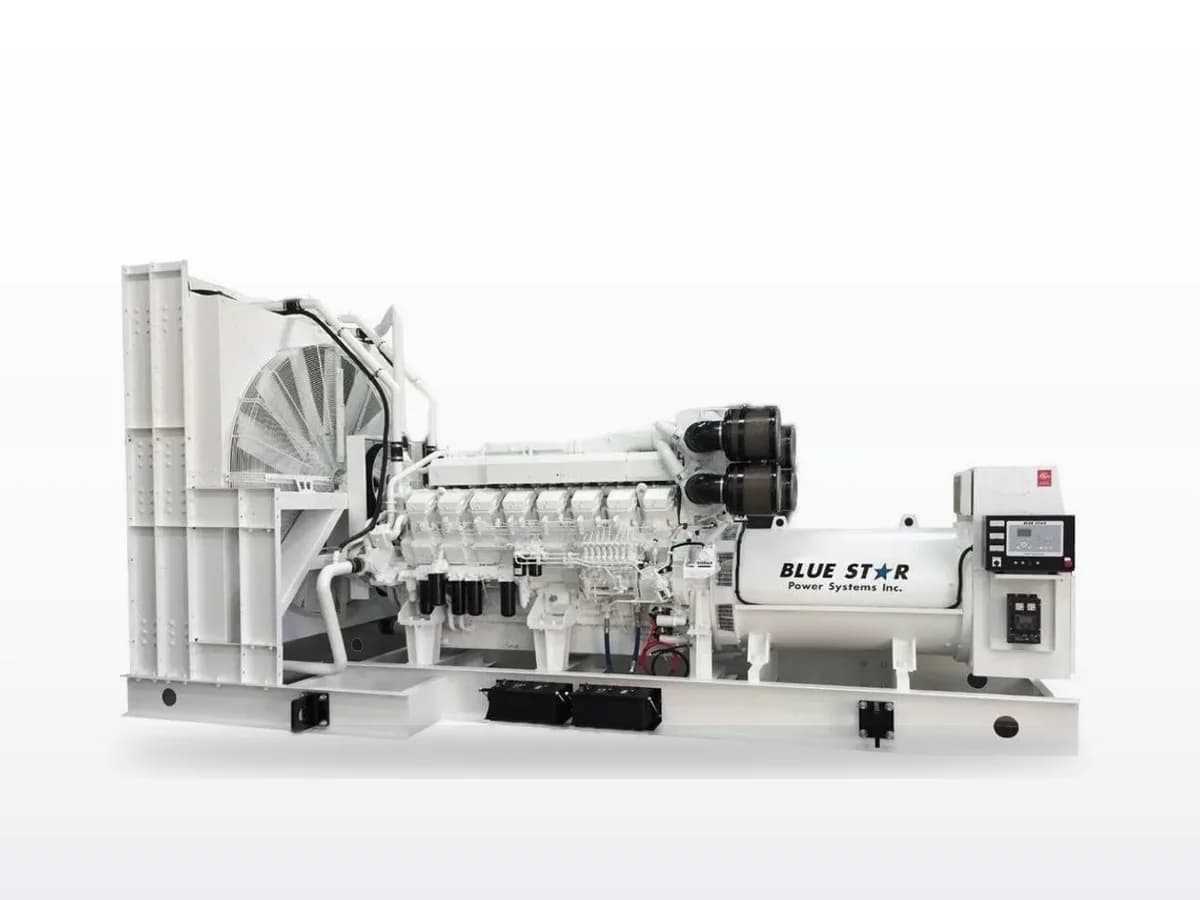
Blue Star MD1000-01
Open Basler controller + Mitsubishi V12 engine + Stamford alternator — no proprietary lock-in. Serviceable by any qualified tech, not just the dealer.
1 MW standby · Diesel · Liquid-cooled
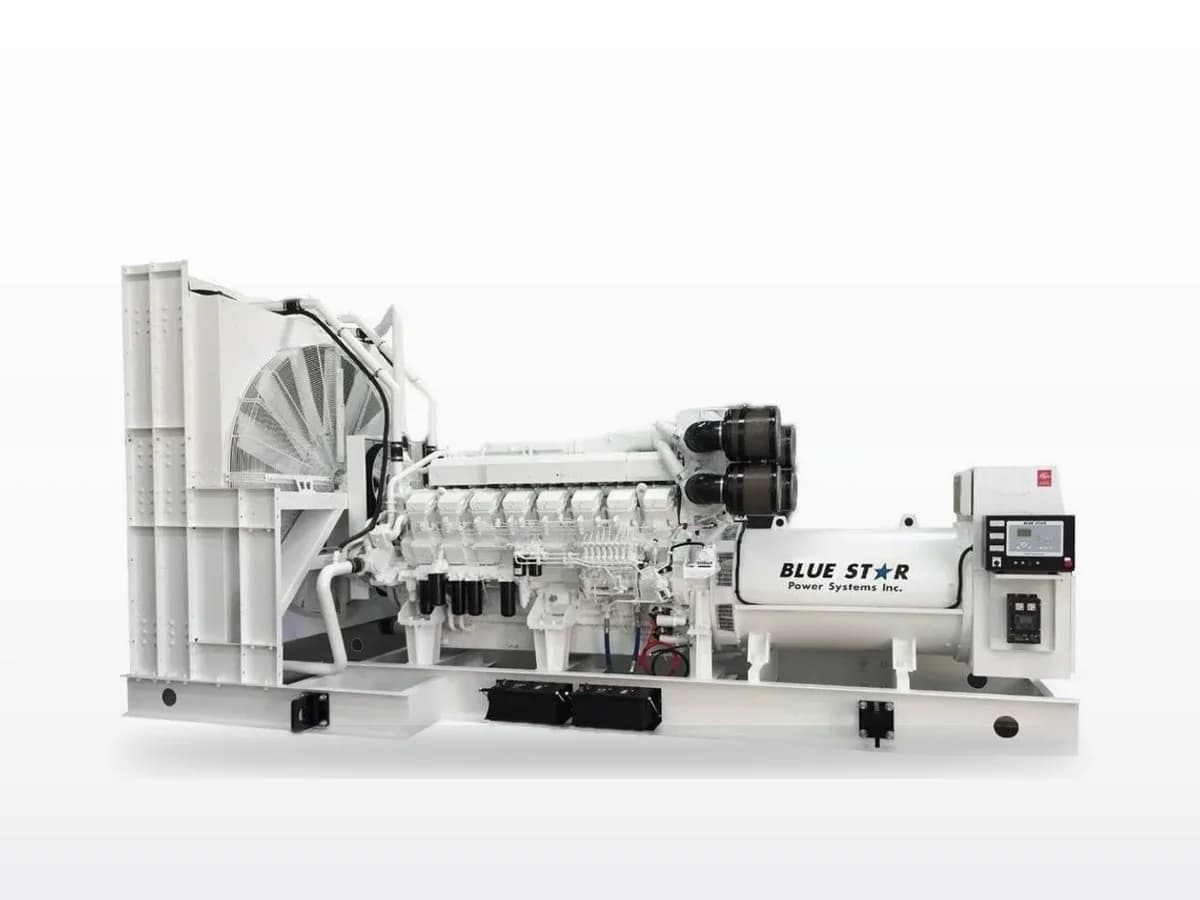
1000 kW diesel standby for industrial, data center, and campus power where value engineering and non-proprietary component independence matter.
1000 kW Tier 2 diesel standby generator built by Blue Star Power Systems. Mitsubishi S12H-Y2PTAW-1 37.1L V12 engine, Stamford S6L1D alternator, DSE DCP7310 controller. Three-phase, 208–4160V.
Tier 23-phaseindustrialmunicipal
Blue Star Power Systems
Blue Star MD1250-01
Open Basler controller + Mitsubishi V12 engine + Stamford alternator — no proprietary lock-in. Serviceable by any qualified tech, not just the dealer.
1.3 MW standby · Diesel · Liquid-cooled
1250 kW diesel standby for industrial, data center, and utility-scale applications where value engineering and open-architecture components matter.
1250 kW Tier 2 diesel standby generator built by Blue Star Power Systems. Mitsubishi S12R-Y2PTAW-1 49.0L V12 engine, Stamford S6L1D alternator, DSE DCP7310 controller. Three-phase, 208–4160V.
Tier 23-phaseindustrialmunicipal
Blue Star Power Systems
Blue Star MD1600-01
Open Basler controller + Mitsubishi V16 engine + Stamford alternator — no proprietary lock-in. Serviceable by any qualified tech, not just the dealer.
1.6 MW standby · Diesel · Liquid-cooled
1600 kW diesel standby for industrial, data center, and utility-scale applications where value engineering and non-proprietary components matter.
1600 kW Tier 2 diesel standby generator built by Blue Star Power Systems. Mitsubishi S16R-Y2PTAW-1 65.4L V16 engine, Stamford S7L1D alternator, DSE DCP7310 controller. Three-phase, 208–4160V.
Tier 23-phaseindustrialmunicipal
Blue Star Power Systems
Blue Star MD2000-01
Open Basler controller + Mitsubishi V16 engine + Stamford alternator — no proprietary lock-in. 2 MW class without OEM dealer dependency.
2 MW standby · Diesel · Liquid-cooled
2000 kW diesel standby for data centers, hospitals, and utility-scale applications where component independence and value engineering matter.
2000 kW Tier 2 diesel standby generator built by Blue Star Power Systems. Mitsubishi S16R-Y2PTAW2-1 65.4L V16 engine, Stamford S7L1D alternator, DSE DCP7310 controller. Three-phase, 208–4160V.
Tier 23-phaseindustrialmunicipal
Blue Star Power Systems
Blue Star MD800-01
Open Basler controller + Mitsubishi V12 engine + Stamford alternator — no proprietary lock-in. Serviceable by any qualified tech, not just the dealer.
800 kW standby · Diesel · Liquid-cooled
800 kW diesel standby for industrial plants, campus power, and data centers where value engineering and non-proprietary component access matter.
800 kW Tier 2 diesel standby generator built by Blue Star Power Systems. Mitsubishi S12A2-Y2PTAW-2 33.9L V12 engine, Stamford S6L1D alternator, DSE DCP7310 controller. Three-phase, 208–4160V.
Tier 23-phaseindustrialmunicipal
Blue Star Power Systems
Blue Star NG1050-01
Open Basler controller + PSI V16 engine + Stamford alternator — no proprietary lock-in. 1 MW gas class without OEM dealer dependency.
1.1 MW standby · Natural Gas / LPG · Liquid-cooled
1050 kW natural gas standby for data centers, campus power, and utility-scale gas applications where component independence matters.
1050 kW natural gas / LP standby generator from Blue Star Power Systems. PSI 53L V16 turbocharged-aftercooled, DSE DCP7310 controller, three-phase 480-4160V.
Open Basler controller + PSI V16 engine + Stamford alternator — prime-rated, no proprietary lock-in. Serviceable by any qualified tech.
1.1 MW standby · Natural Gas / LPG · Liquid-cooled
900 kW prime natural gas for continuous-duty data center, CHP, and utility-scale applications needing 24/7 gas-fueled power.
900 kW prime-rated natural gas / LP generator from Blue Star Power Systems. PSI 53L V16 turbocharged-aftercooled, DSE DCP7310 controller, three-phase 480-4160V.
Open Basler controller + PSI high-output V16 engine + Stamford alternator — no proprietary lock-in. 1.25 MW gas class without OEM dealer dependency.
1.3 MW standby · Natural Gas · Liquid-cooled
1250 kW natural-gas-only standby for data centers and utility-scale facilities where gas-fueled backup and component independence matter.
1250 kW natural-gas-only standby generator from Blue Star Power Systems. PSI 53LHO high-output V16 turbocharged-aftercooled, DSE DCP7310 controller, three-phase 480-4160V. LP not available.
Open Basler controller + PSI engine + Stamford alternator — prime-rated, no proprietary lock-in. Serviceable by any qualified tech.
150 kW standby · Natural Gas / LPG · Liquid-cooled
125 kW prime natural gas for continuous-duty commercial and institutional applications needing 24/7 gas-fueled power with component independence.
125 kW prime-rated natural gas / LP generator from Blue Star Power Systems. PSI 8.1LT inline-six, DSE DCP7310 controller, 208-600V, continuous prime duty.
Open Basler controller + PSI engine + Stamford alternator — prime-rated, no proprietary lock-in. Serviceable by any qualified tech.
200 kW standby · Natural Gas / LPG · Liquid-cooled
175 kW prime natural gas for continuous-duty commercial and institutional applications needing 24/7 gas-fueled power with component independence.
175 kW prime-rated natural gas / LP generator from Blue Star Power Systems. PSI 11.1L inline-six, DSE DCP7310 controller, 208-600V, continuous prime duty.
Open Basler controller + PSI engine + Stamford alternator — no proprietary lock-in. Non-proprietary components serviceable by any qualified tech.
265 kW standby · Natural Gas / LPG · Liquid-cooled
265 kW natural gas standby for large commercial, campus, and hospital (non-critical) facilities where gas-fueled backup matters.
265 kW natural gas / LP standby generator from Blue Star Power Systems. PSI 14.6L turbocharged V8, DSE DCP7310 controller, structural steel base, 208-600V.
Open Basler controller + PSI engine + Stamford alternator — prime-rated, no proprietary lock-in. Serviceable by any qualified tech.
265 kW standby · Natural Gas / LPG · Liquid-cooled
250 kW prime natural gas for continuous-duty commercial, CHP, and campus applications needing 24/7 gas-fueled power.
250 kW prime-rated natural gas / LP generator from Blue Star Power Systems. PSI 14.6L V8, DSE DCP7310 controller, structural steel base, continuous prime duty.
Open Basler controller + PSI engine + Stamford alternator — no proprietary lock-in. Non-proprietary components serviceable by any qualified tech.
300 kW standby · Natural Gas / LPG · Liquid-cooled
300 kW natural gas standby for large commercial, campus, and institutional facilities where gas-fueled backup and component independence matter.
300 kW natural gas / LP standby generator from Blue Star Power Systems. PSI 14.6L turbocharged V8, DSE DCP7310 controller, structural steel base, three-phase 208-600V.
Open Basler controller + PSI engine + Stamford alternator — prime-rated, no proprietary lock-in. Serviceable by any qualified tech.
300 kW standby · Natural Gas / LPG · Liquid-cooled
260 kW prime natural gas for continuous-duty commercial, CHP, and campus applications needing 24/7 gas-fueled power.
260 kW prime-rated natural gas / LP generator from Blue Star Power Systems. PSI 14.6L V8, DSE DCP7310 controller, structural steel base, three-phase 208-600V.
Open Basler controller + PSI high-output engine + Stamford alternator — no proprietary lock-in. Serviceable by any qualified tech.
350 kW standby · Natural Gas · Liquid-cooled
350 kW natural gas standby for large commercial, campus, and data center facilities where gas-fueled backup and component independence matter.
350 kW natural gas standby generator from Blue Star Power Systems. PSI 14.6LHO high-output V8, DSE DCP7310 controller, structural steel base, three-phase 208-600V. Natural gas only — no LP rating.
Open Basler controller + PSI V12 engine + Stamford alternator — no proprietary lock-in. Non-proprietary components serviceable by any qualified tech.
400 kW standby · Natural Gas / LPG · Liquid-cooled
400 kW natural gas standby for large commercial, campus, and data center facilities where gas-fueled backup and component independence matter.
400 kW natural gas / LP standby generator from Blue Star Power Systems. PSI 21.9L turbocharged V12, DSE DCP7310 controller, structural steel base, three-phase 208-600V.
Open Basler controller + PSI V12 engine + Stamford alternator — prime-rated, no proprietary lock-in. Serviceable by any qualified tech.
400 kW standby · Natural Gas / LPG · Liquid-cooled
375 kW prime natural gas for continuous-duty commercial, CHP, and campus applications needing 24/7 gas-fueled power.
375 kW prime-rated natural gas / LP generator from Blue Star Power Systems. PSI 21.9L V12, DSE DCP7310 controller, structural steel base, three-phase 208-600V.
Open Basler controller + PSI V12 engine + Stamford alternator — no proprietary lock-in. Non-proprietary components serviceable by any qualified tech.
425 kW standby · Natural Gas / LPG · Liquid-cooled
425 kW natural gas standby for large commercial, campus, and data center facilities where gas-fueled backup and component independence matter.
425 kW natural gas / LP standby generator from Blue Star Power Systems. PSI 21.9L V12 turbocharged-aftercooled, DSE DCP7310 controller, three-phase 208-600V.
Open Basler controller + PSI V12 engine + Stamford alternator — no proprietary lock-in. Non-proprietary components serviceable by any qualified tech.
450 kW standby · Natural Gas / LPG · Liquid-cooled
450 kW natural gas standby for large commercial, campus, and data center facilities where gas-fueled backup and component independence matter.
450 kW natural gas / LP standby generator from Blue Star Power Systems. PSI 21.9L V12 turbocharged-aftercooled, DSE DCP7310 controller, three-phase 208-600V.
Open Basler controller + PSI V12 engine + Stamford alternator — no proprietary lock-in. Non-proprietary components serviceable by any qualified tech.
500 kW standby · Natural Gas / LPG · Liquid-cooled
500 kW natural gas standby for large commercial, campus, and data center facilities where gas-fueled backup and component independence matter.
500 kW natural gas / LP standby generator from Blue Star Power Systems. PSI 32L V12 turbocharged-aftercooled, DSE DCP7310 controller, three-phase 208-600V.
Open Basler controller + PSI V12 engine + Stamford alternator — prime-rated, no proprietary lock-in. Serviceable by any qualified tech.
500 kW standby · Natural Gas / LPG · Liquid-cooled
450 kW prime natural gas for continuous-duty data center, CHP, and campus applications needing 24/7 gas-fueled power.
450 kW prime-rated natural gas / LP generator from Blue Star Power Systems. PSI 32L V12 turbocharged-aftercooled, DSE DCP7310 controller, three-phase 208-600V.
Open Basler controller + PSI high-output V12 engine + Stamford alternator — no proprietary lock-in. Serviceable by any qualified tech.
500 kW standby · Natural Gas · Liquid-cooled
500 kW natural-gas-only standby for data center, campus, and industrial facilities where gas-fueled backup and component independence matter.
500 kW natural-gas-only standby generator from Blue Star Power Systems. PSI 21.9LHO high-output V12 turbocharged-aftercooled, DSE DCP7310 controller, three-phase 208-600V. LP not available.
Open Basler controller + PSI V12 engine + Stamford alternator — no proprietary lock-in. Non-proprietary components serviceable by any qualified tech.
600 kW standby · Natural Gas / LPG · Liquid-cooled
600 kW natural gas standby for data center, campus, and industrial facilities where gas-fueled backup and component independence matter.
600 kW natural gas / LP standby generator from Blue Star Power Systems. PSI 32L V12 turbocharged-aftercooled, DSE DCP7310 controller, three-phase 208-600V.
Open Basler controller + PSI V12 engine + Stamford alternator — prime-rated, no proprietary lock-in. Serviceable by any qualified tech.
600 kW standby · Natural Gas / LPG · Liquid-cooled
540 kW prime natural gas for continuous-duty data center, CHP, and campus applications needing 24/7 gas-fueled power.
540 kW prime-rated natural gas / LP generator from Blue Star Power Systems. PSI 32L V12 turbocharged-aftercooled, DSE DCP7310 controller, three-phase 208-600V.
Open Basler controller + PSI V12 engine + Stamford alternator — no proprietary lock-in. Non-proprietary components serviceable by any qualified tech.
650 kW standby · Natural Gas / LPG · Liquid-cooled
650 kW natural gas standby for data center, campus, and industrial facilities where gas-fueled backup and component independence matter.
650 kW natural gas / LP standby generator from Blue Star Power Systems. PSI 32L V12 turbocharged-aftercooled, DSE DCP7310 controller, three-phase 208-600V.
Open Basler controller + PSI V12 engine + Stamford alternator — prime-rated, no proprietary lock-in. Serviceable by any qualified tech.
650 kW standby · Natural Gas / LPG · Liquid-cooled
550 kW prime natural gas for continuous-duty data center, CHP, and campus applications needing 24/7 gas-fueled power.
550 kW prime-rated natural gas / LP generator from Blue Star Power Systems. PSI 32L V12 turbocharged-aftercooled, DSE DCP7310 controller, three-phase 208-600V.
Open Basler controller + PSI V12 engine + Stamford alternator — no proprietary lock-in. 800 kW gas class without OEM dealer dependency.
800 kW standby · Natural Gas / LPG · Liquid-cooled
800 kW natural gas standby for data center, campus, and industrial facilities where gas-fueled backup and component independence matter.
800 kW natural gas / LP standby generator from Blue Star Power Systems. PSI 40L V12 turbocharged-aftercooled, DSE DCP7310 controller, three-phase 208-4160V.
Open Basler controller + PSI V12 engine + Stamford alternator — prime-rated, no proprietary lock-in. Serviceable by any qualified tech.
800 kW standby · Natural Gas / LPG · Liquid-cooled
660 kW prime natural gas for continuous-duty data center, CHP, and campus applications needing 24/7 gas-fueled power at scale.
660 kW prime-rated natural gas / LP generator from Blue Star Power Systems. PSI 40L V12 turbocharged-aftercooled, DSE DCP7310 controller, three-phase 208-4160V.
Open Basler controller + Perkins engine + Stamford alternator — no proprietary lock-in. Serviceable by any qualified tech, not just the dealer.
100 kW standby · Diesel · Liquid-cooled
100 kW diesel standby for commercial, institutional, and municipal facilities where Perkins parts access and non-proprietary components matter.
100 kW Tier 3 diesel standby generator built by Blue Star Power Systems. Perkins 1104D-E44TAG2 turbocharged intercooled engine, Stamford UCI274C alternator, DSE DCP7310 controller.
Tier 33-phaselight-commercialcommercial
Blue Star Power Systems
Blue Star PD125-01
Open Basler controller + Perkins engine + Stamford alternator — no proprietary lock-in. Serviceable by any qualified tech, not just the dealer.
125 kW standby · Diesel · Liquid-cooled
125 kW diesel standby for commercial, institutional, and municipal facilities where Perkins parts access and component independence matter.
125 kW Tier 3 diesel standby generator built by Blue Star Power Systems. Perkins 1106D-E70TAG2 six-cylinder engine with charge air cooling, Stamford UCI274E alternator, DSE DCP7310 controller.
Tier 33-phaselight-commercialcommercial
Blue Star Power Systems
Blue Star PD150-01
Open Basler controller + Perkins engine + Stamford alternator — no proprietary lock-in. Serviceable by any qualified tech, not just the dealer.
150 kW standby · Diesel · Liquid-cooled
150 kW diesel standby for commercial, institutional, and municipal facilities where value engineering and Perkins global parts access matter.
150 kW Tier 3 diesel standby generator built by Blue Star Power Systems. Perkins 1106D-E70TAG2 six-cylinder engine with charge air cooling, Stamford UCI274F alternator, DSE DCP7310 controller.
Tier 33-phaselight-commercialcommercial
Blue Star Power Systems
Blue Star PD180-01
Open Basler controller + Perkins engine + Stamford alternator — no proprietary lock-in. Serviceable by any qualified tech, not just the dealer.
180 kW standby · Diesel · Liquid-cooled
180 kW diesel standby for commercial, institutional, and municipal facilities where value engineering and Perkins global parts access matter.
180 kW Tier 3 diesel standby generator built by Blue Star Power Systems. Perkins 1106D-E70TAG4 six-cylinder engine with charge air cooling, Stamford UCI274G alternator, DSE DCP7310 controller.
Tier 33-phaselight-commercialcommercial
Blue Star Power Systems
Blue Star PD20-01IT4
Open Basler controller + Perkins engine + Stamford alternator — no proprietary lock-in. Serviceable by any qualified tech, not just the dealer.
17 kW standby · Diesel · Liquid-cooled
17 kW diesel standby for small retail, telecom shelters, and light commercial sites needing compact backup with off-the-shelf components.
17 kW Tier 4 Interim diesel standby generator built by Blue Star Power Systems. Perkins 404D-22G naturally aspirated engine, Stamford S1L2-J41 alternator, DSE DCP7310 controller.
Tier 4 Interim3-phaselight-commercialsmall-office
Blue Star Power Systems
Blue Star PD200-01
Open Basler controller + Perkins engine + Stamford alternator — no proprietary lock-in. Serviceable by any qualified tech, not just the dealer.
200 kW standby · Diesel · Liquid-cooled
200 kW diesel standby for value-engineering projects, municipal facilities, and service-savvy buyers who prioritize component independence.
200 kW Tier 3 diesel standby generator built by Blue Star Power Systems. Perkins 1106D-E70TAG5 six-cylinder engine with charge air cooling, Stamford UCI274H alternator, DSE DCP7310 controller.
Tier 33-phaselight-commercialcommercial
Blue Star Power Systems
Blue Star PD250-01
Open Basler controller + Perkins engine + Stamford alternator — no proprietary lock-in. Serviceable by any qualified tech, not just the dealer.
250 kW standby · Diesel · Liquid-cooled
250 kW diesel standby for large commercial, campus, and industrial facilities where value engineering and non-proprietary component access matter.
250 kW Tier 3 diesel standby generator built by Blue Star Power Systems. Perkins 1706D-E93TAG1 six-cylinder engine with charge air cooling, Stamford S4L1D-C41 alternator, DSE DCP7310 controller.
Tier 33-phaselight-commercialcommercial
Blue Star Power Systems
Blue Star PD30-01IT4
Open Basler controller + Perkins engine + Stamford alternator — no proprietary lock-in. Serviceable by any qualified tech, not just the dealer.
25 kW standby · Diesel · Liquid-cooled
25 kW diesel standby for small commercial, retail, and light-duty sites needing compact backup with globally sourced Perkins components.
25 kW Tier 4 Interim diesel standby generator built by Blue Star Power Systems. Perkins 404D-22TAG turbocharged intercooled engine, Stamford S1L2-J41 alternator, DSE DCP7310 controller.
Tier 4 Interim3-phaselight-commercialsmall-office
Blue Star Power Systems
Blue Star PD300-01
Open Basler controller + Perkins engine + Stamford alternator — no proprietary lock-in. Serviceable by any qualified tech, not just the dealer.
300 kW standby · Diesel · Liquid-cooled
300 kW diesel standby for large commercial, campus, and industrial facilities where value engineering and non-proprietary component access matter.
300 kW Tier 3 diesel standby generator built by Blue Star Power Systems. Perkins 1706D-E93TAG2 six-cylinder engine with charge air cooling, Stamford S4L1D-D41 alternator, DSE DCP7310 controller.
Tier 33-phasecommerciallight-industrial
Blue Star Power Systems
Blue Star PD350-01
Open Basler controller + Perkins engine + Stamford alternator — no proprietary lock-in. Serviceable by any qualified tech, not just the dealer.
350 kW standby · Diesel · Liquid-cooled
350 kW diesel standby for large commercial, industrial, and campus facilities where Perkins parts access and component independence matter.
350 kW Tier 3 diesel standby generator built by Blue Star Power Systems. Perkins 2206D-E13TAG2 six-cylinder engine with charge air cooling, Stamford S4L1D-E41 alternator, DSE DCP7310 controller.
Tier 33-phasecommerciallight-industrial
Blue Star Power Systems
Blue Star PD400-01
Open Basler controller + Perkins engine + Stamford alternator — no proprietary lock-in. Serviceable by any qualified tech, not just the dealer.
400 kW standby · Diesel · Liquid-cooled
400 kW diesel standby for industrial, campus, and data center facilities where value engineering and non-proprietary component access matter.
400 kW Tier 3 diesel standby generator built by Blue Star Power Systems. Perkins 2206D-E13TAG3 six-cylinder engine with charge air cooling, Stamford S4L1D-F41 alternator, DSE DCP7310 controller.
Tier 33-phasecommerciallight-industrial
Blue Star Power Systems
Blue Star PD450-01
Open Basler controller + Perkins engine + Stamford alternator — no proprietary lock-in. Serviceable by any qualified tech, not just the dealer.
450 kW standby · Diesel · Liquid-cooled
450 kW diesel standby for industrial, campus, and data center facilities where value engineering and open-architecture components matter.
450 kW Tier 3 diesel standby generator built by Blue Star Power Systems. Perkins 2506D-E15TAG1 six-cylinder engine with charge air cooling, Stamford HCI534C alternator, DSE DCP7310 controller.
Tier 33-phasecommercialindustrial
Blue Star Power Systems
Blue Star PD50-01
Open Basler controller + Perkins engine + Stamford alternator — no proprietary lock-in. Serviceable by any qualified tech, not just the dealer.
50 kW standby · Diesel · Liquid-cooled
50 kW diesel standby for small commercial, worship, and light-industrial sites prioritizing Perkins global parts availability and value engineering.
50 kW Tier 3 diesel standby generator built by Blue Star Power Systems. Perkins 1104D-44TG1 turbocharged engine, Stamford UCI224D alternator, DSE DCP7310 controller.
Tier 33-phaselight-commercialcommercial
Blue Star Power Systems
Blue Star PD500-01
Open Basler controller + Perkins engine + Stamford alternator — no proprietary lock-in. Serviceable by any qualified tech, not just the dealer.
500 kW standby · Diesel · Liquid-cooled
500 kW diesel standby for industrial, data center, and campus facilities where value engineering and non-proprietary component access matter.
500 kW Tier 2 diesel standby generator built by Blue Star Power Systems. Perkins 2506C-E15TAG3 six-cylinder engine with charge air cooling, Stamford HCI534D alternator, DSE DCP7310 controller.
Tier 23-phasecommercialindustrial
Blue Star Power Systems
Blue Star PD550-01
Open Basler controller + Perkins engine + Stamford alternator — no proprietary lock-in. Serviceable by any qualified tech, not just the dealer.
550 kW standby · Diesel · Liquid-cooled
550 kW diesel standby for industrial, data center, and campus facilities where value engineering and open-architecture components matter.
550 kW Tier 2 diesel standby generator built by Blue Star Power Systems. Perkins 2506C-E15TAG4 six-cylinder engine with charge air cooling, Stamford HCI534E alternator, DSE DCP7310 controller.
Tier 23-phasecommercialindustrial
Blue Star Power Systems
Blue Star PD60-01
Open Basler controller + Perkins engine + Stamford alternator — no proprietary lock-in. Serviceable by any qualified tech, not just the dealer.
60 kW standby · Diesel · Liquid-cooled
60 kW diesel standby for light commercial, retail, and multi-family sites where Perkins global parts network and component independence matter.
60 kW Tier 3 diesel standby generator built by Blue Star Power Systems. Perkins 1104D-E44TG1 electronically injected turbocharged engine, Stamford UCI224E alternator, DSE DCP7310 controller.
Tier 33-phaselight-commercialcommercial
Blue Star Power Systems
Blue Star PD600-01
Open Basler controller + Perkins engine + Stamford alternator — no proprietary lock-in. Serviceable by any qualified tech, not just the dealer.
600 kW standby · Diesel · Liquid-cooled
600 kW diesel standby for industrial, data center, and campus power where value engineering and non-proprietary component access matter.
600 kW Tier 2 diesel standby generator built by Blue Star Power Systems. Perkins 2806C-E18TAG3 six-cylinder engine with charge air cooling, Stamford HCI534E alternator, DSE DCP7310 controller.
Tier 23-phasecommercialindustrial
Blue Star Power Systems
Blue Star PD750-01
Open Basler controller + Perkins engine + Stamford alternator — no proprietary lock-in. Serviceable by any qualified tech, not just the dealer.
750 kW standby · Diesel · Liquid-cooled
750 kW diesel standby for industrial, data center, and mission-critical facilities where value engineering and non-proprietary components matter.
750 kW Tier 2 diesel standby generator built by Blue Star Power Systems. Perkins 2806C-E18TTAG7 twin-turbocharged six-cylinder engine, Stamford S6L1D-C alternator, DSE DCP7310 controller.
Tier 23-phasecommercialindustrial
Blue Star Power Systems
Blue Star PD80-01
Open Basler controller + Perkins engine + Stamford alternator — no proprietary lock-in. Serviceable by any qualified tech, not just the dealer.
80 kW standby · Diesel · Liquid-cooled
80 kW diesel standby for commercial, multi-family, and municipal sites where Perkins global parts availability and value engineering matter.
80 kW Tier 3 diesel standby generator built by Blue Star Power Systems. Perkins 1104D-E44TAG2 turbocharged intercooled engine, Stamford UCI224G alternator, DSE DCP7310 controller.
Tier 33-phaselight-commercialcommercial
Blue Star Power Systems
Blue Star PS130-01
Open Basler controller + PSI engine + Stamford alternator — no proprietary lock-in. Non-proprietary components serviceable by any qualified tech.
130 kW standby · Natural Gas / LPG · Liquid-cooled
130 kW natural gas standby for commercial, school, and multi-family buildings where gas-fueled backup and component independence matter.
130 kW natural gas / LP standby generator from Blue Star Power Systems. PSI 8.8LTCAC turbocharged V8, DSE DCP7310 controller, 208-600V output.
Open Basler controller + PSI engine + Stamford alternator — no proprietary lock-in. Non-proprietary components serviceable by any qualified tech.
150 kW standby · Natural Gas / LPG · Liquid-cooled
150 kW natural gas standby for commercial, school, and institutional buildings where gas-fueled backup and component independence matter.
150 kW natural gas / LP standby generator from Blue Star Power Systems. PSI 8.8LTCAC turbocharged-aftercooled V8, DSE DCP7310 controller, single- and three-phase 120-600V.
Open Basler controller + PSI engine + Stamford alternator — prime-rated, no proprietary lock-in. Serviceable by any qualified tech.
40 kW standby · Natural Gas / LPG · Liquid-cooled
35 kW prime natural gas for continuous-duty commercial applications and facilities needing 24/7 gas-fueled power with component independence.
35 kW prime / 40 kW standby natural gas / LP generator from Blue Star Power Systems. PSI 4.3L six-cylinder V6 engine with catalyst/silencer, Stamford UCI224C alternator, DSE DCP7310 controller, 208-600V output.
Open Basler controller + Volvo Penta engine + Stamford alternator — Tier 4 Final compliant, no proprietary lock-in. Serviceable by any qualified tech.
100 kW standby · Diesel · Liquid-cooled
100 kW Tier 4 Final diesel standby for commercial and institutional facilities requiring current emissions compliance and component independence.
100 kW Tier 4 Final diesel standby/prime generator from Blue Star Power Systems. Volvo Penta TAD581VE 5.13L inline-four with SCR/DPF/DOC, DSE DCP7310 controller, 208-600V.
Tier 4 Final3-phasecommercialsmall-commercial
Blue Star Power Systems
Blue Star VD100-04FT4MP
Open Basler controller + Volvo Penta engine + Stamford alternator — trailer-mounted, no proprietary lock-in. Serviceable by any qualified tech.
100 kW standby · Diesel · Liquid-cooled
100 kW Tier 4 Final mobile diesel for construction, emergency response, and temporary power where portability and clean emissions matter.
100 kW Tier 4 Final / EU Stage 5 mobile trailer diesel generator built by Blue Star Power Systems. Volvo Penta TAD581VE four-cylinder engine, Stamford UCI274D alternator, DSE DCP7310 controller, 250-gallon integrated fuel tank.
Tier 4 Final3-phaseconstructiontemporary-power
Blue Star Power Systems
Blue Star VD125-02FT4
Open Basler DGC-2020 controller + Volvo Penta engine + Stamford alternator — Tier 4 Final, no proprietary lock-in. Serviceable by any qualified tech.
125 kW standby · Diesel · Liquid-cooled
125 kW Tier 4 Final diesel standby for commercial and institutional facilities requiring current emissions compliance and component independence.
125 kW Tier 4 Final diesel standby generator from Blue Star Power Systems. Volvo Penta TAD572VE engine with charge-air cooling, paired with Basler DGC-2020 controller.
Tier 4 Final3-phasecommerciallight-industrial
Blue Star Power Systems
Blue Star VD125-04FT4
Open Basler controller + Volvo Penta engine + Stamford alternator — Tier 4 Final compliant, no proprietary lock-in. Serviceable by any qualified tech.
125 kW standby · Diesel · Liquid-cooled
125 kW Tier 4 Final diesel standby for commercial and institutional facilities requiring current emissions compliance and component independence.
125 kW Tier 4 Final diesel standby/prime generator from Blue Star Power Systems. Volvo Penta TAD582VE 5.13L inline-four with SCR/DPF/DOC, DSE DCP7310 controller, 208-600V.
Tier 4 Final3-phasecommercialsmall-commercial
Blue Star Power Systems
Blue Star VD125-04FT4MP
Open Basler controller + Volvo Penta engine + Stamford alternator — trailer-mounted, no proprietary lock-in. Serviceable by any qualified tech.
125 kW standby · Diesel · Liquid-cooled
125 kW Tier 4 Final mobile diesel for construction, emergency response, and temporary power where portability and clean emissions matter.
125 kW Tier 4 Final / EU Stage 5 mobile trailer diesel generator built by Blue Star Power Systems. Volvo Penta TAD582VE four-cylinder engine, Stamford UCI274E alternator, DSE DCP7310 controller, 250-gallon integrated fuel tank.
Tier 4 Final3-phaseconstructiontemporary-power
Blue Star Power Systems
Blue Star VD150-04FT4
Open Basler controller + Volvo Penta engine + Stamford alternator — Tier 4 Final compliant, no proprietary lock-in. Serviceable by any qualified tech.
150 kW standby · Diesel · Liquid-cooled
150 kW Tier 4 Final diesel standby for commercial, institutional, and municipal facilities requiring current emissions and component independence.
150 kW Tier 4 Final diesel standby/prime generator from Blue Star Power Systems. Volvo Penta TAD881VE 7.7L inline-six with SCR/DPF/DOC, DSE DCP7310 controller, 208-600V.
Tier 4 Final3-phasecommerciallarge-commercial
Blue Star Power Systems
Blue Star VD150-04FT4MP
Open Basler controller + Volvo Penta engine + Stamford alternator — trailer-mounted, no proprietary lock-in. Serviceable by any qualified tech.
150 kW standby · Diesel · Liquid-cooled
150 kW Tier 4 Final mobile diesel for construction, planned outage support, and temporary power requiring portability and clean emissions.
150 kW Tier 4 Final / EU Stage 5 mobile trailer diesel generator built by Blue Star Power Systems. Volvo Penta TAD881VE six-cylinder engine, Stamford UCI274F alternator, DSE DCP7310 controller, 250-gallon integrated fuel tank.
Tier 4 Final3-phaseconstructiontemporary-power
Blue Star Power Systems
Blue Star VD200-04FT4
Open Basler controller + Volvo Penta engine + Stamford alternator — Tier 4 Final compliant, no proprietary lock-in. Serviceable by any qualified tech.
200 kW standby · Diesel · Liquid-cooled
200 kW Tier 4 Final diesel standby for commercial, institutional, and campus facilities requiring current emissions and component independence.
200 kW Tier 4 Final diesel standby/prime generator from Blue Star Power Systems. Volvo Penta TAD1180VE 10.8L inline-six with SCR/DPF/DOC, DSE DCP7310 controller, 208-600V.
Tier 4 Final3-phasecommerciallarge-commercial
Blue Star Power Systems
Blue Star VD200-04FT4MP
Open Basler controller + Volvo Penta engine + Stamford alternator — trailer-mounted, no proprietary lock-in. Serviceable by any qualified tech.
200 kW standby · Diesel · Liquid-cooled
200 kW Tier 4 Final mobile diesel for construction, planned outage support, and temporary power requiring portability and clean emissions.
200 kW Tier 4 Final / EU Stage 5 mobile trailer diesel generator built by Blue Star Power Systems. Volvo Penta TAD1180VE six-cylinder engine, Stamford UCDI274J1 alternator, DSE DCP7310 controller, 350-gallon integrated fuel tank.
Tier 4 Final3-phaseconstructiontemporary-power
Blue Star Power Systems
Blue Star VD230-01
Open Basler controller + Volvo Penta engine + Stamford alternator — no proprietary lock-in. Serviceable by any qualified tech, not just the dealer.
230 kW standby · Diesel · Liquid-cooled
230 kW diesel standby for commercial, institutional, and campus facilities where value engineering and non-proprietary component access matter.
230 kW Tier 3 diesel standby generator from Blue Star Power Systems. Volvo Penta TAD851GE 7.7L inline-six with DSE DCP7310 controller, 208-600V output.
Tier 33-phasecommerciallarge-commercial
Blue Star Power Systems
Blue Star VD250-03
Open Basler controller + Volvo Penta engine + Stamford alternator — no proprietary lock-in. Serviceable by any qualified tech, not just the dealer.
250 kW standby · Diesel · Liquid-cooled
250 kW diesel standby for large commercial, campus, and institutional facilities where value engineering and non-proprietary component access matter.
250 kW Tier 3 diesel standby generator from Blue Star Power Systems. Volvo Penta TAD852GE 7.7L inline-six, DSE DCP7310 controller, 208-600V output.
Tier 33-phasecommerciallarge-commercial
Blue Star Power Systems
Blue Star VD250-04FT4
Open Basler controller + Volvo Penta engine + Stamford alternator — Tier 4 Final compliant, no proprietary lock-in. Serviceable by any qualified tech.
250 kW standby · Diesel · Liquid-cooled
250 kW Tier 4 Final diesel standby for commercial, campus, and institutional facilities requiring current emissions and component independence.
250 kW Tier 4 Final diesel standby/prime generator from Blue Star Power Systems. Volvo Penta TAD1381VE 12.8L inline-six with SCR/DPF/DOC, DSE DCP7310 controller, 208-600V.
Tier 4 Final3-phasecommerciallarge-commercial
Blue Star Power Systems
Blue Star VD250-04FT4MP
Open Basler controller + Volvo Penta engine + Stamford alternator — trailer-mounted, no proprietary lock-in. Serviceable by any qualified tech.
250 kW standby · Diesel · Liquid-cooled
250 kW Tier 4 Final mobile diesel for construction, planned outage support, and large-scale temporary power with clean emissions.
250 kW Tier 4 Final / EU Stage 5 mobile trailer diesel generator built by Blue Star Power Systems. Volvo Penta TAD1381VE six-cylinder engine, Stamford S4L1D-D41 alternator, DSE DCP7310 controller, 350-gallon integrated fuel tank.
Tier 4 Final3-phaseconstructiontemporary-power
Blue Star Power Systems
Blue Star VD275-01
Open Basler controller + Volvo Penta engine + Stamford alternator — no proprietary lock-in. Serviceable by any qualified tech, not just the dealer.
275 kW standby · Diesel · Liquid-cooled
275 kW diesel standby for large commercial, campus, and institutional facilities where value engineering and non-proprietary component access matter.
275 kW Tier 3 diesel standby generator from Blue Star Power Systems. Volvo Penta TAD853GE 7.7L inline-six with DSE DCP7310 controller, 208-600V output.
Tier 33-phasecommerciallarge-commercial
Blue Star Power Systems
Blue Star VD300-01
Open Basler controller + Volvo Penta engine + Stamford alternator — no proprietary lock-in. Serviceable by any qualified tech, not just the dealer.
300 kW standby · Diesel · Liquid-cooled
300 kW diesel standby for large commercial, campus, and industrial facilities where value engineering and non-proprietary component access matter.
300 kW Tier 3 diesel standby generator from Blue Star Power Systems. Volvo Penta TAD1351GE 12.8L inline-six with DSE DCP7310 controller, 208-600V output.
Tier 33-phasecommerciallarge-commercial
Blue Star Power Systems
Blue Star VD300-02FT4
Open Basler DGC-2020 controller + Volvo Penta engine + Stamford alternator — Tier 4 Final, no proprietary lock-in. Serviceable by any qualified tech.
300 kW standby · Diesel · Liquid-cooled
300 kW Tier 4 Final diesel standby for large commercial and campus facilities requiring current emissions compliance and open-architecture components.
300 kW Tier 4 Final diesel standby generator. Volvo Penta TAD1373VE 12.8L inline-six, 208-600V output, with Basler DGC-2020 controller and SCR aftertreatment.
Open Basler controller + Volvo Penta engine + Stamford alternator — Tier 4 Final compliant, no proprietary lock-in. Serviceable by any qualified tech.
300 kW standby · Diesel · Liquid-cooled
300 kW Tier 4 Final diesel standby for large commercial, campus, and industrial facilities requiring current emissions and component independence.
300 kW Tier 4 Final diesel standby/prime generator from Blue Star Power Systems. Volvo Penta TAD1383VE 12.8L inline-six with SCR/DPF/DOC, DSE DCP7310 controller, 208-600V.
Open Basler controller + Volvo Penta engine + Stamford alternator — trailer-mounted, no proprietary lock-in. Serviceable by any qualified tech.
300 kW standby · Diesel · Liquid-cooled
300 kW Tier 4 Final mobile diesel for construction, planned outage support, and large-scale temporary power with clean emissions.
300 kW Tier 4 Final / EU Stage 5 mobile trailer diesel generator built by Blue Star Power Systems. Volvo Penta TAD1383VE six-cylinder engine, Stamford S4L1D-E41 alternator, DSE DCP7310 controller, 350-gallon integrated fuel tank.
Tier 4 Final3-phaseconstructiontemporary-power
Blue Star Power Systems
Blue Star VD350-01
Open Basler controller + Volvo Penta engine + Stamford alternator — no proprietary lock-in. Serviceable by any qualified tech, not just the dealer.
350 kW standby · Diesel · Liquid-cooled
350 kW diesel standby for large commercial, industrial, and campus facilities where value engineering and non-proprietary component access matter.
350 kW Tier 3 diesel standby generator from Blue Star Power Systems. Volvo Penta TAD1352GE 12.8L inline-six with DSE DCP7310 controller, 208-600V output.
Tier 33-phasecommerciallarge-commercial
Blue Star Power Systems
Blue Star VD400-01
Open Basler controller + Volvo Penta engine + Stamford alternator — no proprietary lock-in. Serviceable by any qualified tech, not just the dealer.
400 kW standby · Diesel · Liquid-cooled
400 kW diesel standby for industrial, campus, and data center facilities where value engineering and non-proprietary component access matter.
400 kW Tier 3 diesel standby generator from Blue Star Power Systems. Volvo Penta TAD1353GE 12.8L inline-six with DSE DCP7310 controller, 208-600V output.
Tier 33-phasecommerciallarge-commercial
Blue Star Power Systems
Blue Star VD450-01
Open Basler controller + Volvo Penta engine + Stamford alternator — no proprietary lock-in. Serviceable by any qualified tech, not just the dealer.
450 kW standby · Diesel · Liquid-cooled
450 kW diesel standby for industrial, campus, and data center facilities where value engineering and non-proprietary component access matter.
450 kW Tier 3 diesel standby generator from Blue Star Power Systems. Volvo Penta TAD1650GE 16.1L inline-six with DSE DCP7310 controller, 208-600V output.
Tier 33-phasecommerciallarge-commercial
Blue Star Power Systems
Blue Star VD500-01
Open Basler controller + Volvo Penta engine + Stamford alternator — no proprietary lock-in. Serviceable by any qualified tech, not just the dealer.
500 kW standby · Diesel · Liquid-cooled
500 kW diesel standby for industrial, data center, and campus facilities where value engineering and non-proprietary component access matter.
500 kW Tier 2 diesel standby generator from Blue Star Power Systems. Volvo Penta TAD1641GE-B 16.1L inline-six with DSE DCP7310 controller, 208-600V output.
Tier 23-phasecommerciallarge-commercial
Blue Star Power Systems
Blue Star VD550-01
Open Basler controller + Volvo Penta engine + Stamford alternator — no proprietary lock-in. Serviceable by any qualified tech, not just the dealer.
550 kW standby · Diesel · Liquid-cooled
550 kW diesel standby for industrial, data center, and campus facilities where value engineering and open-architecture components matter.
550 kW Tier 2 diesel standby generator from Blue Star Power Systems. Volvo Penta TAD1642GE-B 16.1L inline-six with DSE DCP7310 controller, 208-600V output.
Tier 23-phasecommerciallarge-commercial
Blue Star Power Systems
Blue Star VD550-04FT4
Open Basler controller + Volvo Penta engine + Stamford alternator — Tier 4 Final compliant, no proprietary lock-in. Serviceable by any qualified tech.
550 kW standby · Diesel · Liquid-cooled
550 kW Tier 4 Final diesel standby for industrial, data center, and campus facilities requiring current emissions and component independence.
550 kW standby / 500 kW prime Tier 4 Final diesel generator from Blue Star Power Systems. Volvo Penta TWD1682GE 16.12L inline-six with SCR/DPF/DOC, DSE DCP7310 controller, three-phase 208-600V.
Open Basler controller + Volvo Penta engine + Leroy-Somer alternator — trailer-mounted, no proprietary lock-in. Serviceable by any qualified tech.
550 kW standby · Diesel · Liquid-cooled
550 kW Tier 4 Final mobile diesel for industrial temporary power, planned outage support, and large-scale construction with clean emissions.
550 kW standby / 500 kW prime Tier 4 Final / EU Stage 5 mobile trailer diesel generator built by Blue Star Power Systems. Volvo Penta TWD1682GE six-cylinder engine, 572RSL6429 alternator, DSE DCP7310 controller, 550-gallon integrated fuel tank.
Tier 4 Final3-phaseconstructiontemporary-power
Blue Star Power Systems
Blue Star VD600-01
Open Basler DGC-2020 controller + Volvo Penta engine + Stamford alternator — no proprietary lock-in. Serviceable by any qualified tech.
600 kW standby · Diesel · Liquid-cooled
600 kW diesel standby for industrial, data center, and campus power where value engineering and non-proprietary component access matter.
600 kW EPA Tier 2 diesel standby generator from Blue Star Power Systems. Volvo Penta TWD1643GE 16.1L inline-six, 208-4160V output, available with medium-voltage option.
Tier 23-phaselarge-commercialhospital
Blue Star Power Systems
Blue Star VD600-03
Open Basler controller + Volvo Penta engine + Stamford alternator — no proprietary lock-in. Serviceable by any qualified tech, not just the dealer.
600 kW standby · Diesel · Liquid-cooled
600 kW diesel standby for industrial, data center, and campus power where value engineering and non-proprietary component access matter.
600 kW Tier 2 diesel standby generator from Blue Star Power Systems. Volvo Penta TWD1644GE 16.1L inline-six with dual-stage turbo, DSE DCP7310 controller, 208-600V.
Tier 23-phasecommerciallarge-commercial
Blue Star Power Systems
Blue Star VD600-04FT4
Open Basler controller + Volvo Penta engine + Stamford alternator — Tier 4 Final compliant, no proprietary lock-in. Serviceable by any qualified tech.
600 kW standby · Diesel · Liquid-cooled
600 kW Tier 4 Final diesel standby for industrial, data center, and campus facilities requiring current emissions and component independence.
600 kW standby / 570 kW prime Tier 4 Final diesel generator from Blue Star Power Systems. Volvo Penta TWD1683GE 16.12L inline-six with SCR/DPF/DOC, DSE DCP7310 controller, three-phase 208-600V.
Open Basler controller + Volvo Penta engine + Leroy-Somer alternator — trailer-mounted, no proprietary lock-in. Serviceable by any qualified tech.
600 kW standby · Diesel · Liquid-cooled
600 kW Tier 4 Final mobile diesel for industrial temporary power, planned outage support, and large-scale construction with clean emissions.
600 kW standby / 570 kW prime Tier 4 Final / EU Stage 5 mobile trailer diesel generator built by Blue Star Power Systems. Volvo Penta TWD1683GE six-cylinder engine, 572RSL6431 alternator, DSE DCP7310 controller, 550-gallon integrated fuel tank.
Tier 4 Final3-phaseconstructiontemporary-power
Blue Star Power Systems
Blue Star VD700-01
Open Basler controller + Volvo Penta engine + Stamford alternator — no proprietary lock-in. 700 kW class without OEM dealer dependency.
700 kW standby · Diesel · Liquid-cooled
700 kW diesel standby for industrial, data center, and mission-critical facilities where value engineering and non-proprietary components matter.
700 kW Tier 2 diesel standby generator from Blue Star Power Systems. Volvo Penta TWD1744GE 17.3L inline-six with Common Rail injection, DSE DCP7310 controller, 208-600V.
Tier 23-phaselarge-commercialhospital
Caterpillar
Cat 3412C
800 kW Cat diesel with 3412C V-12. Updated 3400-series with EMCP 4 controls. Proven reliability.
800 kW standby · Diesel · Liquid-cooled
800 kW standby for data centers, hospitals, and campuses with existing 3400-series fleet.
800 kW standby diesel generator with Cat 3412C V12 engine, 27.0L displacement. The current-generation 3412 with upgraded controls and improved fuel efficiency.
Tier 23-phasedata-centerhospital
Caterpillar
Cat 3508
850 kW Cat diesel with 3508 V-8. 34.5L between the 3412 and 3512. Proven 3500-series reliability.
850 kW standby · Diesel · Liquid-cooled
850 kW standby for industrial facilities, campuses, and mining operations with 3500-series standardization.
850 kW standby diesel generator with Cat 3508 V8 engine, 34.5L displacement. Purpose-built for industrial facilities, mining operations, and mission-critical power.
Tier 23-phaseindustrialcampus
Caterpillar
Cat 3508B
1 MW Cat diesel with 3508B V-8. Upgraded 3500-series for data centers. Megawatt from 8 cylinders.
1 MW standby · Diesel · Liquid-cooled
1 MW standby for data centers, hospitals, and mission-critical facilities preferring 3500-series platform.
1000 kW standby diesel generator with Cat 3508B V8 engine, 34.5L displacement. Built for data centers, hospitals, and paralleling arrays requiring 1 MW per unit.
Tier 23-phasedata-centerhospital
Caterpillar
Cat 3512
1000 kW diesel with CAT 3512 V-12. Best resale value in class. ~200 US dealers with parts availability back decades.
1 MW standby · Diesel · Liquid-cooled
1000 kW diesel standby for Tier III data centers, large hospitals, and industrial campuses with CAT fleet.
1000-1400 kVA diesel generator with Cat 3512 V-12 engine. 51.8L displacement, Woodward governor, continuous/prime/standby ratings.
3-phasecommercial-standbyindustrial
Caterpillar
Cat 3512B
1500 kW diesel with CAT 3512B V-12. Best resale -- retains 15-25% more than Cummins/MTU. Deepest parts network.
1.5 MW standby · Diesel · Liquid-cooled
1500 kW diesel standby for Tier III+ data centers, large hospitals, and critical infrastructure.
1230-1500 kW diesel generator with Cat 3512B V-12 engine. EUI fuel system, EMCP 4.2B controller, mission-critical and standby ratings.
3-phasecommercial-standbymission-critical
Caterpillar
Cat 3516
1600 kW diesel with CAT 3516 V-16. Best resale -- retains 15-25% more than competitors. ~200 US dealer network.
1.6 MW standby · Diesel · Liquid-cooled
1600 kW diesel standby for large data centers, hospitals, and industrial campuses with CAT fleet standardization.
1600 kW diesel generator with Cat 3516 turbocharged V-16 engine. Mission-critical platform for data centers, hospitals, and large industrial standby and prime power.
3-phasedata-centerhospital
Caterpillar
Cat 3516B
2000 kW diesel with CAT 3516B V-16. Best resale value in class. Paralleling for multi-MW. ~200 US dealers.
2 MW standby · Diesel · Liquid-cooled
2000 kW diesel standby for Tier IV data centers, large hospitals, and campus-scale critical infrastructure.
2500 kW diesel with CAT 3516C V-16. EPA Tier 4 Final. Best resale in class. Paralleling for multi-MW arrays.
2.5 MW standby · Diesel · Liquid-cooled
2500 kW diesel standby for hyperscale data centers, campus microgrids, and emission-regulated industrial.
2500 kW diesel standby generator with Cat 3516C V-16 engine. The largest Cat genset platform for mission-critical data centers and industrial power.
Tier 23-phasedata-centerhospital-large
Caterpillar
Cat 3516E
3000 kW diesel with CAT 3516E V-16. Best resale value in class. Paralleling for multi-MW. ~200 US dealers.
3 MW standby · Diesel · Liquid-cooled
3000 kW diesel standby for hyperscale data centers, campus microgrids, and utility peak shaving.
Up to 3000 kW diesel generator with Cat 3516E V-16 engine. 78.1L displacement, Tier 2 equivalent, ATAAC aspiration for standby and mission-critical power.
Tier 23-phasecommercial-standbymission-critical
Caterpillar
Cat C15
500 kW diesel with CAT C15 ACERT inline-6. Best resale value in class. ~200 US dealers with deep parts inventory.
500 kW standby · Diesel · Liquid-cooled
500 kW diesel standby for hospitals, data centers, and large commercial with CAT fleet standardization.
500 kW diesel standby generator with Cat C15 ACERT engine. Large commercial standby for hospitals, high-rises, and municipal infrastructure.
Tier 23-phasehospitalhigh-rise
Caterpillar
Cat C175-16
3100 kW diesel with CAT C175-16 V-16. Medium-voltage capable (4160V/13.8kV). Best resale. Paralleling for multi-MW.
3.1 MW standby · Diesel · Liquid-cooled
3100 kW diesel standby for hyperscale data centers, campus microgrids, and mission-critical infrastructure.
2500-3100 kW diesel generator with Cat C175-16 SCAC V-16 engine. 84.7L displacement, Tier 2, mission-critical and standby power for data centers and large industrial facilities.
Tier 23-phasecommercial-standbymission-critical
Caterpillar
Cat C175-20
4000 kW diesel with CAT C175-20 V-20. CAT largest genset. Medium-voltage capable. Best resale in class.
4 MW standby · Diesel · Liquid-cooled
4000 kW diesel standby for hyperscale data centers, utility-scale backup, and campus microgrids.
Up to 4000 kW diesel generator with Cat C175-20 SCAC V-20 engine. 105.8L displacement, mission-critical and continuous duty power for large industrial and utility applications.
3-phasecommercial-standbymission-critical
Caterpillar
Cat C2.2
20 kW compact diesel with CAT C2.2 engine. Premium build quality. Best resale value. ~200 US dealer network.
20 kW standby · Diesel · Liquid-cooled
20 kW diesel standby for telecom shelters, small retail, and remote infrastructure sites.
20 kW diesel standby generator with Cat C2.2 naturally aspirated inline-4 engine. Compact EPA Interim Tier 4 platform for light commercial and essential standby applications.
80 kW compact diesel with CAT C4.4 turbo inline-4. Premium build quality. Best resale value. ~200 US dealer network.
80 kW standby · Diesel · Liquid-cooled
80 kW diesel standby for mid-size commercial, assisted living, and schools with CAT fleet.
80 kW diesel standby generator with Cat C4.4 turbocharged inline-4 engine. Reliable platform for commercial standby and prime power applications.
3-phasecommercial-standbyprime-power
Caterpillar
Cat D1500
1.5 MW Cat diesel with C32B V-12. Cat's newest flagship. Maximum power density for data centers.
1.5 MW standby · Diesel · Liquid-cooled
1.5 MW standby for Tier III+ data centers and large hospitals needing maximum single-unit density.
1500 kW standby diesel generator with Cat C32B V12 engine, 32.1L displacement. Cat's newest 1.5 MW platform — maximum power density for space-constrained data centers.
Tier 23-phasedata-centerhospital
Caterpillar
Cat DG200
200 kW natural gas with CAT DG200. No diesel storage needed. EPA certified for demand response. ~200 US dealers.
200 kW standby · Natural Gas / LPG · Liquid-cooled
200 kW natural gas standby/DR for commercial buildings, hospitals, and facilities on gas mains.
200 kW natural gas generator with 10.3L V8 engine. Emergency standby, demand response, and prime power for commercial and industrial applications.
3-phasecommercial-standbydemand-response
Caterpillar
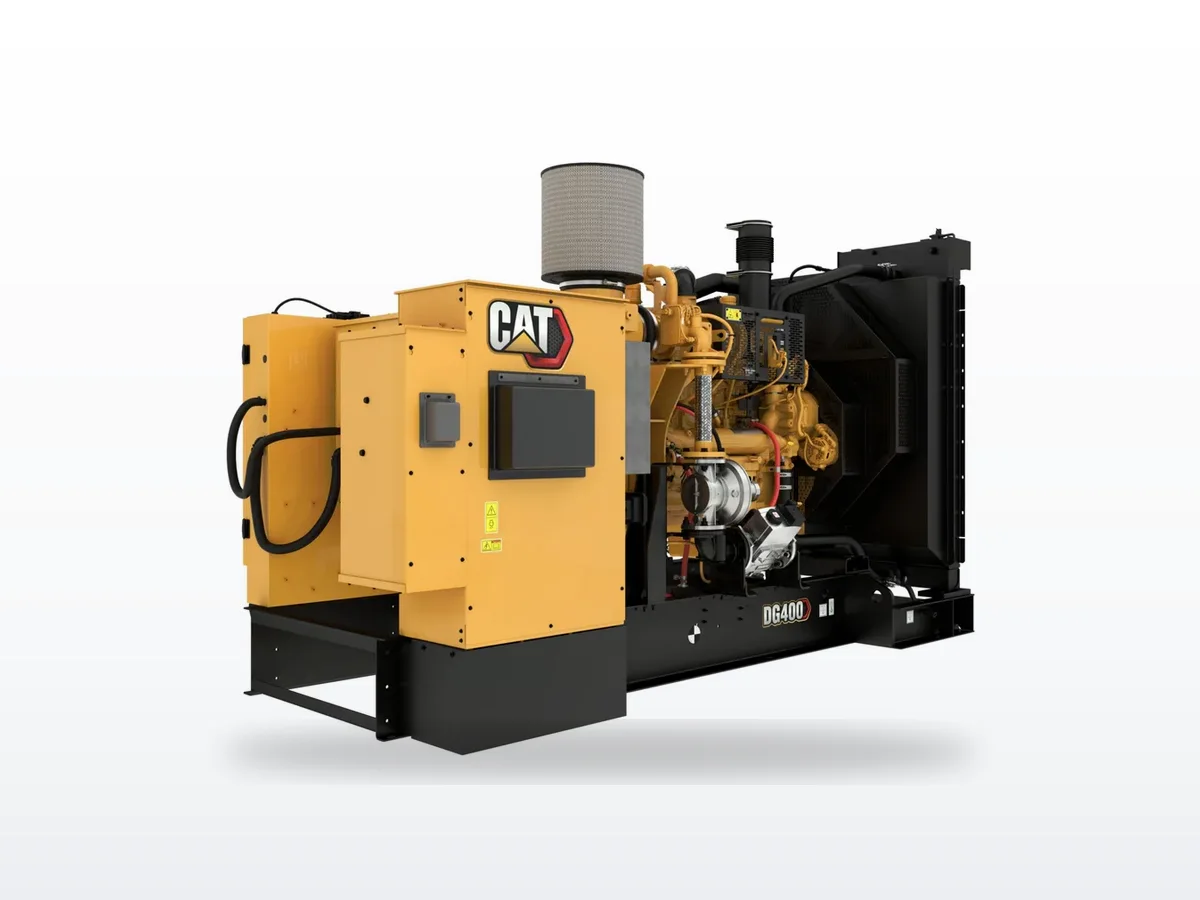
Cat DG400
400 kW natural gas with CAT CG18 engine. EPA certified emergency and non-emergency. No diesel infrastructure needed.
400 kW standby · Natural Gas · Liquid-cooled
400 kW natural gas standby/DR for large commercial, hospitals, and campus facilities on gas mains.
400 kW natural gas generator with Cat CG18 inline-6 engine. Emergency standby, demand response, and limited time power for commercial applications.
3-phasecommercial-standbydemand-response
Caterpillar
Cat G3512
750 kW natural gas with CAT G3512 V-12. Continuous/prime rated. Biogas capable. Best resale in gas class.
750 kW standby · Natural Gas · Liquid-cooled
750 kW natural gas continuous/CHP for industrial cogeneration, distributed generation, and campus power.
750 kW natural gas generator with Cat G3512 turbocharged V-12 engine. Continuous and prime-rated platform for cogeneration, biogas, and distributed power.
3-phasecontinuous-powerprime-power
Caterpillar
Cat G3516H
1982 kW natural gas with CAT G3516H V-16. 43.5% electrical efficiency. Cogeneration-ready. Best resale in class.
2.0 MW standby · Natural Gas · Liquid-cooled
1982 kW natural gas continuous/CHP for industrial cogeneration, distributed generation, and utility power.
1982 kW continuous natural gas generator with Cat G3516H V-16 engine. High-efficiency combined heat and power for industrial, utility, and distributed generation.
3-phasecogenerationdistributed-generation
Caterpillar
Cat G3516H
2027 kW natural gas with CAT G3516H V-16. Medium-voltage capable. Cogeneration-ready. Best resale in class.
2.0 MW standby · Natural Gas · Liquid-cooled
2027 kW natural gas continuous/cogeneration for industrial CHP, distributed generation, and campus power.
Up to 2027 kW natural gas generator with Cat G3516H V-16 engine. Continuous duty, low-emission gas power for cogeneration, distributed generation, and industrial applications.
2022 kW natural gas with CAT G3520E V-20. 41.5% electrical efficiency. Cogeneration-ready. Best resale in class.
2.0 MW standby · Natural Gas · Liquid-cooled
2022 kW natural gas continuous/CHP for industrial cogeneration, distributed generation, and baseload power.
2022 kW continuous natural gas generator with Cat G3520E V-20 engine. High-efficiency CHP platform for industrial, utility, and distributed generation.
3-phasecogenerationdistributed-generation
Caterpillar
Cat G3520H
2519 kW natural gas with CAT G3520H V-20. Medium-voltage capable. Hydrogen-blend ready. Best resale in class.
2.5 MW standby · Natural Gas · Liquid-cooled
2519 kW natural gas continuous/cogeneration for industrial CHP, distributed generation, and campus power.
Up to 2519 kW natural gas generator with Cat G3520H V-20 engine. 97.5L displacement, continuous duty, hydrogen-blend capable for cogeneration and distributed generation.
3-phasecontinuous-dutycogeneration
Caterpillar
Caterpillar 3406
350 kW diesel with legendary CAT 3406 engine. Best resale -- retains 15-25% more than Cummins/MTU. Parts back to 1995.
350 kW standby · Diesel · Liquid-cooled
350 kW diesel standby for industrial plants, water treatment, and large commercial with fleet standardization.
The Caterpillar 3406C is a 275-400 kW diesel generator built on the legendary 14.64L inline-6. Legacy platform with one of the broadest parts ecosystems in the diesel industry. Specs from OEM data sheet.
3-phasecommercial-standbyindustrial
Caterpillar
Caterpillar 3412
720 kW diesel with legendary CAT 3412 engine. Best resale -- retains 15-25% more than competitors. Parts back to 1995.
720 kW standby · Diesel · Liquid-cooled
720 kW diesel standby for large industrial, hospitals, and mission-critical facilities with CAT fleet standardization.
The Caterpillar 3412C is a 680-900 kVA diesel generator built on the 27.02L V12 engine. ADEM A5 governor. Fuel: 45.3 gal/hr at full load. Legacy platform for hospitals, campuses, and industrial sites.
3-phasehospital-largeindustrial
Caterpillar
Caterpillar 3512C
1500 kW diesel with CAT 3512C V-12. EPA Tier 4 Final. Best resale value in class. ~200 US dealers.
1.5 MW standby · Diesel · Liquid-cooled
1500 kW diesel standby for Tier III+ data centers, hospitals, and emission-sensitive industrial sites.
The Caterpillar 3512C is a 1500 kW standby diesel generator. 51.8L V12 ATAAC, 14.7:1 compression, EPA Tier 2. Fuel: 104.6 gal/hr at full load. Medium-voltage outputs to 13,800V for mission-critical applications.
Tier 23-phasedata-centerhospital-large
Caterpillar
Caterpillar C13
350 kW diesel with CAT C13 ACERT inline-6. Best resale -- retains 15-25% more than competitors. ~200 US dealers.
350 kW standby · Diesel · Liquid-cooled
350 kW diesel standby for hospitals, large commercial, and industrial with CAT fleet standardization.
The Caterpillar C13 ACERT is a 350 kW standby diesel generator with EPA Tier 3 certification. 12.5L inline-6 with MEUI injection. Fuel consumption 24.9 gal/hr at full load. Complete specs and service reference.
Tier 33-phasecommercial-standbyhospital-medium
Caterpillar
Caterpillar C18
600 kW diesel with CAT C18 ACERT inline-6. Best resale -- retains 15-25% more than Cummins/MTU. ~200 US dealers.
600 kW standby · Diesel · Liquid-cooled
600 kW diesel standby for large data centers, hospitals, and industrial plants with CAT fleet.
The Caterpillar C18 ACERT is a 600 kW standby diesel generator with EPA Tier 2 certification. 18.1L inline-6 with MEUI injection. Fuel: 42.7 gal/hr at full load. Supports 4160V medium-voltage for hospital and campus applications.
Tier 23-phasehospital-mediumcampus
Caterpillar
Caterpillar C7
200 kW diesel with CAT C7 ACERT inline-6. Best resale value in class. ~200 US dealers. Compact footprint.
200 kW standby · Diesel · Liquid-cooled
200 kW diesel standby for retail, telecom, and small commercial with CAT fleet standardization.
The Caterpillar C7.1 ACERT is a 200 kW standby diesel generator with EPA Tier 3 certification. 7.01L inline-6 with MEUI fuel injection. Compact standby power for small commercial and retail applications.
Tier 33-phasecommercial-standbyretail
Caterpillar
Caterpillar C9
250 kW diesel with CAT C9 ACERT inline-6. Best resale -- retains 15-25% more than competitors. ~200 US dealers.
250 kW standby · Diesel · Liquid-cooled
250 kW diesel standby for mid-size commercial, schools, and light-industrial with CAT fleet.
The Caterpillar C9 ACERT is a 250 kW standby diesel generator with EPA Tier 3 emissions certification. 8.8L inline-6 with MEUI fuel injection. Ideal for retail, telecom, and light-industrial standby applications.
Tier 33-phasecommercial-standbyretail
Caterpillar
Caterpillar G3406
300 kW natural gas with CAT G3406 inline-6. No diesel storage needed. Legacy platform with deep parts availability.
300 kW standby · Natural Gas · Liquid-cooled
300 kW natural gas standby for hospitals, commercial campuses, and facilities on gas mains.
The Caterpillar G3406 is a natural gas standby generator built on the 14.6L G3406 TA inline-6 spark-ignited engine. No diesel fuel storage required. Legacy platform for hospitals, campuses, and commercial facilities.
512 kW natural gas with CAT G3412 V-12. No diesel infrastructure needed. EMCP 4 controller. ~200 US dealers.
512 kW standby · Natural Gas · Liquid-cooled
512 kW natural gas standby for large hospitals, campuses, and data centers on gas mains.
The Caterpillar G3412 is a 512 kW standby natural gas generator built on the 27L V12 G3412C engine. EPA Subpart JJJJ certified. EMCP 4 controller. Dry weight 14,330 lb. Complete specs from OEM sheet.
100 kW diesel with full Cummins vertical integration. 100% load acceptance in 10 seconds. Single-source warranty.
100 kW standby · Diesel · Liquid-cooled
100 kW diesel standby for office complexes, hotels, and commercial buildings requiring fast load pickup.
100 kW EPA Tier 3 diesel standby generator with QSB5-G13 engine and PowerCommand 2.3 control. Sound-attenuated aluminum enclosure, UL 2200 listed, NFPA 110 Level 1 capable.
Tier 33-phasecommercial-standbylight-industrial
Cummins
Cummins C100 N6
100 kW natural gas with full Cummins vertical integration. 100% load in 10 seconds. No diesel logistics.
100 kW standby · Natural Gas / LPG · Liquid-cooled
100 kW natural gas standby for hotels, office campuses, and healthcare clinics with gas service.
100 kW natural gas standby generator with QSJ5.9G-G3 engine. 100 kW / 125 kVA standby, PowerCommand controls, AmpSentry protection, UL 2200, EPA certified. Dry weight 2812 lbs.
3-phasecommercial-standbyindustrial-standby
Cummins
Cummins C1000 D6
1 MW diesel with QST30 V-12 engine. Full Cummins vertical integration. Paralleling for multi-MW. 10-15% below CAT.
1 MW standby · Diesel · Liquid-cooled
1000 kW diesel standby for Tier III+ data centers, large hospitals, and mission-critical infrastructure requiring megawatt-class power.
1000 kW diesel standby generator with QST30 30L V-12 engine. PowerCommand control, liquid-cooled, for data center, hospital, and mission-critical standby applications requiring megawatt-class power.
Tier 23-phasedata-centerhospital
Cummins
Cummins C1000 N6
1000 kW natural gas with full Cummins vertical integration. QSK60G engine. Paralleling for multi-MW gas installations.
1 MW standby · Natural Gas · Liquid-cooled
1000 kW natural gas standby for Tier III data centers, large campuses, and utility peak shaving on gas.
112 kW diesel on the Cummins 6BT5.9-G6 platform. Reliable commercial standby power with full Cummins vertical integration.
112 kW standby · Diesel · Liquid-cooled
112 kW diesel standby for commercial buildings and light-industrial facilities requiring mid-range emergency power between the C100 and C125.
112 kW diesel standby generator with Cummins 6BT5.9-G6 engine and PowerCommand control. Liquid-cooled, for commercial standby applications.
Tier 33-phasecommercial-standbylight-industrial
Cummins
Cummins C1100 D6
1100 kW diesel with QSK38 V-12 engine. MCRS fuel injection. Full Cummins vertical integration. Paralleling for multi-MW.
1.1 MW standby · Diesel · Liquid-cooled
1100 kW diesel standby for Tier III+ data centers, large hospitals, and critical infrastructure requiring above-megawatt power.
1100 kW diesel standby generator with QSK38 37.7L V-12 engine and MCRS fuel injection. EPA Tier 2 compliant, PowerCommand control, liquid-cooled, for data center, hospital, and mission-critical standby applications.
Tier 23-phasedata-centerhospital
Cummins
Cummins C125 D6
125 kW diesel with Cummins QSB5-G6 engine. Top of the QSB5 4-cylinder range. 100% load acceptance in 10 seconds. Single-source warranty.
125 kW standby · Diesel · Liquid-cooled
125 kW diesel standby for hotels, office complexes, and commercial buildings requiring fast load pickup in a compact 4-cylinder package.
125 kW EPA Tier 3 diesel standby generator with Cummins QSB5-G6 engine and PowerCommand 1.1 control. Sound-attenuated aluminum enclosure, UL 2200 listed, NFPA 110 Level 1 capable.
Tier 33-phasecommercial-standbylight-industrial
Cummins
Cummins C125 N6
125 kW natural gas with full Cummins vertical integration. 100% load in 10 seconds. Single-source warranty.
125 kW standby · Natural Gas · Liquid-cooled
125 kW natural gas standby for mid-size commercial, schools, and healthcare facilities on gas mains.
125 kW natural gas standby generator with QSJ8.9G engine. 125 kW standby, PowerCommand 2.3 controls, UL 2200, IBC Seismic, NFPA 110 capable. Quiet Connect RS125 series, weight 3915 lbs.
3-phasecommercial-standbyindustrial-standby
Cummins
Cummins C1250 D6
1250 kW diesel with QSK38 V-12 engine at full rated output. MCRS fuel injection. Full Cummins vertical integration. Paralleling for multi-MW.
1.3 MW standby · Diesel · Liquid-cooled
1250 kW diesel standby for Tier III+ data centers, large hospitals, and mission-critical infrastructure.
1250 kW diesel standby generator with QSK38 37.7L V-12 engine and MCRS fuel injection. EPA Tier 2 compliant, PowerCommand control, 2P2L cooling, for data center, hospital, and mission-critical standby applications.
Tier 23-phasedata-centerhospital
Cummins
Cummins C150 D6
150 kW diesel with full Cummins vertical integration. 100% load acceptance in 10 seconds. 10-15% below CAT pricing.
150 kW standby · Diesel · Liquid-cooled
150 kW diesel standby for hotels, warehouses, and mid-size commercial requiring fast load transfer.
150 kW EPA Tier 3 diesel standby generator with QSB7-G5 inline-6 engine and PowerCommand 1.1 control. NFPA 110 Level 1 compliant, UL 2200 listed, sound-attenuated aluminum enclosure.
Tier 33-phasecommercial-standbylight-industrial
Cummins
Cummins C150 N6
150 kW natural gas with full Cummins vertical integration. 100% load in 10 seconds. No diesel permitting needed.
150 kW standby · Natural Gas / LPG · Liquid-cooled
150 kW natural gas standby for hotels, large retail, and commercial campuses with gas service.
150 kW natural gas/propane standby generator with Cummins QSJ8.9G 8.9L turbocharged inline-6 engine. PowerCommand control, UL 2200 listed, NFPA 110 Level 1 capable. Wet weight 1,776 kg (3,915 lbs).
1500 kW diesel with QSK50 V-16 engine. Full Cummins vertical integration. Paralleling for multi-MW. 10-15% below CAT 3512.
1.5 MW standby · Diesel · Liquid-cooled
1500 kW diesel standby for Tier IV data centers, university campuses, and major industrial plants requiring maximum single-unit power.
1500 kW diesel standby generator with QSK50 50.3L V-16 engine and MCRS fuel injection. EPA Tier 2 compliant, PowerCommand control, 2P2L cooling, for data center, hospital, and mission-critical standby applications.
Tier 23-phasedata-centerhospital
Cummins
Cummins C175 D6
175 kW diesel with Cummins QSB7-G5 inline-6 engine. Full Cummins vertical integration. 100% load acceptance in 10 seconds.
175 kW standby · Diesel · Liquid-cooled
175 kW diesel standby for hotels, office complexes, and mid-size commercial buildings requiring substantial emergency power capacity.
175 kW EPA Tier 3 diesel standby generator with Cummins QSB7-G5 inline-6 engine and PowerCommand 1.1 control. Sound-attenuated aluminum enclosure, NFPA 110 Level 1 capable, UL 2200 listed.
Tier 33-phasecommercial-standbylight-industrial
Cummins
Cummins C175 N6
175 kW natural gas with full Cummins vertical integration. 100% load in 10 seconds. No diesel infrastructure.
175 kW standby · Natural Gas · Liquid-cooled
175 kW natural gas standby for schools, mid-size hotels, and commercial campuses on gas mains.
175 kW natural gas standby generator with GTA 8.3G engine. 175 kW / 219 kVA standby, PowerCommand 1.1 controls, 2202 CFH full-load, dimensions 115 x 40 x 59 in. ISO 9001:2015 manufactured.
3-phasecommercial-standbyindustrial-standby
Cummins
Cummins C20 D6
20 kW diesel standby with Cummins-integrated controls and sound-attenuated enclosure. Compact footprint for tight installations.
20 kW standby · Diesel · Liquid-cooled
20 kW diesel standby for small offices, retail locations, and light commercial buildings requiring backup power.
20 kW EPA Tier 4 Interim diesel standby generator with Kubota V2203M engine and PowerCommand 1.1 control. Sound-attenuated enclosure, liquid-cooled, for small commercial and residential standby applications.
275 kW diesel with Cummins QSL9-G7 engine and HPCR fuel system. Available in Tier 3 (DQDAB) and Tier 4 (C275D6D) configurations. Single-source warranty.
275 kW standby · Diesel · Liquid-cooled
275 kW diesel standby for hospitals, data centers, and large commercial buildings requiring high-capacity emergency power.
275 kW EPA Tier 3 diesel standby generator with Cummins QSL9-G7 inline-6 engine and PowerCommand 2.3 control. HPCR fuel system, sound-attenuated enclosure, for commercial and industrial standby applications.
Tier 33-phasecommercial-standbylight-industrial
Cummins
Cummins C30 N6
30 kW natural gas standby with Cummins vertical integration. Clean-burning gas eliminates diesel storage requirements.
30 kW standby · Natural Gas / LPG · Liquid-cooled
30 kW natural gas standby for small retail, branch offices, and residential applications with natural gas service.
30 kW natural gas standby generator. 30 kW / 38 kVA standby, PowerCommand controls, AmpSentry protection, UL 2200, EPA certified.
3-phasecommercial-standby
Cummins
Cummins C300 D6
300 kW diesel with Cummins QSL9-G7 engine. Top of the QSL9 standby range. PowerCommand 2.3 control with AmpSentry protection. Single-source warranty.
300 kW standby · Diesel · Liquid-cooled
300 kW diesel standby for hospitals, data centers, and large commercial facilities requiring the maximum QSL9 standby output.
300 kW EPA Tier 3 diesel standby generator with Cummins QSL9-G7 inline-6 engine and PowerCommand 2.3 control. HPCR fuel system, sound-attenuated enclosure, for large commercial and industrial standby applications.
Tier 33-phasecommercial-standbylight-industrial
Cummins
Cummins C300 N6
300 kW natural gas with full Cummins vertical integration. 100% load in 10 seconds. Paralleling-ready controller.
300 kW standby · Natural Gas · Liquid-cooled
300 kW natural gas standby for hospitals, university campuses, and large commercial on gas mains.
300 kW natural gas standby generator with GTA 855E engine. 300 kW / 375 kVA standby, PowerCommand 3.3 controls, 4098 CFH full-load, open set dimensions 147 x 69 x 77 in. UL 2200, EPA certified.
3-phasecommercial-standbyindustrial-standby
Cummins
Cummins
Cummins C33 D5
26 kW / 33 kVA diesel with full Cummins vertical integration -- engine, alternator, controls all in-house. One manufacturer warranty.
26 kW standby · Diesel · Liquid-cooled
26 kW diesel standby for international 50 Hz commercial sites, telecom, and small infrastructure.
26 kW / 33 kVA diesel generator from Cummins' international D5 export series. 50 Hz model designed for markets outside North America. Compact liquid-cooled standby generator for commercial standby applications.
3-phasecommercial-standbyinternational-export
Cummins
Cummins C35 D6
35 kW diesel with Cummins 4BT3.3 engine. Same proven block as the C25-C60 range. Sound-attenuated enclosure standard.
35 kW standby · Diesel · Liquid-cooled
35 kW diesel standby for small retail, branch offices, and light-industrial facilities requiring reliable emergency power.
35 kW EPA Tier 3 diesel standby generator with Cummins 4BT3.3-G5 engine and PowerCommand 1.1 control. Sound-attenuated enclosure, liquid-cooled, for small commercial and light-industrial standby.
Tier 33-phasecommercial-standbysmall-office
Cummins
Cummins C350 D6
350 kW diesel with full Cummins vertical integration. 100% load in 10 seconds. 10-15% below CAT at comparable kW.
350 kW standby · Diesel · Liquid-cooled
350 kW diesel standby for large hospitals, industrial plants, and data centers with critical loads.
350 kW diesel standby generator with QSG12-G1 inline-6 engine and HPCR fuel system. EPA Tier 3 compliant, PowerCommand control, liquid-cooled, for large commercial and industrial standby applications.
Tier 33-phasecommercial-standbylarge-commercial
Cummins
Cummins C350 N6
350 kW natural gas standby with Cummins vertical integration. Mid-range gas power without diesel logistics.
350 kW standby · Natural Gas / LPG · Liquid-cooled
350 kW natural gas standby for mid-size commercial buildings, hotels, and healthcare facilities with natural gas service.
350 kW natural gas standby generator. 350 kW / 438 kVA standby, PowerCommand controls, AmpSentry protection, UL 2200, EPA certified.
3-phasecommercial-standbyindustrial-standby
Cummins
Cummins C40 D6
40 kW diesel with Cummins 4BT3.3 engine. Top of the small B-series range. Sound-attenuated enclosure and PowerCommand control standard.
40 kW standby · Diesel · Liquid-cooled
40 kW diesel standby for small commercial buildings, restaurants, and light-industrial facilities needing mid-range backup power.
40 kW EPA Tier 3 diesel standby generator with Cummins 4BT3.3-G5 engine and PowerCommand 1.1 control. Sound-attenuated enclosure, liquid-cooled, for small commercial and light-industrial standby.
Tier 33-phasecommercial-standbysmall-office
Cummins
Cummins C400 D6
400 kW diesel with full Cummins vertical integration. 100% load in 10 seconds. 10-15% below CAT at comparable kW.
400 kW standby · Diesel · Liquid-cooled
400 kW diesel standby for large hospitals, industrial plants, and data centers with critical loads.
400 kW diesel standby generator with QSG12-G4 inline-6 engine and HPCR fuel system. EPA Tier 3 compliant, PowerCommand control, liquid-cooled, for large commercial and industrial standby applications.
Tier 33-phasecommercial-standbylarge-commercial
Cummins
Cummins C400 N6
400 kW natural gas with full Cummins vertical integration. 100% load in 10 seconds. Paralleling for multi-MW gas.
400 kW standby · Natural Gas · Liquid-cooled
400 kW natural gas standby for major hospitals, large campuses, and Tier II data centers on gas.
400 kW natural gas standby generator with Cummins GTA28E 28L inline-6 engine. PowerCommand 3.3 control, UL 2200 listed, EPA SI NSPS certified, NFPA 110 Type 10 Level 1/2 capable. Dimensions 4216 x 2083 x 2486 mm.
450 kW diesel with QSX15 DOHC engine. 30% fewer parts than comparable platforms. Full Cummins vertical integration.
450 kW standby · Diesel · Liquid-cooled
450 kW diesel standby for large hospitals, industrial plants, and data centers requiring high reliability.
450 kW diesel standby generator with QSX15 inline-6 DOHC engine. EPA NSPS certified, PowerCommand control, liquid-cooled, for large commercial and industrial standby applications.
Tier 23-phasecommercial-standbylarge-commercial
Cummins
Cummins C50 N6
50 kW natural gas standby with Cummins vertical integration. Clean-burning gas eliminates diesel storage requirements.
50 kW standby · Natural Gas / LPG · Liquid-cooled
50 kW natural gas standby for small commercial buildings, retail stores, and light industrial facilities with natural gas service.
50 kW natural gas standby generator. 50 kW / 63 kVA standby, PowerCommand controls, AmpSentry protection, UL 2200, EPA certified.
3-phasecommercial-standby
Cummins
Cummins C500 D6
500 kW diesel with QSX15 DOHC engine. 30% fewer parts than comparable platforms. Full Cummins vertical integration.
500 kW standby · Diesel · Liquid-cooled
500 kW diesel standby for Tier III data centers, major hospitals, and large industrial facilities.
500 kW diesel standby generator with QSX15 inline-6 DOHC engine. EPA NSPS certified, PowerCommand control, liquid-cooled, for large commercial, industrial, and data center standby applications.
Tier 23-phasecommercial-standbylarge-commercial
Cummins
Cummins C500 N6
500 kW natural gas with full Cummins vertical integration. 100% load in 10 seconds. No diesel infrastructure needed.
500 kW standby · Natural Gas · Liquid-cooled
500 kW natural gas standby for data centers, large hospitals, and campus microgrids on gas mains.
500 kW natural gas standby generator with GTA 28E V12 engine. 500 kW / 625 kVA standby, PowerCommand 3.3 controls, 6994 CFH full-load, open set dimensions 166 x 82 x 98 in. UL 2200, EPA certified.
3-phasecommercial-standbyindustrial-standby
Cummins
Cummins
Cummins C55 D5
44 kW / 55 kVA diesel with full Cummins vertical integration -- engine, alternator, controls all in-house. One manufacturer warranty.
44 kW standby · Diesel · Liquid-cooled
44 kW diesel standby for international 50 Hz commercial, retail, and light-industrial applications.
44 kW / 55 kVA diesel generator from Cummins' international D5 export series. 50 Hz model for markets outside North America. Liquid-cooled standby generator for commercial applications.
3-phasecommercial-standbyinternational-export
Cummins
Cummins C60 D6
60 kW diesel with Cummins 4BT3.3-G7 engine. Bridge between small and mid-size commercial generators. Sound-attenuated enclosure standard.
60 kW standby · Diesel · Liquid-cooled
60 kW diesel standby for mid-size offices, retail centers, and commercial buildings requiring moderate emergency power capacity.
60 kW EPA Tier 3 diesel standby generator with Cummins 4BT3.3-G7 engine and PowerCommand 1.1 control. Sound-attenuated enclosure, liquid-cooled, for commercial and light-industrial standby applications.
Tier 33-phasecommercial-standbylight-industrial
Cummins
Cummins C60 N6
60 kW natural gas with full Cummins vertical integration. QuietConnect-class sound levels. No diesel storage needed.
60 kW standby · Natural Gas / LPG · Liquid-cooled
60 kW natural gas standby for restaurants, small offices, and commercial buildings on gas mains.
600 kW diesel with QSK19 engine. Full Cummins vertical integration. MCRS fuel system for lower emissions and fuel consumption.
600 kW standby · Diesel · Liquid-cooled
600 kW diesel standby for large hospitals, data centers, and heavy industrial plants with critical power requirements.
600 kW diesel standby generator with QSK19 19L inline-6 engine and MCRS fuel injection. EPA Tier 2 compliant, PowerCommand control, liquid-cooled, for large commercial, industrial, and data center standby applications.
Tier 23-phasecommercial-standbylarge-commercial
Cummins
Cummins C750 D6
750 kW diesel with QSK23 engine. Full Cummins vertical integration. 100% load in 10 seconds. Paralleling capable.
750 kW standby · Diesel · Liquid-cooled
750 kW diesel standby for mission-critical data centers, large hospitals, and industrial campuses.
750 kW diesel standby generator with QSK23-G3 23.1L inline-6 engine and HPI-PT fuel injection. PowerCommand control, liquid-cooled, for data center, hospital, and mission-critical standby applications.
Tier 23-phasecommercial-standbylarge-commercial
Cummins
Cummins C750 N6
750 kW natural gas with full Cummins vertical integration. GTA50 engine platform. Paralleling for multi-MW gas backup.
750 kW standby · Natural Gas · Liquid-cooled
750 kW natural gas standby for mission-critical data centers and large campus power on gas mains.
750 kW standby natural gas generator with GTA50 engine. PowerCommand 3.3 controls, AmpSentry protection, UL 2200, NFPA 110 Type 10 load acceptance.
3-phasecommercial-standbyindustrial
Cummins
Cummins C80 D6
80 kW diesel with full Cummins vertical integration. 100% load acceptance in 10 seconds. One throat to choke.
80 kW standby · Diesel · Liquid-cooled
80 kW diesel standby for commercial buildings, healthcare clinics, and municipal water systems.
80 kW EPA Tier 3 diesel standby generator with QSB5-G13 engine and PowerCommand 2.3 control. Sound-attenuated aluminum enclosure, liquid-cooled, rated for 50°C ambient operation.
Tier 33-phasecommercial-standbylight-industrial
Cummins
Cummins C80 N6
80 kW natural gas with full Cummins vertical integration. QuietConnect-class sound levels. No fuel storage permits.
80 kW standby · Natural Gas / LPG · Liquid-cooled
80 kW natural gas standby for mid-size commercial, assisted living, and retail with gas service.
80 kW natural gas standby generator with QSJ5.9G engine. PowerCommand 1.1 controls, UL 2200, IBC Seismic, NFPA 110 capable. Quiet Connect RS80 series in sound-attenuated aluminum enclosure.
3-phasecommercial-standbylight-commercial-standby
Cummins
Cummins C800 D6
800 kW diesel with QSK23 engine. Full Cummins vertical integration. 100% load in 10 seconds. Paralleling for multi-MW.
800 kW standby · Diesel · Liquid-cooled
800 kW diesel standby for mission-critical data centers, large hospitals, and industrial campuses requiring N+1 redundancy.
800 kW diesel standby generator with QSK23-G3 23.1L inline-6 engine and HPI-PT fuel injection. PowerCommand control, liquid-cooled, for data center, hospital, and mission-critical standby applications.
Tier 23-phasecommercial-standbylarge-commercial
Cummins
Cummins C900 D6
900 kW diesel with QST30 V-12 engine. Full Cummins vertical integration. 100% load in 10 seconds. Paralleling for multi-MW.
900 kW standby · Diesel · Liquid-cooled
900 kW diesel standby for Tier III+ data centers, large hospitals, and mission-critical infrastructure.
900 kW diesel standby generator with QST30-G3 30L V-12 engine. PowerCommand control, liquid-cooled, for data center, hospital, and mission-critical standby applications.
Tier 23-phasecommercial-standbylarge-commercial
Cummins
Cummins KTA38
887 kW diesel with legendary KTA38 engine. Full Cummins vertical integration. Parts availability back decades.
887 kW standby · Diesel · Liquid-cooled
887 kW diesel standby for large industrial plants, hospitals, and mission-critical infrastructure.
887 kW standby / 811 kW prime diesel generator at 50 Hz. KTA38-G5 37.8L V12 PT fuel injection. Legacy Cummins platform for industrial, hospital, campus, and mining standby applications.
3-phaseindustrialhospital-large
Cummins
Cummins KTA50
1340 kW diesel with legendary KTA50 engine. Full Cummins vertical integration. 10-15% below CAT 3512 class.
1.3 MW standby · Diesel · Liquid-cooled
1340 kW diesel standby for Tier III+ data centers, large hospitals, and heavy industrial plants.
1340 kW standby / 1200 kW prime diesel generator at 50 Hz. KTA50-GS8 50.3L V16 PT fuel injection, 2-pump 2-loop cooling. Legacy Cummins platform for data center, industrial, hospital, and mining standby applications.
3-phasedata-centerhospital-large
Cummins
Cummins QSB7 (C200 D6)
200 kW diesel with QSB7 engine. Full Cummins vertical integration. 100% load in 10 seconds. Best cold-weather start (-40F).
200 kW standby · Diesel · Liquid-cooled
200 kW diesel standby for hospitals, office complexes, and commercial buildings in any climate.
200 kW diesel commercial standby generator with Cummins QSB7 6.7L engine. The mid-range diesel workhorse for commercial and institutional facilities.
Tier 33-phasecommercialhealthcare
Cummins
Cummins QSK19
550 kW diesel with QSK19 engine. Full Cummins vertical integration. Power Command controller. 10-15% below CAT.
550 kW standby · Diesel · Liquid-cooled
550 kW diesel standby for large data centers, hospitals, and heavy industrial plants.
550 kW standby / 500 kW prime diesel generator with QSK19-G4 19L inline-6 MCRS engine. EPA Tier 2, CTT HX83 turbocharging, 24V starting. Engine dimensions 1695 x 985 x 1723 mm, dry weight 1900 kg.
Tier 23-phasehospital-mediumcampus
Cummins
Cummins QSK23
800 kW diesel with QSK23 engine. Full Cummins vertical integration. 100% load in 10 seconds. 10-15% below CAT.
800 kW standby · Diesel · Liquid-cooled
800 kW diesel standby for mission-critical data centers, large hospitals, and industrial campuses.
800 kW standby / 727 kW prime diesel generator with QSK23-G3 23.1L inline-6 HPI-PT engine. Non-regulated, CTT HX82 turbocharging, 24V starting. Engine dimensions 2976 x 1656 x 1964 mm, dry weight 3245 kg.
Tier 23-phasehospital-largecampus
Cummins
Cummins QSK38
1160 kW diesel with QSK38 engine. Full Cummins vertical integration. Paralleling for multi-MW. 10-15% below CAT.
1.2 MW standby · Diesel · Liquid-cooled
1160 kW diesel standby for Tier III+ data centers, large hospitals, and critical infrastructure.
1160 kW standby / 965 kW prime diesel generator with QSK38-G5 37.7L V12 MCRS engine. EPA Tier 2, 2P2L cooling, 24V starting. Engine dimensions 2081 x 1492 x 1860 mm, dry weight 4100 kg.
Tier 23-phasedata-centerhospital-large
Cummins
Cummins QSK50
1500 kW diesel with QSK50 engine. Full Cummins vertical integration. Paralleling for multi-MW. 10-15% below CAT 3512.
1.5 MW standby · Diesel · Liquid-cooled
1500 kW diesel standby for Tier IV data centers, university campuses, and major industrial plants.
1500 kW standby / 1365 kW prime diesel generator with QSK50-G4 50.3L V16 MCRS engine. EPA Tier 2 and TA Luft compliant, 2P2L cooling, 24V starting. Engine dimensions 4674 x 2468 x 3100 mm, dry weight 7429 kg.
Tier 23-phasedata-centerhospital-large
Cummins
Cummins QSK60
2000 kW diesel with QSK60 engine. Full Cummins vertical integration. Paralleling for multi-MW. 10-15% below CAT 3516.
2 MW standby · Diesel · Liquid-cooled
2000 kW diesel standby for hyperscale data centers, large hospitals, and campus microgrids.
2000 kW diesel standby generator. The data center industry standard — V-16, 60.2L, Tier 2. Cummins' flagship for mission-critical power.
Tier 23-phasedata-centerhospital
Cummins
Cummins QSK78
2750 kW diesel with QSK78 engine. Full Cummins vertical integration. Paralleling for multi-MW. 10-15% below CAT 3516B.
2.8 MW standby · Diesel · Liquid-cooled
2750 kW diesel standby for hyperscale data centers, critical infrastructure, and utility peaking.
2750 kW standby / 2500 kW prime diesel generator with QSK78-G14 V18 engine. EPA Tier 4 Final, 78-liter displacement for mission-critical and data center power.
Tier 4 Final3-phasedata-centerhospital
Cummins
Cummins QSK95
3010 kW diesel with QSK95 engine -- Cummins largest. Full vertical integration. Paralleling for campus-scale power.
3.0 MW standby · Diesel · Liquid-cooled
3010 kW diesel standby for hyperscale data centers, campus microgrids, and utility peak shaving.
3010 kW standby / 2690 kW prime diesel generator with QSK95-G10 V16 engine. EPA Tier 2, quad turbo, MCRS fuel injection, ISO 8528-G3 transient capability.
Tier 23-phasedata-centerhospital
Cummins
Cummins QSL9
300 kW diesel with QSL9 engine. Full Cummins vertical integration. 100% load in 10 seconds. 10-15% below CAT.
300 kW standby · Diesel · Liquid-cooled
300 kW diesel standby for hospitals, multi-building campuses, and industrial plants.
300 kW standby / 275 kW prime diesel generator with QSL9-G7 8.8L inline-6 Bosch HPCR engine. EPA Tier 3 / EU Stage IIIA compliant, Holset HX40 wastegated turbo, 24V starting. Engine dimensions 2157 x 1126 x 1562 mm, dry weight 940 kg.
15 kW diesel standby for telecom shelters, small retail, and remote municipal sites.
15 kW industrial diesel standby generator. Perkins 2.2L turbocharged inline-4, EPA Certified Stationary Emergency, Digital H control with NFPA 110 Level I/II.
3-phasecommercial-standbylight-industrial
Generac
Generac SD020
20 kW industrial diesel with Perkins engine. 10-15% below Kohler at comparable kW. NFPA 110 Level I/II ready.
20 kW standby · Diesel · Liquid-cooled
20 kW diesel standby for small commercial buildings, bank branches, and cell towers.
20 kW industrial diesel standby generator. Perkins 2.2L turbocharged inline-4, EPA Certified Stationary Emergency, Digital H control with NFPA 110 Level I/II.
3-phasecommercial-standbylight-industrial
Generac
Generac SD025T
25 kW Tier 4 Final diesel — meets non-emergency EPA requirements. Perkins engine with DPF aftertreatment. Largest dealer network.
25 kW standby · Diesel · Liquid-cooled
25 kW Tier 4 Final diesel standby for sites requiring non-emergency EPA compliance, cell towers, and small commercial buildings.
25 kW industrial diesel standby generator. Tier 4 Final certified. Perkins turbocharged inline-4, EPA Tier 4 Final, Digital H control with NFPA 110 Level I/II.
30 kW Tier 4 Final diesel — meets non-emergency EPA requirements. Perkins engine with DPF aftertreatment. Largest dealer network.
30 kW standby · Diesel · Liquid-cooled
30 kW Tier 4 Final diesel standby for sites requiring non-emergency EPA compliance, retail chains, and small offices.
30 kW industrial diesel standby generator. Tier 4 Final certified. Perkins turbocharged inline-4, EPA Tier 4 Final, Digital H control with NFPA 110 Level I/II.
100 kW industrial diesel with EPA Tier 4 Final emissions certification. Same proven 6.7L inline-6 platform with exhaust aftertreatment for projects requiring stricter emissions compliance.
100 kW standby · Diesel · Liquid-cooled
100 kW diesel standby for commercial installations in non-attainment zones or projects requiring Tier 4 Final emissions compliance.
100 kW industrial diesel standby generator with EPA Tier 4 Final emissions certification. Iveco/FPT 6.7L turbocharged-aftercooled inline-6 with exhaust aftertreatment, Digital H control with NFPA 110 Level I/II.
3-phasecommercial-standbylight-industrial
Generac
Generac SD1250
1250 kW industrial diesel with Mitsubishi engine. Competitive pricing vs CAT/Cummins. Paralleling for multi-MW systems.
1.3 MW standby · Diesel · Liquid-cooled
1250 kW diesel standby for Tier III+ data centers, large hospitals, and critical infrastructure.
130 kW industrial diesel with Iveco/FPT engine. 10-15% below Kohler pricing. Digital controller with paralleling capability.
130 kW standby · Diesel · Liquid-cooled
130 kW diesel standby for mid-size commercial, light manufacturing, and healthcare clinics.
130 kW industrial diesel standby generator. Iveco/FPT 6.7L turbocharged-aftercooled inline-6, EPA Certified Stationary Emergency, Digital H control with NFPA 110 Level I/II.
3-phasecommercial-standbylight-industrial
Generac
Generac SD130-4
130 kW industrial diesel with EPA Tier 4 Final emissions certification. Same proven 6.7L inline-6 platform with exhaust aftertreatment for projects requiring stricter emissions compliance.
130 kW standby · Diesel · Liquid-cooled
130 kW diesel standby for commercial and light-industrial installations in non-attainment zones or projects requiring Tier 4 Final emissions compliance.
130 kW industrial diesel standby generator with EPA Tier 4 Final emissions certification. Iveco/FPT 6.7L turbocharged-aftercooled inline-6 with exhaust aftertreatment, Digital H control with NFPA 110 Level I/II.
3-phasecommercial-standbylight-industrial
Generac
Generac SD150
150 kW industrial diesel with 10,000+ dealer support network. 10-15% below Kohler pricing. NFPA 110 compliant.
150 kW standby · Diesel · Liquid-cooled
150 kW diesel standby for hotels, warehouses, and commercial office buildings.
150 kW industrial diesel standby generator. Iveco/FPT 6.7L turbocharged-aftercooled inline-6 with electronic injection, EPA Certified Stationary Emergency, Digital H control with NFPA 110 Level I/II.
3-phasecommercial-standbylight-industrial
Generac
Generac SD150-4
150 kW industrial diesel, EPA Tier 4 Final certified. Proven 6.7L inline-6 with electronic injection and exhaust aftertreatment for stricter emissions compliance.
150 kW standby · Diesel · Liquid-cooled
150 kW diesel standby for commercial and healthcare installations in non-attainment zones or projects requiring Tier 4 Final emissions compliance.
150 kW industrial diesel standby generator with EPA Tier 4 Final emissions certification. Iveco/FPT 6.7L turbocharged-aftercooled inline-6 with electronic injection and exhaust aftertreatment, Digital H control with NFPA 110 Level I/II.
3-phasecommercial-standbylight-industrial
Generac
Generac SD1500
1500 kW industrial diesel with Mitsubishi engine. Cost-effective alternative to CAT 3512 class. Multi-MW paralleling.
1.5 MW standby · Diesel · Liquid-cooled
1500 kW diesel standby for Tier IV data centers, university campuses, and major industrial plants.
175 kW diesel standby for large retail, assisted living, and mid-size industrial facilities.
175 kW industrial diesel standby generator. Generac 6.7L turbocharged-aftercooled inline-6 with electronic injection, EPA Certified Stationary Emergency, Digital H control with NFPA 110 Level I/II.
3-phasecommercial-standbylight-industrial
Generac
Generac SD175-4
175 kW industrial diesel, EPA Tier 4 Final certified. Proven 6.7L inline-6 with electronic injection and exhaust aftertreatment for stricter emissions compliance.
175 kW standby · Diesel · Liquid-cooled
175 kW diesel standby for large commercial, healthcare, and industrial installations in non-attainment zones or projects requiring Tier 4 Final emissions compliance.
175 kW industrial diesel standby generator with EPA Tier 4 Final emissions certification. Generac 6.7L turbocharged-aftercooled inline-6 with electronic injection and exhaust aftertreatment, Digital H control with NFPA 110 Level I/II.
3-phasecommercial-standbylight-industrial
Generac
Generac SD200
200 kW industrial diesel with Iveco/FPT 8.7L engine. 10-15% cost advantage over Kohler. Paralleling-ready controller.
200 kW standby · Diesel · Liquid-cooled
200 kW diesel standby for hospitals, data centers, and large commercial complexes.
230 kW diesel standby for medium commercial buildings, multi-tenant properties, and small hospitals.
230 kW industrial diesel standby generator. Turbocharged-aftercooled inline-6, EPA Certified Stationary Emergency, Digital H control with NFPA 110 Level I/II.
3-phasecommercial-standbyindustrial
Generac
Generac SD250
250 kW industrial diesel at 10-15% below Kohler equivalent. Proven Iveco/FPT engine. Largest US dealer network.
250 kW standby · Diesel · Liquid-cooled
250 kW diesel standby for hospitals, manufacturing plants, and high-rise buildings.
250 kW industrial diesel standby generator. Iveco/FPT 8.7L turbocharged-aftercooled inline-6 with common rail injection, EPA Certified Stationary Emergency, Digital H control with NFPA 110 Level I/II.
3-phasecommercial-standbylight-industrial
Generac
Generac SD2500/MD2500
2500 kW diesel in SD/MD platform with Baudouin engine. Cost-competitive with CAT 3516B at lower acquisition cost.
2.5 MW standby · Diesel · Liquid-cooled
2500 kW diesel standby for Tier IV data centers, critical infrastructure, and utility peaking.
2500 kW diesel industrial standby generator. Baudouin 65.6L V12 turbocharged/aftercooled, EPA Tier 2 Certified Stationary Emergency. Data Center Ready.
Tier 23-phasecommercial-standbyindustrial
Generac
Generac SD275
275 kW industrial diesel. 10-15% below Kohler at comparable kW. Digital control with paralleling and load management.
275 kW standby · Diesel · Liquid-cooled
275 kW diesel standby for large commercial campuses, water treatment, and healthcare facilities.
275 kW industrial diesel standby generator. Iveco/FPT 10.3L turbocharged-aftercooled inline-6 with common rail injection, EPA Certified Stationary Emergency, Digital H control with NFPA 110 Level I/II.
3-phasecommercial-standbylight-industrial
Generac
Generac SD300
300 kW industrial diesel with Iveco engine. 10-15% cost advantage vs Kohler. NFPA 110 compliant, paralleling-ready.
300 kW standby · Diesel · Liquid-cooled
300 kW diesel standby for hospitals, multi-building campuses, and industrial plants.
50 kW natural gas/LP standby. No fuel storage permits needed. 10-15% below Kohler gas equivalent.
50 kW standby · Natural Gas · Liquid-cooled
50 kW natural gas standby for grocery stores, medical offices, and chain retail with gas service.
50 kW standby natural gas generator with Generac 4.5L turbocharged spark-ignited engine. EPA certified stationary emergency. Single and three-phase configurations.
3-phasecommercial-standbyindustrial-standby
Generac
Generac SG060
60 kW natural gas/LP standby. No diesel logistics. Largest dealer network (10,000+) for fast local service.
60 kW standby · Natural Gas · Liquid-cooled
60 kW natural gas standby for mid-size commercial, medical clinics, and chain restaurants.
60 kW standby natural gas generator with Generac 4.5L turbocharged spark-ignited engine. EPA certified stationary emergency. Single and three-phase configurations.
70 kW natural gas standby for large restaurants, small hotels, and commercial buildings on gas mains.
70 kW standby natural gas generator with Generac 4.5L turbocharged spark-ignited engine. EPA certified stationary emergency and demand response. Single and three-phase.
80 kW natural gas standby for assisted living, mid-size offices, and retail distribution centers.
80 kW standby natural gas generator with Generac 9.0L V8 naturally aspirated spark-ignited engine. EPA certified stationary emergency and demand response. Single and three-phase.
3-phasecommercial-standbyindustrial-standby
Generac
Generac SG100
100 kW natural gas industrial standby. No on-site diesel storage. 10-15% below Kohler at comparable kW.
100 kW standby · Natural Gas / LPG · Liquid-cooled
100 kW natural gas standby for hotels, office campuses, and healthcare clinics with gas service.
100 kW industrial gaseous standby generator. Generac's commercial natural gas/LP platform competing with Kohler KG100 and Cummins C100 N6.
Factory-direct prime-rated gas at 15-30% below major brands. PSI 31.8L V12 — Gillette's largest prime gas unit. Continuous duty, no lock-in.
540 kW standby · Natural Gas · Liquid-cooled
540 kW prime natural gas for continuous-duty industrial, mining, and large off-grid operations. Gillette's largest prime unit.
540 kW prime-rated natural gas generator. PSI 31.8L V12 turbocharged, Stamford HCI534 alternator, DSE 7420. Continuous duty, 3-phase only. Gillette's largest prime gas unit.
Factory-direct megawatt-class gas at 15-30% below major brands. PSI 52.3L V16 engine + DSE controller — no proprietary lock-in.
1.1 MW standby · Natural Gas · Liquid-cooled
1,050 kW (1 MW) natural gas standby for data centers, hospitals, industrial campuses, and utility-scale backup.
1,050 kW natural gas stationary standby generator. PSI 52.3L V16 turbocharged engine, Stamford AVK alternator, DSE 7420 MKII. Natural gas only. Made in USA.
Factory-direct at 15-30% below major brands. PSI 8.8L high-output turbo V8 + DSE controller — no proprietary lock-in. 3-7 day lead times.
200 kW standby · Natural Gas · Liquid-cooled
200 kW natural gas standby for commercial buildings, hotels, multi-family housing, and data centers.
200 kW natural gas stationary standby generator. Made-in-USA commercial unit with PSI 8.8L high-output turbocharged V8, Stamford alternator, and DSE 7420 MKII controller. NG only.
Factory-direct at 15-30% below major brands. PSI 31.8L V12 engine + DSE controller — no proprietary lock-in. 3-7 day lead times.
650 kW standby · Natural Gas · Liquid-cooled
650 kW natural gas standby for data centers, hospitals, industrial facilities, and campus-scale emergency backup.
650 kW natural gas stationary standby generator. PSI 31.8L V12 turbocharged engine, Stamford HCI634 alternator, DSE 7420 MKII. Natural gas only. Made in USA.
Factory-direct at 15-30% below major brands. PSI 39.2L V12 engine + DSE controller — no proprietary lock-in. 3-7 day lead times.
800 kW standby · Natural Gas · Liquid-cooled
800 kW natural gas standby for data centers, hospitals, industrial campuses, and large municipal facilities.
800 kW natural gas stationary standby generator. PSI 39.2L V12 turbocharged engine, Stamford HCI634 alternator, DSE 7420 MKII. Natural gas only. Made in USA.
Factory-direct at 15-30% below major brands. Perkins engine + DSE controller — no proprietary lock-in. 3-7 day lead times.
100 kW standby · Diesel · Liquid-cooled
100 kW diesel standby for commercial buildings, telecom sites, pump stations, and light industrial facilities.
100 kW stationary diesel standby generator with Perkins 1104D-E44TAG2 engine. Made-in-USA with Stamford UCI274D alternator and DSE 7420 MKII controller.
Tier 33-phasecommercialtelecom
Gillette
Gillette SPD-1500
Factory-direct at 15-30% below major brands. Perkins 7.0L I6 engine + DSE controller — no proprietary lock-in. 3-7 day lead times.
150 kW standby · Diesel · Liquid-cooled
150 kW diesel standby for hospitals, hotels, commercial buildings, and municipal infrastructure.
150 kW stationary diesel standby generator with Perkins 1106D-E70TAG4 engine. Made-in-USA with Stamford UCI274G alternator and DSE 7420 MKII controller.
Tier 33-phasecommercialhospital
Gillette
Gillette SPD-2000
Factory-direct at 15-30% below major brands. Perkins 7.0L I6 engine + DSE controller — no proprietary lock-in. 3-7 day lead times.
200 kW standby · Diesel · Liquid-cooled
200 kW diesel standby for hospitals, hotels, water treatment, and mid-size commercial or municipal facilities.
200 kW stationary diesel standby generator with Perkins 1106D-E70TAG5 engine. Made-in-USA with Stamford UCID274J alternator and DSE 7420 MKII controller.
Tier 33-phasecommercialhospital
Gillette
Gillette SPD-300
Factory-direct at 15-30% below major brands. Perkins engine + DSE controller — no proprietary lock-in. 3-7 day lead times.
30 kW standby · Diesel · Liquid-cooled
30 kW diesel standby for cost-conscious commercial, telecom shelters, and small municipal pump stations.
30 kW stationary diesel standby generator with Perkins 404D-22TAG engine. Made-in-USA commercial diesel unit with Stamford alternator and DSE 7420 MKII controller.
Tier 4 Interim3-phasecommercialtelecom
Gillette
Gillette SPD-600
Factory-direct at 15-30% below major brands. Perkins engine + DSE controller — no proprietary lock-in. 3-7 day lead times.
60 kW standby · Diesel · Liquid-cooled
60 kW diesel standby for commercial buildings, telecom sites, retail stores, and pump stations.
60 kW stationary diesel standby generator with Perkins 1104D-E44TG1 engine. Made-in-USA with Stamford UCI224F alternator and DSE 7420 MKII controller.
Tier 33-phasecommercialtelecom
Gillette
Gillette SPHD-9000
Factory-direct at 15-30% below major brands. Hyundai 21.9L V12 engine + DSE controller — no proprietary lock-in. 3-7 day lead times.
900 kW standby · Diesel · Liquid-cooled
900 kW diesel standby for data centers, hospitals, industrial campuses, and large-scale critical infrastructure.
900 kW stationary diesel standby generator with Hyundai DP222CCS V12 engine. Made-in-USA with Stamford S6DD311 alternator, shunt excitation, and DSE 7420 MKII controller.
Tier 23-phasedata-centerhospital
Gillette
Gillette SPJD-1000
Factory-direct at 15-30% below major brands. John Deere 4045 engine + DSE controller — no proprietary lock-in. 3-7 day lead times.
100 kW standby · Diesel · Liquid-cooled
100 kW diesel standby for commercial, telecom, pump stations, and municipal buyers. Buy American compliant.
100 kW stationary diesel standby generator with John Deere 4045HF285 engine. Made-in-USA with Stamford UCI274D alternator and DSE 7420 MKII controller.
Tier 33-phasecommercialtelecom
Gillette
Gillette SPJD-1550
Factory-direct at 15-30% below major brands. John Deere 6068 engine + DSE controller — no proprietary lock-in. 3-7 day lead times.
155 kW standby · Diesel · Liquid-cooled
155 kW diesel standby for hospitals, hotels, commercial buildings, and municipal infrastructure. Buy American compliant.
155 kW stationary diesel standby generator with John Deere 6068HF285 engine. Made-in-USA with Stamford UCI274G alternator and DSE 7420 MKII controller.
Tier 33-phasecommercialhospital
Gillette
Gillette SPJD-2100
Factory-direct at 15-30% below major brands. John Deere 6068 engine + DSE controller — no proprietary lock-in. 3-7 day lead times.
210 kW standby · Diesel · Liquid-cooled
210 kW diesel standby for hospitals, hotels, water treatment, and commercial facilities. Buy American compliant.
210 kW stationary diesel standby generator with John Deere 6068HF485 engine. Made-in-USA with Stamford UCID274J alternator and DSE 7420 MKII controller.
Tier 33-phasecommercialhospital
Gillette
Gillette SPJD-600
Factory-direct at 15-30% below major brands. John Deere engine + DSE controller — no proprietary lock-in. 3-7 day lead times.
60 kW standby · Diesel · Liquid-cooled
60 kW diesel standby for cost-conscious commercial, telecom, and municipal buyers. Buy American compliant.
60 kW stationary diesel standby generator with John Deere engine. Made-in-USA commercial diesel unit with DSE controller and Stamford or Marathon alternator.
Tier 33-phasecommercialtelecom
Gillette
Gillette SPMI-1.5M
Factory-direct megawatt-class diesel at 15-30% below major brands. Mitsubishi S16R V16 engine + DSE controller — no proprietary lock-in.
1.5 MW standby · Diesel · Liquid-cooled
1,500 kW (1.5 MW) diesel standby for data centers, hospitals, industrial campuses, and municipal emergency power.
1,500 kW stationary diesel standby generator with Mitsubishi S16R V16 engine. 65.37L displacement, Stamford AVK S7L1D alternator, PMG excitation. Made in USA.
Tier 23-phasedata-centerhospital
Gillette
Gillette SPMI-1M
Factory-direct megawatt-class diesel at 15-30% below major brands. Mitsubishi S12H engine + DSE controller — no proprietary lock-in.
1 MW standby · Diesel · Liquid-cooled
1,000 kW (1 MW) diesel standby for data centers, hospitals, industrial campuses, and utility-scale backup.
1,000 kW stationary diesel standby generator with Mitsubishi S12H engine. Made-in-USA with Stamford AVK S6D alternator, PMG excitation, and DSE 7420 MKII controller.
Tier 23-phasedata-centerhospital
Gillette
Gillette SPMI-2M
Factory-direct 2 MW diesel at 15-30% below major brands. Mitsubishi S16R V16 — Gillette's largest unit. No proprietary lock-in.
2 MW standby · Diesel · Liquid-cooled
2,000 kW (2 MW) diesel standby for hyperscale data centers, hospitals, industrial campuses, and utility-grade backup.
2,000 kW stationary diesel standby generator with Mitsubishi S16R V16 engine. 65.37L displacement, Stamford AVK S7L1DG alternator, PMG excitation. Gillette's largest unit.
Tier 23-phasedata-centerhospital
Gillette
Gillette SPMI-8000
Factory-direct at 15-30% below major brands. Mitsubishi S12A2 engine + DSE controller — no proprietary lock-in. 3-7 day lead times.
800 kW standby · Diesel · Liquid-cooled
800 kW diesel standby for data centers, hospitals, industrial campuses, and large-scale critical infrastructure.
800 kW stationary diesel standby generator with Mitsubishi S12A2 engine. Made-in-USA with Stamford AVK HCI634 alternator, PMG excitation, and DSE 7420 MKII controller.
Tier 23-phasedata-centerhospital
Gillette
Gillette SPVD-2500
Factory-direct at 15-30% below major brands. Volvo Penta 7.7L engine + Basler controller — no proprietary lock-in. 3-7 day lead times.
250 kW standby · Diesel · Liquid-cooled
250 kW diesel standby for hospitals, hotels, data centers, and mid-size commercial or industrial facilities.
250 kW stationary diesel standby generator with Volvo Penta TAD852GE 7.7L engine. Stamford S4L1D alternator, Basler DGC-2020 controller. Made in USA.
Tier 33-phasecommercialhospital
Gillette
Gillette SPVD-3000
Factory-direct at 15-30% below major brands. Volvo Penta 12.8L engine + Basler controller — no proprietary lock-in. 3-7 day lead times.
300 kW standby · Diesel · Liquid-cooled
300 kW diesel standby for hospitals, hotels, data centers, and large commercial or industrial facilities.
300 kW stationary diesel standby generator with Volvo Penta TAD1351GE 12.8L engine. Stamford S4L1D alternator, Basler DGC-2020 controller. Made in USA.
Tier 33-phasecommercialhospital
Gillette
Gillette SPVD-3500
Factory-direct at 15-30% below major brands. Volvo Penta 12.8L engine + Basler controller — no proprietary lock-in. 3-7 day lead times.
350 kW standby · Diesel · Liquid-cooled
350 kW diesel standby for hospitals, data centers, hotels, and large commercial or campus facilities.
350 kW stationary diesel standby generator with Volvo Penta TAD1352GE 12.8L engine. Stamford S4L1DF alternator, Basler DGC-2020 controller. Made in USA.
Tier 33-phasecommercialhospital
Gillette
Gillette SPVD-4000
Factory-direct at 15-30% below major brands. Volvo Penta 12.8L engine + Basler controller — no proprietary lock-in. 3-7 day lead times.
400 kW standby · Diesel · Liquid-cooled
400 kW diesel standby for hospitals, data centers, hotels, and large commercial or campus facilities.
400 kW stationary diesel standby generator with Volvo Penta TAD1353GE 12.8L engine. Stamford S4L1DG alternator, Basler DGC-2020 controller. Made in USA.
Tier 33-phasecommercialhospital
Gillette
Gillette SPVD-5000
Factory-direct at 15-30% below major brands. Volvo Penta 16.1L engine + Basler controller — no proprietary lock-in. 3-7 day lead times.
500 kW standby · Diesel · Liquid-cooled
500 kW diesel standby for data centers, hospitals, industrial campuses, and large municipal facilities.
500 kW stationary diesel standby generator with Volvo Penta TAD1641GE 16.1L engine. Stamford HCI534 alternator, Basler DGC-2020 controller. Made in USA.
Tier 23-phasedata-centerhospital
Gillette
Gillette SPVD-5500
Factory-direct at 15-30% below major brands. Volvo Penta 16.1L engine + Basler controller — no proprietary lock-in. 3-7 day lead times.
550 kW standby · Diesel · Liquid-cooled
550 kW diesel standby for data centers, hospitals, industrial campuses, and large municipal infrastructure.
550 kW stationary diesel standby generator with Volvo Penta TAD1642GE 16.1L engine. Stamford HCI534F alternator, Basler DGC-2020 controller. Made in USA.
Tier 23-phasedata-centerhospital
Gillette
Gillette SPVD-6000
Factory-direct at 15-30% below major brands. Volvo Penta 16.1L engine + Basler controller — no proprietary lock-in. 3-7 day lead times.
600 kW standby · Diesel · Liquid-cooled
600 kW diesel standby for data centers, hospitals, industrial campuses, and large-scale commercial emergency backup.
Factory-direct at 15-30% below major brands. Volvo Penta 17.26L engine + Basler controller — Gillette's largest Volvo unit. No lock-in.
700 kW standby · Diesel · Liquid-cooled
700 kW diesel standby for data centers, hospitals, industrial campuses, and large-scale municipal or commercial facilities.
700 kW stationary diesel standby generator with Volvo Penta TWD1744GE 17.26L engine. Stamford S6DC311 alternator, Basler DGC-2020 controller. Gillette's largest Volvo unit.
Tier 23-phasedata-centerhospital
Gillette
Gillette T4D-1000
Factory-direct Tier 4 Final at 15-30% below major brands. Volvo Penta engine + Basler controller — EPA/CARB compliant, no lock-in.
100 kW standby · Diesel · Liquid-cooled
100 kW Tier 4 Final diesel for air-quality-restricted sites, prime power, and commercial standby in CARB jurisdictions.
100 kW Tier 4 Final / Stage 5 diesel generator with Volvo Penta TAD581VE 5.13L engine. SCR aftertreatment, DEF system, Basler DGC-2020 controller. Made in USA.
Tier 4 Final3-phasecommercialhospital
Gillette
Gillette T4D-1500
Factory-direct Tier 4 Final at 15-30% below major brands. Volvo Penta 7.7L engine + Basler controller — EPA/CARB compliant, no lock-in.
150 kW standby · Diesel · Liquid-cooled
150 kW Tier 4 Final diesel for air-quality-restricted sites, hospitals, and prime power in CARB jurisdictions.
150 kW Tier 4 Final / Stage 5 diesel generator with Volvo Penta TAD881VE 7.7L engine. SCR aftertreatment, DEF system, Basler DGC-2020 controller. Made in USA.
Tier 4 Final3-phasecommercialhospital
Gillette
Gillette T4D-2000
Factory-direct Tier 4 Final at 15-30% below major brands. Volvo Penta 10.8L engine + Basler controller — EPA/CARB compliant, no lock-in.
200 kW standby · Diesel · Liquid-cooled
200 kW Tier 4 Final diesel for hospitals, municipal sites, construction, and prime power in CARB jurisdictions.
200 kW Tier 4 Final / Stage 5 diesel generator with Volvo Penta TAD1180VE 10.8L engine. SCR aftertreatment, DEF, Basler DGC-2020 controller. Made in USA.
Tier 4 Final3-phasecommercialhospital
Gillette
Gillette T4D-2500
Factory-direct Tier 4 Final at 15-30% below major brands. Volvo Penta 12.8L engine + Basler controller — EPA/CARB compliant, no lock-in.
250 kW standby · Diesel · Liquid-cooled
250 kW Tier 4 Final diesel for hospitals, municipal sites, and prime power in air-quality-restricted CARB jurisdictions.
250 kW Tier 4 Final / Stage 5 diesel generator with Volvo Penta TAD1381VE 12.8L engine. SCR aftertreatment, DEF, Basler DGC-2020 controller. Made in USA.
Tier 4 Final3-phasecommercialhospital
Gillette
Gillette T4D-3000
Factory-direct Tier 4 Final at 15-30% below major brands. Volvo Penta 12.8L engine + Basler controller — EPA/CARB compliant, no lock-in.
300 kW standby · Diesel · Liquid-cooled
300 kW Tier 4 Final diesel for hospitals, municipal infrastructure, and prime power in CARB jurisdictions.
300 kW Tier 4 Final / Stage 5 diesel generator with Volvo Penta TAD1383VE 12.8L engine. Water-to-air aftercooled, SCR+DEF, Basler DGC-2020. Made in USA.
Tier 4 Final3-phasecommercialhospital
Gillette
Gillette T4D-3500
Factory-direct Tier 4 Final at 15-30% below major brands. Volvo Penta 12.8L engine + Basler controller — EPA/CARB compliant, no lock-in.
350 kW standby · Diesel · Liquid-cooled
350 kW Tier 4 Final diesel for hospitals, data centers, municipal sites, and prime power in CARB jurisdictions.
350 kW Tier 4 Final / Stage 5 diesel generator with Volvo Penta TAD1385VE 12.8L engine. Water-to-air aftercooled, SCR+DEF, Basler DGC-2020. Made in USA.
Tier 4 Final3-phasecommercialhospital
Gillette
Gillette T4D-6000
Factory-direct Tier 4 Final at 15-30% below major brands. Volvo Penta 16.1L engine — Gillette's largest T4F unit. EPA/CARB compliant.
600 kW standby · Diesel · Liquid-cooled
600 kW Tier 4 Final diesel for data centers, hospitals, industrial prime power, and sites in CARB jurisdictions.
600 kW standby / 570 kW prime Tier 4 Final diesel generator with Volvo Penta TWD1683GE 16.1L engine. H2O-to-air aftercooled, SCR+DEF. Gillette's largest T4F unit.
Tier 4 Final3-phasedata-centerhospital
Kohler
Kohler 1000REOZMD
1020 kW diesel standby -- Mitsubishi S12H-Y2PTAW-1, sub-3% THD. Decision-Maker controller for load management and paralleling.
1.0 MW standby · Diesel · Liquid-cooled
1 MW industrial standby for hospitals, data centers, and large campuses requiring NFPA 110 Level 1.
1020 kW diesel industrial standby generator powered by Mitsubishi. Large-frame REOZ for data centers, hospitals, and mission-critical facilities.
Tier 23-phasedata-centerhealthcare
Kohler
Kohler 100REOZJF
THD below 3% at 100 kW -- the healthcare and commercial default. John Deere 4045HF285 with Decision-Maker controller.
100 kW standby · Diesel · Liquid-cooled
100 kW commercial standby for hospitals, schools, retail, and institutional facilities requiring clean power and NFPA 110 compliance.
100 kW diesel commercial standby generator. Mid-range diesel workhorse for commercial facilities, healthcare, and institutional applications.
Tier 33-phasecommercialhealthcare
Kohler
Kohler 100REZGD
100 kW industrial gaseous -- General Motors Vortec 5.7L with PM alternator, sub-3% THD. No on-site fuel storage required.
100 kW standby · LPG · Liquid-cooled
100 kW commercial standby on NG/LP for retail, offices, and light commercial preferring gaseous fuel over diesel.
100 kW LPG industrial standby generator. Enclosed gaseous standby for commercial and institutional applications requiring clean-burning propane fuel.
3-phasecommercialhealthcare
Kohler
Kohler 100RZGD
100 kW industrial gaseous -- General Motors Vortec 5.7L with PM alternator, sub-3% THD. No on-site fuel storage required.
100 kW standby · LPG · Liquid-cooled
100 kW commercial standby on NG/LP for retail, offices, and light commercial preferring gaseous fuel over diesel.
100 kW LPG industrial standby generator. Open-frame gaseous standby for commercial and industrial applications on propane.
3-phasecommercialhealthcare
Kohler
Kohler 10REOZDC
Compact 10 kW diesel standby -- Yanmar 3TNV82A at 1800 RPM. Quiet operation with sub-3% THD for sensitive loads.
10 kW standby · Diesel · Liquid-cooled
10 kW diesel standby for small commercial, retail, telecom, and remote facilities where natural gas is unavailable.
10 kW diesel commercial standby generator. Compact Yanmar-powered diesel for small commercial, retail, and light institutional applications.
3-phasecommercialhealthcare
Kohler
Kohler 1250REOZDD
1250 kW diesel standby -- Detroit Diesel/MTU 12V4000G43, sub-3% THD. Decision-Maker controller for paralleling and load management.
1.3 MW standby · Diesel · Liquid-cooled
1250 kW industrial standby for data centers, hospitals, and mission-critical campuses requiring NFPA 110 Level 1.
1250 kW diesel industrial standby generator powered by Detroit Diesel/MTU. Mission-critical standby for data centers, hospitals, and large facilities.
Tier 23-phasedata-centerhealthcare
Kohler
Kohler 1250REOZMD
1280 kW diesel standby -- Mitsubishi S12R-Y2PTAW-1, sub-3% THD. Decision-Maker controller for load management and paralleling.
1.3 MW standby · Diesel · Liquid-cooled
1280 kW commercial/industrial standby for hospitals, data centers, and large campuses requiring NFPA 110 Level 1.
1280 kW diesel industrial generator powered by Mitsubishi. Mission-critical standby for data centers, hospitals, and large commercial facilities.
Tier 23-phasedata-centerhealthcare
Kohler
Kohler 1250ROZMC
1120 kW diesel standby -- Mitsubishi S12R V12 turbo, sub-3% THD. Decision-Maker controller for load management and paralleling.
1.1 MW standby · Diesel · Liquid-cooled
1120 kW commercial/industrial standby for hospitals, data centers, and large campuses requiring NFPA 110 Level 1.
1120 kW diesel 1500 RPM non-certified industrial generator powered by Mitsubishi. Mission-critical standby for data centers, hospitals, and large commercial facilities.
3-phasedata-centerhealthcare
Kohler
Kohler 125REOZJ4
THD below 3% at 130 kW -- the healthcare and commercial default. John Deere 6068HG550 with Decision-Maker controller.
130 kW standby · Diesel · Liquid-cooled
130 kW commercial standby for hospitals, schools, retail, and institutional facilities requiring clean power and NFPA 110 compliance.
130 kW diesel commercial standby generator powered by John Deere. Reliable standby power for commercial and institutional facilities.
Tier 4 Final3-phasecommercialhealthcare
Kohler
Kohler 125REOZJG
THD below 3% at 125 kW -- the healthcare and commercial default. John Deere 4045HF285K with Decision-Maker controller.
125 kW standby · Diesel · Liquid-cooled
125 kW commercial standby for hospitals, schools, retail, and institutional facilities requiring clean power and NFPA 110 compliance.
125 kW diesel commercial standby generator. John Deere-powered mid-range diesel for commercial, healthcare, and institutional applications.
3-phasecommercialhealthcare
Kohler
Kohler 145REOZT4
130 kW mobile diesel trailer -- Tier 4 John Deere 6068HG550. DOT-towable for large temporary power and emergency deployment.
130 kW standby · Diesel · Liquid-cooled
130 kW mobile standby for large construction projects, event power, emergency response, and planned outage bridge power.
130 kW diesel mobile trailer Tier 4 Final commercial standby generator powered by John Deere. Reliable standby power for commercial and institutional facilities.
Tier 4 Final3-phasecommercialhealthcare
Kohler
Kohler 150REOZJ4
THD below 3% at 150 kW -- the healthcare and commercial default. John Deere 6068HG550 with Decision-Maker controller.
150 kW standby · Diesel · Liquid-cooled
150 kW commercial standby for hospitals, schools, retail, and institutional facilities requiring clean power and NFPA 110 compliance.
154 kW diesel commercial standby generator powered by John Deere. Reliable standby power for commercial and institutional facilities.
Tier 4 Final3-phasecommercialhealthcare
Kohler
Kohler 150REOZJF
THD below 3% at 154 kW -- the healthcare and commercial default. John Deere 6068HF285K with Decision-Maker controller.
154 kW standby · Diesel · Liquid-cooled
154 kW commercial standby for hospitals, schools, retail, and institutional facilities requiring clean power and NFPA 110 compliance.
154 kW diesel commercial standby generator powered by John Deere. Reliable standby power for commercial and institutional facilities.
Tier 33-phasecommercialhealthcare
Kohler
Kohler 150REZGC
150 kW industrial gaseous -- PSI 8.8L Industrial with PM alternator, sub-3% THD. No on-site fuel storage required.
150 kW standby · LPG · Liquid-cooled
150 kW commercial standby on NG/LP for retail, offices, and light commercial preferring gaseous fuel over diesel.
150 kW LPG industrial standby generator. Enclosed gaseous standby with PSI engine for mid-range commercial and institutional applications.
3-phasecommercialhealthcare
Kohler
Kohler 150RZGC
150 kW industrial gaseous -- PSI 8.8L Industrial with PM alternator, sub-3% THD. No on-site fuel storage required.
150 kW standby · LPG · Liquid-cooled
150 kW commercial standby on NG/LP for retail, offices, and light commercial preferring gaseous fuel over diesel.
135 kW LPG industrial standby generator. Open-frame gaseous standby with PSI engine for commercial and industrial facilities.
3-phasecommercialhealthcare
Kohler
Kohler 15REOZK
Compact 15 kW diesel standby -- Kohler KDI1903M at 1800 RPM. Quiet operation with sub-3% THD for sensitive loads.
15 kW standby · Diesel · Liquid-cooled
15 kW diesel standby for small commercial, retail, telecom, and remote facilities where natural gas is unavailable.
15 kW diesel commercial standby generator. Kohler-powered compact diesel for small commercial, retail, and light institutional standby applications.
3-phasecommercialhealthcare
Kohler
Kohler 1600REOZMD
1600 kW industrial diesel -- Mitsubishi S16R-Y2PTAW-1 with Decision-Maker 6000 paralleling. Sub-3% THD, UL 2200, NFPA 110 Level 1.
1.6 MW standby · Diesel · Liquid-cooled
1600 kW industrial standby for data centers, hospitals, and utility-scale facilities. Parallel-ready for N+1 mission-critical redundancy.
1600 kW diesel industrial generator powered by Mitsubishi. Mission-critical standby for data centers, hospitals, and large commercial facilities.
1560 kW industrial standby for data centers, hospitals, and utility-scale facilities. Parallel-ready for N+1 mission-critical redundancy.
1560 kW diesel 1500 RPM non-certified industrial generator powered by Mitsubishi. Mission-critical standby for data centers, hospitals, and large commercial facilities.
3-phasedata-centerhealthcare
Kohler
Kohler 1750REOZMD
1780 kW industrial diesel -- Mitsubishi S16R-Y2PTAW2-1 with Decision-Maker 6000 paralleling. Sub-3% THD, UL 2200, NFPA 110 Level 1.
1.8 MW standby · Diesel · Liquid-cooled
1780 kW industrial standby for data centers, hospitals, and utility-scale facilities. Parallel-ready for N+1 mission-critical redundancy.
1780 kW diesel industrial generator powered by Mitsubishi. Mission-critical standby for data centers, hospitals, and large commercial facilities.
Tier 23-phasedata-centerhealthcare
Kohler
Kohler 175REOZT4
150 kW mobile diesel trailer -- Tier 4 John Deere 6068HG550. DOT-towable for large temporary power and emergency deployment.
150 kW standby · Diesel · Liquid-cooled
150 kW mobile standby for large construction projects, event power, emergency response, and planned outage bridge power.
154 kW diesel mobile trailer Tier 4 Final commercial standby generator powered by John Deere. Reliable standby power for commercial and institutional facilities.
Tier 4 Final3-phasecommercialhealthcare
Kohler
Kohler 180REOZJG
THD below 3% at 180 kW -- the healthcare and commercial default. John Deere 6068HFG82E with Decision-Maker controller.
180 kW standby · Diesel · Liquid-cooled
180 kW commercial standby for hospitals, schools, retail, and institutional facilities requiring clean power and NFPA 110 compliance.
180 kW diesel commercial standby generator powered by John Deere. Reliable standby power for commercial and institutional facilities.
Tier 33-phasecommercialhealthcare
Kohler
Kohler 180REZXB
190 kW industrial gaseous -- Doosan D111TIC with PM alternator, sub-3% THD. No on-site fuel storage required.
190 kW standby · LPG · Liquid-cooled
190 kW commercial standby on NG/LP for retail, offices, and light commercial preferring gaseous fuel over diesel.
190 kW LPG industrial standby generator. Enclosed gaseous standby with Doosan engine for commercial, healthcare, and institutional applications.
3-phasecommercialhealthcare
Kohler
Kohler 180RZXB
190 kW industrial gaseous -- Doosan D111TIC with PM alternator, sub-3% THD. No on-site fuel storage required.
190 kW standby · LPG · Liquid-cooled
190 kW commercial standby on NG/LP for retail, offices, and light commercial preferring gaseous fuel over diesel.
170 kW LPG industrial standby generator. Open-frame gaseous standby with Doosan engine for commercial and industrial facilities.
3-phasecommercialhealthcare
Kohler
Kohler 2000REOZMD
2000 kW industrial diesel -- Mitsubishi S16R-Y2PTAW2-1 with Decision-Maker 6000 paralleling. Sub-3% THD, UL 2200, NFPA 110 Level 1.
2 MW standby · Diesel · Liquid-cooled
2000 kW industrial standby for data centers, hospitals, and utility-scale facilities. Parallel-ready for N+1 mission-critical redundancy.
2000 kW diesel industrial generator powered by Mitsubishi. Mission-critical standby for data centers, hospitals, and large commercial facilities.
1760 kW industrial standby for data centers, hospitals, and utility-scale facilities. Parallel-ready for N+1 mission-critical redundancy.
1760 kW diesel 1500 RPM non-certified industrial generator powered by Mitsubishi. Mission-critical standby for data centers, hospitals, and large commercial facilities.
3-phasedata-centerhealthcare
Kohler
Kohler 200REOZJF
200 kW diesel standby with sub-3% THD -- John Deere 6068HFG85. Healthcare and data center default in this power class.
200 kW standby · Diesel · Liquid-cooled
200 kW commercial standby for hospitals, data centers, government, and mid-size facilities requiring NFPA 110 Level 1.
200 kW diesel commercial standby generator. Large commercial diesel for hospitals, data centers, and institutional facilities.
Tier 33-phasehospitaldata-center
Kohler
Kohler 200REZXB
200 kW industrial gaseous -- Doosan D111TIC with PM alternator. No fuel storage, no SPCC plan, lower emissions than diesel.
200 kW standby · LPG · Liquid-cooled
200 kW commercial standby on NG/LP for mid-to-large commercial, multi-tenant buildings, and institutional applications.
200 kW LPG industrial standby generator. Enclosed gaseous standby with Doosan engine for commercial, healthcare, and institutional applications.
3-phasecommercialhealthcare
Kohler
Kohler 200RZXB
200 kW industrial gaseous -- Doosan D111TIC with PM alternator. No fuel storage, no SPCC plan, lower emissions than diesel.
200 kW standby · LPG · Liquid-cooled
200 kW commercial standby on NG/LP for mid-to-large commercial, multi-tenant buildings, and institutional applications.
175 kW LPG industrial standby generator. Open-frame gaseous standby with Doosan engine for commercial and industrial facilities.
3-phasecommercialhealthcare
Kohler
Kohler 20REOZK
Compact 20 kW diesel standby -- Kohler KDI2504ESM at 1800 RPM. Quiet operation with sub-3% THD for sensitive loads.
20 kW standby · Diesel · Liquid-cooled
20 kW diesel standby for small commercial, retail, telecom, and remote facilities where natural gas is unavailable.
20 kW diesel commercial standby generator. Kohler-powered diesel for small commercial, retail, and light institutional standby applications.
3-phasecommercialhealthcare
Kohler
Kohler 230REOZJE
230 kW diesel standby with sub-3% THD -- John Deere 6090HF484C. Healthcare and data center default in this power class.
230 kW standby · Diesel · Liquid-cooled
230 kW commercial standby for hospitals, data centers, government, and mid-size facilities requiring NFPA 110 Level 1.
230 kW diesel commercial standby generator powered by John Deere. Reliable standby power for commercial and institutional facilities.
Tier 33-phasecommercialhealthcare
Kohler
Kohler 2500REOZDC
2500 kW industrial diesel -- Detroit Diesel/MTU 16V4000G83L with Decision-Maker 6000 paralleling. Sub-3% THD, UL 2200, NFPA 110 Level 1.
2.5 MW standby · Diesel · Liquid-cooled
2500 kW industrial standby for data centers, hospitals, and utility-scale facilities. Parallel-ready for N+1 mission-critical redundancy.
2500 kW diesel industrial generator powered by Detroit Diesel/MTU. Mission-critical standby for data centers, hospitals, and large commercial facilities.
Tier 23-phasedata-centerhealthcare
Kohler
Kohler 250REOZJE
255 kW diesel standby with sub-3% THD -- John Deere 6090HF484B. Healthcare and data center default in this power class.
255 kW standby · Diesel · Liquid-cooled
255 kW commercial standby for hospitals, data centers, government, and mid-size facilities requiring NFPA 110 Level 1.
255 kW diesel commercial standby generator powered by John Deere. Mid-range diesel workhorse for commercial, healthcare, and institutional applications.
Tier 33-phasecommercialhealthcare
Kohler
Kohler 250REZXB
260 kW industrial gaseous -- Doosan D146L with PM alternator. No fuel storage, no SPCC plan, lower emissions than diesel.
260 kW standby · LPG · Liquid-cooled
260 kW commercial standby on NG/LP for mid-to-large commercial, multi-tenant buildings, and institutional applications.
260 kW LPG industrial standby generator. Enclosed gaseous standby with Doosan engine for large commercial and institutional applications.
3-phasecommercialhealthcare
Kohler
Kohler 250RZXB
260 kW industrial gaseous -- Doosan D146L with PM alternator. No fuel storage, no SPCC plan, lower emissions than diesel.
260 kW standby · LPG · Liquid-cooled
260 kW commercial standby on NG/LP for mid-to-large commercial, multi-tenant buildings, and institutional applications.
224 kW LPG industrial standby generator. Open-frame gaseous standby with Doosan engine for commercial and industrial facilities.
3-phasecommercialhealthcare
Kohler
Kohler 25CCL
25 kW gaseous standby with PowerBoost -- 300% short-circuit for 10 sec. Kohler KG2204T turbo, no fuel storage required.
25 kW residential/light commercial standby on NG or propane. Sized for whole-house backup and small retail with motor-starting loads.
25 kW gaseous-fueled standby generator with Brushless Wound-Field alternator and PowerBoost excitation. Sized for residential and light commercial backup on natural gas or propane.
Single-phaseresidentialcommercial-small
Kohler
Kohler 275REOZJE
280 kW diesel standby with sub-3% THD -- John Deere 6090HF484A. Healthcare and data center default in this power class.
280 kW standby · Diesel · Liquid-cooled
280 kW commercial standby for hospitals, data centers, government, and mid-size facilities requiring NFPA 110 Level 1.
280 kW diesel commercial standby generator powered by John Deere. Mid-range diesel workhorse for commercial, healthcare, and institutional applications.
Tier 33-phasecommercialhealthcare
Kohler
Kohler 300REOZJ
300 kW diesel standby with sub-3% THD -- John Deere 6090HFG86. Healthcare and data center default in this power class.
300 kW standby · Diesel · Liquid-cooled
300 kW commercial standby for hospitals, data centers, government, and mid-size facilities requiring NFPA 110 Level 1.
300 kW diesel commercial standby generator powered by John Deere. Mid-range diesel workhorse for commercial, healthcare, and institutional applications.
Tier 33-phasecommercialhealthcare
Kohler
Kohler 300REZXC
300 kW industrial gaseous -- Doosan D146L with PM alternator. No fuel storage, no SPCC plan, lower emissions than diesel.
300 kW standby · Natural Gas · Liquid-cooled
300 kW commercial standby on NG/LP for mid-to-large commercial, multi-tenant buildings, and institutional applications.
300 kW natural gas industrial standby generator. Enclosed gaseous standby with Doosan engine for large commercial and institutional applications.
3-phasecommercialhealthcare
Kohler
Kohler 300REZXC (300 kW Gas)
300 kW industrial gaseous -- Doosan 14.6L (Kohler PN GM64103) with PM alternator. No fuel storage, no SPCC plan, lower emissions than diesel.
300 kW commercial standby on NG/LP for mid-to-large commercial, multi-tenant buildings, and institutional applications.
300 kW gaseous-fueled commercial standby generator. Kohler/Rehlko 300REZXC large industrial gaseous unit for major facilities, paralleling applications, and campus power. Note: the 300 kW Kohler gas genset is sold as the 300REZXC, not as 'KG300'.
30 kW residential/light commercial standby on NG or propane. Sized for whole-house backup and small retail with motor-starting loads.
30 kW gaseous-fueled standby generator with Brushless Wound-Field alternator and PowerBoost excitation. Mid-range CCL series unit for residential and light commercial backup.
Single-phaseresidentialcommercial-small
Kohler
Kohler 30REOZK
Compact 30 kW diesel standby -- Kohler KDI2504TM/G18 at 1800 RPM. Quiet operation with sub-3% THD for sensitive loads.
30 kW standby · Diesel · Liquid-cooled
30 kW diesel standby for small commercial, retail, telecom, and remote facilities where natural gas is unavailable.
30 kW diesel commercial standby generator. Kohler-powered diesel for commercial, healthcare, education, and government standby applications.
3-phasecommercialhealthcare
Kohler
Kohler 30REOZK4
Compact 30 kW diesel standby -- Kohler KDI 1903 TCR at 1800 RPM. Quiet operation with sub-3% THD for sensitive loads.
30 kW standby · Diesel · Liquid-cooled
30 kW diesel standby for small commercial, retail, telecom, and remote facilities where natural gas is unavailable.
30 kW Tier 4 Final diesel commercial standby generator. Kohler-powered diesel with EPA Tier 4 Final emissions compliance for commercial and institutional applications.
Tier 4 Final3-phasecommercialhealthcare
Kohler
Kohler 350REOZJ
350 kW diesel standby with sub-3% THD -- John Deere 6135HF485T. Healthcare and data center default in this power class.
350 kW standby · Diesel · Liquid-cooled
350 kW commercial standby for hospitals, data centers, government, and mid-size facilities requiring NFPA 110 Level 1.
350 kW diesel commercial standby generator powered by John Deere. Mid-range diesel workhorse for commercial, healthcare, and institutional applications.
Tier 33-phasecommercialhealthcare
Kohler
Kohler 350REOZJB
360 kW diesel standby with sub-3% THD -- John Deere 6135HFG84B. Healthcare and data center default in this power class.
360 kW standby · Diesel · Liquid-cooled
360 kW commercial standby for hospitals, data centers, government, and mid-size facilities requiring NFPA 110 Level 1.
360 kW diesel commercial standby generator powered by John Deere. Mid-range diesel workhorse for commercial, healthcare, and institutional applications.
Tier 33-phasecommercialhealthcare
Kohler
Kohler 350REOZJC
350 kW diesel standby with sub-3% THD -- John Deere 6135HF485T. Healthcare and data center default in this power class.
350 kW standby · Diesel · Liquid-cooled
350 kW commercial standby for hospitals, data centers, government, and mid-size facilities requiring NFPA 110 Level 1.
350 kW diesel commercial standby generator powered by John Deere. Mid-range diesel workhorse for commercial, healthcare, and institutional applications.
Tier 33-phasecommercialhealthcare
Kohler
Kohler 350REOZJD
360 kW diesel standby with sub-3% THD -- John Deere 6135HFG84B. Healthcare and data center default in this power class.
360 kW standby · Diesel · Liquid-cooled
360 kW commercial standby for hospitals, data centers, government, and mid-size facilities requiring NFPA 110 Level 1.
360 kW diesel commercial standby generator powered by John Deere. Mid-range diesel workhorse for commercial, healthcare, and institutional applications.
Tier 33-phasecommercialhealthcare
Kohler
Kohler 350REZXB
355 kW industrial gaseous -- Doosan D183TIC with PM alternator. No fuel storage, no SPCC plan, lower emissions than diesel.
355 kW standby · LPG · Liquid-cooled
355 kW commercial standby on NG/LP for mid-to-large commercial, multi-tenant buildings, and institutional applications.
355 kW LPG industrial standby generator. Enclosed gaseous standby with Doosan engine and pilot-excited permanent-magnet alternator.
3-phasecommercialhealthcare
Kohler
Kohler 350REZXD
355 kW industrial gaseous -- PSI/Doosan D183L with PM alternator. No fuel storage, no SPCC plan, lower emissions than diesel.
355 kW standby · LPG · Liquid-cooled
355 kW commercial standby on NG/LP for mid-to-large commercial, multi-tenant buildings, and institutional applications.
355 kW LPG industrial standby generator. Enclosed gaseous standby with PSI/Doosan engine and pilot-excited permanent-magnet alternator.
3-phasecommercialhealthcare
Kohler
Kohler 350RZXD
355 kW industrial gaseous -- PSI/Doosan D183L with PM alternator. No fuel storage, no SPCC plan, lower emissions than diesel.
355 kW standby · LPG · Liquid-cooled
355 kW commercial standby on NG/LP for mid-to-large commercial, multi-tenant buildings, and institutional applications.
290 kW LPG industrial standby generator. Open-frame gaseous standby with PSI/Doosan engine and pilot-excited permanent-magnet alternator.
3-phasecommercialhealthcare
Kohler
Kohler 35REOZT4
30 kW mobile diesel trailer -- Tier 4 Kohler KDI 1903 TCR. Road-towable for temporary power, construction, and emergency deployment.
30 kW standby · Diesel · Liquid-cooled
30 kW mobile standby for construction sites, planned outages, and emergency response requiring Tier 4 emissions compliance.
35 kW Tier 4 Final diesel mobile trailer generator. Kohler-powered portable diesel for construction, events, and temporary power applications.
Tier 4 Final3-phasecommercialhealthcare
Kohler
Kohler 36CCL
36 kW gaseous standby with PowerBoost -- 300% short-circuit for 10 sec. Kohler KG2204T turbo, no fuel storage required.
36 kW residential/light commercial standby on NG or propane. Sized for whole-house backup and small retail with motor-starting loads.
30-36 kW gaseous-fueled standby generator with Brushless Wound-Field alternator and PowerBoost excitation. Largest CCL series unit for residential and light commercial backup.
Single-phaseresidentialcommercial-small
Kohler
Kohler 400REOZJ
400 kW diesel standby with sub-3% THD -- John Deere 6135HF485S. Healthcare and data center default in this power class.
400 kW standby · Diesel · Liquid-cooled
400 kW commercial standby for hospitals, data centers, government, and mid-size facilities requiring NFPA 110 Level 1.
400 kW diesel commercial standby generator powered by John Deere. Mid-range diesel workhorse for commercial, healthcare, and institutional applications.
Tier 33-phasecommercialhealthcare
Kohler
Kohler 400REOZJC
400 kW diesel standby with sub-3% THD -- John Deere 6135HF485S. Healthcare and data center default in this power class.
400 kW standby · Diesel · Liquid-cooled
400 kW commercial standby for hospitals, data centers, government, and mid-size facilities requiring NFPA 110 Level 1.
400 kW diesel commercial standby generator powered by John Deere. Mid-range diesel workhorse for commercial, healthcare, and institutional applications.
Tier 33-phasecommercialhealthcare
Kohler
Kohler 400REOZJD
410 kW diesel standby with sub-3% THD -- John Deere 6135HFG84A. Healthcare and data center default in this power class.
410 kW standby · Diesel · Liquid-cooled
410 kW commercial standby for hospitals, data centers, government, and mid-size facilities requiring NFPA 110 Level 1.
410 kW diesel commercial standby generator powered by John Deere. Mid-range diesel workhorse for commercial, healthcare, and institutional applications.
Tier 33-phasecommercialhealthcare
Kohler
Kohler 400REZXB (400 kW Gas)
400 kW industrial gaseous -- Doosan D219TIC (PSI 21.9L) with PM alternator, sub-3% THD. No fuel tank, no SPCC, lower emissions than diesel.
400 kW gaseous standby for large commercial, industrial, and campus applications where NG eliminates diesel logistics and permitting.
400 kW gaseous-fueled commercial standby generator. Kohler/Rehlko 400REZXB — the flagship of Kohler's industrial gaseous lineup for large facilities and paralleling arrays. Note: the 400 kW Kohler gas genset is sold as the 400REZXB, not as 'KG400'.
400 kW industrial gaseous -- PSI/Doosan D219L with PM alternator, sub-3% THD. No fuel tank, no SPCC, lower emissions than diesel.
400 kW standby · LPG · Liquid-cooled
400 kW gaseous standby for large commercial, industrial, and campus applications where NG eliminates diesel logistics and permitting.
400 kW LPG industrial standby generator. Enclosed gaseous standby with PSI/Doosan engine and pilot-excited permanent-magnet alternator.
3-phasecommercialhealthcare
Kohler
Kohler 400RZXD
400 kW industrial gaseous -- PSI/Doosan D219L with PM alternator, sub-3% THD. No fuel tank, no SPCC, lower emissions than diesel.
400 kW standby · LPG · Liquid-cooled
400 kW gaseous standby for large commercial, industrial, and campus applications where NG eliminates diesel logistics and permitting.
304 kW LPG industrial standby generator. Open-frame gaseous standby with PSI/Doosan engine and pilot-excited permanent-magnet alternator.
3-phasecommercialhealthcare
Kohler
Kohler 40REOZK
40 kW compact diesel standby -- Kohler KDI 3404TM turbo at 1800 RPM. Sub-3% THD with quiet enclosure options.
40 kW standby · Diesel · Liquid-cooled
40 kW commercial standby for small-to-mid commercial, retail, branch offices, and light industrial applications on diesel.
40 kW diesel commercial standby generator. Kohler-powered diesel for commercial, healthcare, education, and government standby applications.
3-phasecommercialhealthcare
Kohler
Kohler 40REOZK4
40 kW compact diesel standby -- Kohler KDI 2504 TCR turbo at 1800 RPM. Sub-3% THD with quiet enclosure options.
40 kW standby · Diesel · Liquid-cooled
40 kW commercial standby for small-to-mid commercial, retail, branch offices, and light industrial applications on diesel.
40 kW Tier 4 Final diesel commercial standby generator. Kohler-powered diesel with EPA Tier 4 Final emissions compliance for commercial and institutional applications.
Tier 4 Final3-phasecommercialhealthcare
Kohler
Kohler 450REZXD
450 kW industrial gaseous -- PSI/Doosan D219L with PM alternator, sub-3% THD. No fuel tank, no SPCC, lower emissions than diesel.
450 kW standby · LPG · Liquid-cooled
450 kW gaseous standby for large commercial, industrial, and campus applications where NG eliminates diesel logistics and permitting.
450 kW LPG industrial standby generator. Enclosed gaseous standby with PSI/Doosan engine and pilot-excited permanent-magnet alternator.
3-phasecommercialhealthcare
Kohler
Kohler 45REOZT4
40 kW mobile diesel trailer -- Tier 4 Kohler KDI 2504 TCR. Road-towable for temporary power, construction, and emergency deployment.
40 kW standby · Diesel · Liquid-cooled
40 kW mobile standby for construction sites, planned outages, and emergency response requiring Tier 4 emissions compliance.
45 kW Tier 4 Final diesel mobile trailer generator. Kohler-powered portable diesel for construction, events, and temporary power applications.
Tier 4 Final3-phasecommercialhealthcare
Kohler
Kohler 48REOZK4
47 kW compact diesel standby -- Kohler KDI 3404 TCR turbo at 1800 RPM. Sub-3% THD with quiet enclosure options.
47 kW standby · Diesel · Liquid-cooled
47 kW commercial standby for small-to-mid commercial, retail, branch offices, and light industrial applications on diesel.
48 kW Tier 4 Final diesel commercial standby generator. Kohler-powered diesel with EPA Tier 4 Final emissions compliance for commercial and institutional applications.
Tier 4 Final3-phasecommercialhealthcare
Kohler
Kohler 500REOZJ
500 kW diesel standby -- John Deere 6135HFG75, sub-3% THD. Decision-Maker controller for load management and paralleling.
500 kW standby · Diesel · Liquid-cooled
500 kW commercial/industrial standby for hospitals, data centers, and large campuses requiring NFPA 110 Level 1.
500 kW diesel commercial/industrial standby generator powered by John Deere. Suitable for hospitals, data centers, and large commercial complexes.
Tier 23-phasecommercialhealthcare
Kohler
Kohler 500REOZJB
510 kW diesel standby -- John Deere 6135HFG75, sub-3% THD. Decision-Maker controller for load management and paralleling.
510 kW standby · Diesel · Liquid-cooled
510 kW commercial/industrial standby for hospitals, data centers, and large campuses requiring NFPA 110 Level 1.
510 kW diesel commercial/industrial standby generator powered by John Deere. Suitable for hospitals, data centers, and large commercial complexes.
Tier 23-phasecommercialhealthcare
Kohler
Kohler 500REOZJC
500 kW diesel standby -- John Deere 6135HFG75, sub-3% THD. Decision-Maker controller for load management and paralleling.
500 kW standby · Diesel · Liquid-cooled
500 kW commercial/industrial standby for hospitals, data centers, and large campuses requiring NFPA 110 Level 1.
500 kW diesel commercial standby generator. Large institutional diesel for hospitals, data centers, high-rises, and mission-critical facilities.
Tier 23-phasehospitaldata-center
Kohler
Kohler 500REOZVC
515 kW diesel standby -- Volvo TAD1641GE-B, sub-3% THD. Decision-Maker controller for load management and paralleling.
515 kW standby · Diesel · Liquid-cooled
515 kW commercial/industrial standby for hospitals, data centers, and large campuses requiring NFPA 110 Level 1.
515 kW diesel commercial/industrial standby generator powered by Volvo. Suitable for hospitals, data centers, and large commercial complexes.
Tier 23-phasecommercialhealthcare
Kohler
Kohler 500REZK
500 kW industrial gaseous -- Siemens SGE-24SL with PM alternator, sub-3% THD. No fuel tank, no SPCC, lower emissions than diesel.
500 kW standby · Natural Gas · Liquid-cooled
500 kW gaseous standby for large commercial, industrial, and campus applications where NG eliminates diesel logistics and permitting.
490-500 kW natural gas industrial standby generator with Siemens engine and Brushless Permanent-Magnet Pilot Exciter alternator. Large commercial and industrial backup power.
3-phasecommercialhealthcare
Kohler
Kohler 500REZXD
500 kW industrial gaseous -- PSI/Doosan D219L with PM alternator, sub-3% THD. No fuel tank, no SPCC, lower emissions than diesel.
500 kW standby · LPG · Liquid-cooled
500 kW gaseous standby for large commercial, industrial, and campus applications where NG eliminates diesel logistics and permitting.
500 kW LPG industrial standby generator. Enclosed gaseous standby with PSI/Doosan engine and pilot-excited permanent-magnet alternator.
3-phasecommercialhealthcare
Kohler
Kohler 50REOZK
50 kW compact diesel standby -- Kohler KDI 3404TM turbo at 1800 RPM. Sub-3% THD with quiet enclosure options.
50 kW standby · Diesel · Liquid-cooled
50 kW commercial standby for small-to-mid commercial, retail, branch offices, and light industrial applications on diesel.
50 kW diesel commercial standby generator. Kohler-powered diesel for commercial, healthcare, education, and government standby applications.
3-phasecommercialhealthcare
Kohler
Kohler 550REOZVB
550 kW diesel standby -- Volvo TAD1642GE-B, sub-3% THD. Decision-Maker controller for load management and paralleling.
550 kW standby · Diesel · Liquid-cooled
550 kW commercial/industrial standby for hospitals, data centers, and large campuses requiring NFPA 110 Level 1.
550 kW diesel commercial/industrial standby generator powered by Volvo. Suitable for hospitals, data centers, and large commercial complexes.
Tier 23-phasecommercialhealthcare
Kohler
Kohler 55REOZT4
47 kW mobile diesel trailer -- Tier 4 Kohler KDI 3404 TCR. DOT-towable for temporary and emergency power deployment.
47 kW standby · Diesel · Liquid-cooled
47 kW mobile standby for construction, planned utility outages, disaster response, and rental fleet applications.
55 kW Tier 4 Final diesel mobile trailer generator. Kohler-powered portable diesel for construction, events, and temporary power applications.
Tier 4 Final3-phasecommercialhealthcare
Kohler
Kohler 600REOZVB
600 kW diesel standby -- Volvo TWD1643GE, sub-3% THD. Decision-Maker controller for load management and paralleling.
600 kW standby · Diesel · Liquid-cooled
600 kW commercial/industrial standby for hospitals, data centers, and large campuses requiring NFPA 110 Level 1.
600 kW diesel commercial/industrial standby generator powered by Volvo. Suitable for hospitals, data centers, and large commercial complexes.
Tier 23-phasecommercialhealthcare
Kohler
Kohler 60REOZK
60 kW compact diesel standby -- Kohler KDI 3404TM turbo at 1800 RPM. Sub-3% THD with quiet enclosure options.
60 kW standby · Diesel · Liquid-cooled
60 kW commercial standby for small-to-mid commercial, retail, branch offices, and light industrial applications on diesel.
60 kW diesel commercial standby generator. Kohler-powered diesel for commercial, healthcare, education, and government standby applications.
3-phasecommercialhealthcare
Kohler
Kohler 750REOZMD
760 kW diesel standby -- Mitsubishi S12A2-Y2PTAW-2, sub-3% THD. Decision-Maker controller for load management and paralleling.
760 kW standby · Diesel · Liquid-cooled
760 kW commercial/industrial standby for hospitals, data centers, and large campuses requiring NFPA 110 Level 1.
760 kW diesel commercial/industrial standby generator powered by Mitsubishi. Suitable for hospitals, data centers, and large commercial complexes.
Tier 23-phasecommercialhealthcare
Kohler
Kohler
Kohler 800REOZMD
810 kW diesel standby -- Mitsubishi S12A2-Y2PTAW-2, sub-3% THD. Decision-Maker controller for load management and paralleling.
810 kW standby · Diesel · Liquid-cooled
810 kW industrial standby for hospitals, data centers, and large campuses requiring NFPA 110 Level 1.
800 kW diesel industrial standby generator powered by Mitsubishi. Large-frame REOZ for data centers, hospitals, and mission-critical facilities.
Tier 23-phasedata-centerhealthcare
Kohler
Kohler 80REOZJ4
85 kW compact diesel standby -- John Deere 4045HFG04 turbo at 1800 RPM. Sub-3% THD with quiet enclosure options.
85 kW standby · Diesel · Liquid-cooled
85 kW commercial standby for small-to-mid commercial, retail, branch offices, and light industrial applications on diesel.
80 kW Tier 4 Final diesel commercial standby generator. John Deere-powered diesel with EPA Tier 4 Final emissions compliance for commercial and institutional applications.
Tier 4 Final3-phasecommercialhealthcare
Kohler
Kohler 80REOZJF
80 kW compact diesel standby -- John Deere 4045HF285H turbo at 1800 RPM. Sub-3% THD with quiet enclosure options.
80 kW standby · Diesel · Liquid-cooled
80 kW commercial standby for small-to-mid commercial, retail, branch offices, and light industrial applications on diesel.
80 kW diesel commercial standby generator. John Deere-powered diesel for commercial, healthcare, education, and government standby applications.
Tier 33-phasecommercialhealthcare
Kohler
Kohler 900REOZMD
900 kW diesel standby -- Mitsubishi S12H-Y2PTAW-1, sub-3% THD. Decision-Maker controller for load management and paralleling.
900 kW standby · Diesel · Liquid-cooled
900 kW industrial standby for hospitals, data centers, and large campuses requiring NFPA 110 Level 1.
900 kW diesel industrial standby generator powered by Mitsubishi. Large-frame REOZ for data centers, hospitals, and mission-critical facilities.
Tier 23-phasedata-centerhealthcare
Kohler
Kohler 90REOZT4
85 kW mobile diesel trailer -- Tier 4 John Deere 4045HFG04. DOT-towable for temporary and emergency power deployment.
85 kW standby · Diesel · Liquid-cooled
85 kW mobile standby for construction, planned utility outages, disaster response, and rental fleet applications.
90 kW Tier 4 Final diesel mobile trailer generator. John Deere-powered portable diesel for construction, events, and temporary power applications.
1250 kW industrial standby for data centers, hospitals, and large commercial campuses. NFPA 110 Level 1, UL 2200 listed.
1250 kW EPA Tier 4 Final diesel industrial standby generator. Dual-certified (emergency and non-emergency) for mission-critical and prime power applications.
1750 kW industrial standby for data centers, hospitals, and large commercial campuses. NFPA 110 Level 1, UL 2200 listed.
1750 kW diesel industrial standby generator. KD Series platform for data centers, healthcare, and mission-critical infrastructure.
Tier 23-phasedata-centerhealthcare
Kohler
Kohler KD2000
2000 kW KD Series -- Kohler KD62V12 with sub-3% THD and PM pilot exciter. Hurricane-rated enclosures available.
2 MW standby · Diesel · Liquid-cooled
2000 kW industrial standby for data centers, hospitals, and critical infrastructure requiring multi-MW backup with NFPA 110 Level 1.
2000 kW diesel industrial standby generator. KD Series platform for data centers, healthcare, and mission-critical infrastructure requiring multi-megawatt backup.
Tier 23-phasedata-centerhealthcare
Kohler
Kohler KD2250
2250 kW KD Series -- Kohler KD62V12 with sub-3% THD and PM pilot exciter. Hurricane-rated enclosures available.
2.3 MW standby · Diesel · Liquid-cooled
2250 kW industrial standby for data centers, hospitals, and critical infrastructure requiring multi-MW backup with NFPA 110 Level 1.
2250 kW diesel industrial standby generator. KD Series platform for data centers, healthcare, and mission-critical facilities approaching 2 MW.
Tier 23-phasedata-centerhealthcare
Kohler
Kohler KD2500
2500 kW KD Series -- Kohler KD62V12 with sub-3% THD and PM pilot exciter. Hurricane-rated enclosures available.
2.5 MW standby · Diesel · Liquid-cooled
2500 kW industrial standby for data centers, hospitals, and critical infrastructure requiring multi-MW backup with NFPA 110 Level 1.
2500 kW diesel industrial standby generator. KD Series platform for data centers, healthcare, and heavy industrial facilities requiring 2+ MW backup.
Tier 23-phasedata-centerhealthcare
Kohler
Kohler KD2500-4
2500 kW KD Series -- Kohler KD62V12 with sub-3% THD and PM pilot exciter. Hurricane-rated enclosures available.
2.5 MW standby · Diesel · Liquid-cooled
2500 kW industrial standby for data centers, hospitals, and critical infrastructure requiring multi-MW backup with NFPA 110 Level 1.
2500 kW EPA Tier 4 Final diesel industrial standby generator. Dual-certified (emergency and non-emergency) for mission-critical and prime power applications.
Tier 4 Final3-phasedata-centerhealthcare
Kohler
Kohler KD2800
2800 kW KD Series -- Kohler KD83V16 with sub-3% THD and PM pilot exciter. Hurricane-rated enclosures available.
2.8 MW standby · Diesel · Liquid-cooled
2800 kW industrial standby for data centers, hospitals, and critical infrastructure requiring multi-MW backup with NFPA 110 Level 1.
2800 kW diesel industrial standby generator. Upper-range KD Series platform for data centers, healthcare, and mission-critical infrastructure.
Tier 23-phasedata-centerhealthcare
Kohler
Kohler KD3000
3000 kW KD Series -- Kohler KD83V16 engine, skewed stator for sub-3% THD. Purpose-built for multi-MW mission-critical paralleling.
3 MW standby · Diesel · Liquid-cooled
3000 kW industrial standby for Tier IV data centers, large hospitals, and campus microgrids. NFPA 110 Level 1, UL 2200 listed.
3000 kW diesel industrial standby generator. Upper-range KD Series platform for data centers, healthcare, and mission-critical infrastructure.
Tier 23-phasedata-centerhealthcare
Kohler
Kohler KD3250
3250 kW KD Series -- Kohler KD83V16 engine, skewed stator for sub-3% THD. Purpose-built for multi-MW mission-critical paralleling.
3.3 MW standby · Diesel · Liquid-cooled
3250 kW industrial standby for Tier IV data centers, large hospitals, and campus microgrids. NFPA 110 Level 1, UL 2200 listed.
3250 kW diesel industrial standby generator. Upper-range KD Series platform for data centers, healthcare, and mission-critical infrastructure.
Tier 23-phasedata-centerhealthcare
Kohler
Kohler KD3250-4
3250 kW KD Series -- Kohler KD83V16 engine, skewed stator for sub-3% THD. Purpose-built for multi-MW mission-critical paralleling.
3.3 MW standby · Diesel · Liquid-cooled
3250 kW industrial standby for Tier IV data centers, large hospitals, and campus microgrids. NFPA 110 Level 1, UL 2200 listed.
3250 kW EPA Tier 4 Final diesel industrial standby generator. Dual-certified (emergency and non-emergency) for mission-critical and prime power applications.
Tier 4 Final3-phasedata-centerhealthcare
Kohler
Kohler KD3500
3500 kW KD Series -- Kohler KD103V20 engine, skewed stator for sub-3% THD. Purpose-built for multi-MW mission-critical paralleling.
3.5 MW standby · Diesel · Liquid-cooled
3500 kW industrial standby for Tier IV data centers, large hospitals, and campus microgrids. NFPA 110 Level 1, UL 2200 listed.
3500 kW diesel industrial standby generator. Near-top-of-line KD Series platform for data centers, healthcare, and mission-critical infrastructure.
Tier 23-phasedata-centerhealthcare
Kohler
Kohler KD4000
4000 kW KD Series -- Kohler KD103V20 engine, skewed stator for sub-3% THD. Purpose-built for multi-MW mission-critical paralleling.
4 MW standby · Diesel · Liquid-cooled
4000 kW industrial standby for Tier IV data centers, large hospitals, and campus microgrids. NFPA 110 Level 1, UL 2200 listed.
4000 kW diesel industrial standby generator. Flagship KD Series platform — the largest single-engine generator in Kohler's industrial lineup.
Tier 23-phasedata-centerhealthcare
Kohler
Kohler KD700
700 kW KD Series -- Kohler KD18L06 17.96L engine with sub-3% THD and PM pilot exciter. HVO-compatible for renewable fuel initiatives.
700 kW standby · Diesel · Liquid-cooled
700 kW industrial standby for data centers, hospitals, and mission-critical facilities requiring premium power quality and NFPA 110 Level 1.
700 kW diesel industrial standby generator. KD Series platform for data centers, healthcare, and mission-critical facilities.
Tier 23-phasedata-centerhealthcare
Kohler
Kohler KD800
800 kW KD Series -- Kohler KD27V12 27L V12 engine with sub-3% THD and PM pilot exciter. HVO-compatible for renewable fuel initiatives.
800 kW standby · Diesel · Liquid-cooled
800 kW industrial standby for data centers, hospitals, and mission-critical facilities requiring premium power quality and NFPA 110 Level 1.
800 kW diesel industrial standby generator. KD Series platform with KD27V12 engine for data centers, healthcare, and mission-critical facilities.
Tier 23-phasedata-centerhealthcare
Kohler
Kohler KD900
900 kW KD Series -- Kohler KD27V12 with sub-3% THD and PM pilot exciter. Clean power for sensitive loads.
900 kW standby · Diesel · Liquid-cooled
900 kW industrial standby for data centers, hospitals, and mission-critical facilities requiring premium power quality and NFPA 110 Level 1.
900 kW diesel industrial standby generator. Entry-level KD Series platform for data centers, healthcare, and mission-critical facilities.
Tier 23-phasedata-centerhealthcare
Kohler
Kohler KG100
100 kW industrial gaseous -- Kohler KG6208THD turbo V8, sub-3% THD, rare-earth PM alternator. No fuel storage or SPCC required.
100 kW commercial standby on NG/LP for mid-size commercial, multi-family, and light industrial with reliable gas supply.
100 kW gaseous-fueled commercial standby generator. Upper-mid-range industrial gaseous unit for larger commercial facilities on natural gas or propane.
45 kW commercial standby on NG/LP for retail, offices, and light commercial where diesel storage is impractical or prohibited.
45 kW gaseous-fueled commercial standby generator with Brushless Rare-Earth Permanent-Magnet alternator. Industrial gaseous unit for commercial backup on natural gas or propane.
53 kW commercial standby on NG/LP for retail, offices, and light commercial where diesel storage is impractical or prohibited.
53 kW gaseous-fueled commercial standby generator with Brushless Rare-Earth Permanent-Magnet alternator. Industrial gaseous unit for commercial backup on natural gas or propane.
60 kW commercial standby on NG/LP for retail, offices, and light commercial where diesel storage is impractical or prohibited.
60 kW gaseous-fueled commercial standby generator with Kohler 6.2L engine, EPA Subpart JJJJ certified for stationary emergency. Specs, service intervals, common failure modes, and compatible transfer switches.
Compact portable at 6 kW prime. Residential backup, small tool power, and light commercial applications where 120/240V flexibility is needed in a small footprint.
7 kW standby (6 kW prime) portable diesel generator. Compact Kubota-powered WhisperWatt with 120/240V output at 65 dBA.
WhisperWatt 150 kVA — John Deere 6068HFG05 6.8L inline-6, 66 dBA, 319-gal tank for 36-hr full-load runtime. JD dealer network parts.
132 kW standby · Diesel · Liquid-cooled
Major construction/disaster recovery at 120 kW prime. Diesel at 8.9 gph, 319-gal tank for 5-7 day deployments, Tier 4 Final.
150 kVA (120 kW prime) portable diesel generator. John Deere-powered WhisperWatt Super-Silent for major construction, large events, and emergency commercial power.
WhisperWatt 180 kVA — John Deere 6068HFG05, 70 dBA at 7m, 319-gal tank for 31+ hours at half load. Fills the gap between the DCA-150 and DCA-300.
158 kW standby · Diesel · Liquid-cooled
Large portable at 144 kW prime. Bridges the DCA-150 (120 kW) and DCA-300 (240 kW) for sites needing more than 150 kVA without stepping up to a 300.
180 kVA (144 kW prime) portable diesel generator. John Deere-powered WhisperWatt Super-Silent with 319-gallon tank for extended runtime.
Tier 4 Final3-phaseconstruction-largerental-fleet
MQ Power
MQ Power DCA-20 WhisperWatt
WhisperWatt 20 kW single-phase — Isuzu diesel at 1800 RPM, 65 dBA at 7m, 120/240V output, 41.7-gal tank. Same 20 kW as the DCA-25 but for single-phase-only loads.
22 kW standby · Diesel · Liquid-cooled
Full residential or light commercial at 20 kW prime. For sites that need the power of a DCA-25 but only require single-phase 120/240V output.
20 kW prime (22 kW standby) portable diesel generator. Isuzu-powered WhisperWatt single-phase at 65 dBA — same power as the DCA-25, single-phase only.
WhisperWatt 220 kVA — John Deere 6068HFG06 6.8L, 69 dBA at 7m, 319-gal fuel + 29.7-gal DEF. Right-size option between the DCA-150 and DCA-300.
194 kW standby · Diesel · Liquid-cooled
Large portable at 176 kW prime. For sites needing 150-200 kW without stepping up to a 300 kVA unit. Construction, events, emergency response.
220 kVA (176 kW prime) portable diesel generator. John Deere-powered WhisperWatt Super-Silent at 69 dBA with 319-gallon tank.
Tier 4 Final3-phaseconstruction-largerental-fleet
MQ Power
MQ Power DCA-25 WhisperWatt
WhisperWatt by Denyo — 65 dBA at 7m, quietest in class. Isuzu 4LE2T at 1800 RPM, 1.62 gph, switchable single/three-phase, Tier 4 Final.
22 kW standby · Diesel · Liquid-cooled
Rental fleet workhorse at 20 kW prime. Diesel at 1.62 gph, 41.7-gal tank for 25+ hr runtime, noise-sensitive job sites and events.
25 kVA (20 kW prime) portable diesel generator. Quiet WhisperWatt Super-Silent construction workhorse for rental fleets, job sites, and temporary power.
Tier 4 Final3-phaseconstructionrental-fleet
MQ Power
MQ Power DCA-300 WhisperWatt
WhisperWatt 300 kVA — JD 6090HFG06 9.0L inline-6, 72 dBA, 430-gal tank, paralleling capable. Largest JD-powered WhisperWatt.
264 kW standby · Diesel · Liquid-cooled
Major construction/disaster recovery at 240 kW prime. Diesel at 16.7 gph, 430-gal tank for multi-day ops, data center temp power.
300 kVA (240 kW prime) portable diesel generator. Large WhisperWatt for major construction, events, and emergency commercial power.
Tier 4 Final3-phaseconstruction-majorrental-fleet
MQ Power
MQ Power DCA-36 WhisperWatt
The largest single-phase WhisperWatt — 36 kW prime from an Isuzu 4LE2X, 65 dBA at 7m, 120/240V only, 79.2-gal tank. Same engine as the DCA-45 but optimized for single-phase loads.
40 kW standby · Diesel · Liquid-cooled
Large single-phase portable at 36 kW. For commercial and residential sites needing maximum single-phase power: large homes, small buildings, and construction sites with heavy single-phase tool loads.
36 kW prime (40 kW standby) portable diesel generator. The largest single-phase WhisperWatt — Isuzu 4LE2X powered at 65 dBA with 79.2-gal tank.
WhisperWatt 36 kVA with Kubota V2403-CR-T — 63 dBA at 7m, quietest in the three-phase lineup. No DEF required (DOC+EGR only), 41.7-gal tank.
30.2 kW standby · Diesel · Liquid-cooled
Compact three-phase portable at 28.8 kW prime. Fills the gap between the DCA-25 (20 kW) and DCA-45 (36 kW) for light commercial and construction loads where Kubota parts availability matters.
36 kVA (28.8 kW prime) portable diesel generator. Kubota-powered WhisperWatt Super-Silent at 63 dBA — the quietest unit in the MQ Power three-phase lineup.
Tier 4 Final3-phaseconstruction-largerental-fleet
MQ Power
MQ Power DCA-400 WhisperWatt
WhisperWatt 400 kVA — top of lineup. Isuzu BG-6WG1X 6-cyl, 69 dBA (quieter than DCA-300), CARB compliant for California job sites.
336 kW standby · Diesel · Liquid-cooled
Largest WhisperWatt at 320 kW prime. Diesel at 22.5 gph, 405-gal tank, CARB + Tier 4 Final, infrastructure and data center temp.
400 kVA (320 kW prime) portable diesel generator. The largest WhisperWatt Super-Silent for major construction, infrastructure, and large-scale emergency power.
Tier 4 Final3-phaseconstruction-majorrental-fleet
MQ Power
MQ Power DCA-45 WhisperWatt
WhisperWatt 45 kVA — 66 dBA at 7m, Isuzu 4LE2X 2.93L, no DEF required (DPF+EGR only), switchable phase output, 79-gal tank.
40 kW standby · Diesel · Liquid-cooled
Mid-size portable at 36 kW prime. Diesel at 2.93 gph, no DEF logistics, construction and events up to 36 kW.
45 kVA (36 kW prime) portable diesel generator. Compact WhisperWatt Super-Silent for construction sites, events, and commercial temporary power.
Tier 4 Final3-phaseconstruction-largerental-fleet
MQ Power
MQ Power DCA-6 WhisperWatt
The smallest, quietest WhisperWatt — 6 kW prime at just 58 dBA. Single-phase 120V for noise-sensitive residential and light commercial applications.
6.6 kW standby · Diesel · Liquid-cooled
Entry-level portable at 6 kW. Residential emergency power, small tool operation, film production, and any site where sub-60 dBA noise is critical.
6 kW prime portable diesel generator. The smallest WhisperWatt at 58 dBA — ultra-quiet single-phase power for residential and light commercial use.
WhisperWatt 70 kVA — 65 dBA at 7m (same as DCA-25). Isuzu BR-4JJ1X 3.0L, DEF/SCR Tier 4 Final, 103-gal tank, switchable phase.
62 kW standby · Diesel · Liquid-cooled
Commercial temporary power at 56 kW prime. Diesel at 4.4 gph, 103-gal tank for multi-day runtime, film and events.
70 kVA (56 kW prime) portable diesel generator. Quiet WhisperWatt Super-Silent for large construction sites, commercial events, and emergency temporary power.
Tier 4 Final3-phaseconstruction-largerental-fleet
MTU
MTU 10V0068 GS100
100 kW NG/LP standby on MTU's own 6.8L V10. Dual-fuel capable, compact under 87 in, 3-way catalyst, no diesel storage needed.
100 kW standby · Natural Gas / LPG · Liquid-cooled
Commercial dual-fuel standby at 100 kW. 1,100 CFH natural gas, same 100 kW on LP, compact V10 footprint.
100 kW natural gas standby generator with MTU 6.8LT V10 engine, 6.8 L turbocharged 10-cylinder V, dual-fuel capable (NG/LP), 1800 rpm. 3-way catalyst, EPA compliant.
Industrial/data center standby at 600 kW. Diesel at 40 gph, 12-cyl V platform, PMG for UPS and motor starting.
600 kW diesel standby generator with MTU 12V1600G80S 21.0L common-rail V12 engine, EPA Tier 2, 208–600V three-phase, PMG alternator, ADEC isochronous governor. 3737 x 1899 x 2137 mm.
Tier 23-phasecommercial-standbyindustrial-standby
MTU
MTU 12V1600 DS750
750 kW diesel standby — 12V1600 sweet spot. Same footprint as DS600/DS900, 50°C radiator, 51 gph, Leroy-Somer alternator.
750 kW standby · Diesel · Liquid-cooled
Healthcare/data center/high-rise standby at 750 kW. Diesel at 51 gph, compact for sub-MW class, SCAQMD + NFPA 110.
750 kW Tier 2 diesel standby generator. mtu 12V1600G71S engine, 22.44L V-12 with turbocharging and aftercooling, LSA 49.3 M8 alternator.
Tier 23-phasecommercial-standbyindustrial
MTU
MTU 12V1600 DS900
900 kW diesel standby — max output from 12V1600 platform. Same footprint as DS600/DS750, 62 gph, 996 kWm gross. Compact sub-MW.
900 kW standby · Diesel · Liquid-cooled
Large commercial/data center standby at 900 kW. Diesel at 62 gph, compact 178 in footprint, 40°C radiator rating.
900 kW Tier 2 diesel standby generator. mtu 12V1600G91S engine, 22.44L V-12 with turbocharging and aftercooling, LSA 49.3 L9 alternator.
Tier 23-phasecommercial-standbyindustrial
MTU
MTU 12V2000 DS800
800 kW diesel standby — MTU 2000-series V12, 23.9L. Medium-voltage 4,160V option, EUP injection, separate intercooler circuit, 59 gph.
800 kW standby · Diesel · Liquid-cooled
Industrial/hospital standby at 800 kW. Diesel at 59 gph, 4,160V medium-voltage available, 20K-hr overhaul interval.
800 kW diesel standby generator with MTU 12V2000G85TB 23.9L V12 engine, EPA Tier 2, 208–4160V including medium voltage, electronic unit pump injection, ADEC governor. 4675 x 2292 x 2341 mm, 17,379 lb.
Data center continuous power at 1,600 kW DCCP. Diesel at 111 gph, flagship 12-cyl, HVO renewable fuel compatible.
1,750 kW standby / 1,600 kW DCCP diesel generator from MTU (Rolls-Royce). 57.2L V12 engine, EPA Tier 2 + SCAQMD, 380-13,800V. Maximum continuous output from the 12-cylinder Series 4000.
Tier 23-phasedata-centerhospital-large
MTU
MTU 16V2000 DS1000
1 MW standby from compact Series 2000 — 35.7L V16 at under 19,000 lb. Half the weight of Series 4000, 208-4,160V, water-to-air charge cooling.
1 MW standby · Diesel · Liquid-cooled
Compact 1 MW commercial/industrial standby. Diesel at 66.6 gph, lightweight for rooftop installs, N+1 paralleling arrays.
1,000 kW standby / 900 kW prime diesel generator from MTU (Rolls-Royce). 35.7L V16 engine, EPA Tier 2, 208-4,160V. Compact 1 MW class genset from the Series 2000 platform.
Data center / hospital 2 MW standby. Diesel at 143 gph, DCCP Uptime Tier III/IV, parts shared with DS2250/DS2500.
2,000 kW standby / 1,800 kW prime diesel generator from MTU (Rolls-Royce). 76.3L V16 engine, EPA Tier 2 + SCAQMD, 380-13,800V. Entry point to the 16-cylinder Series 4000 platform.
Tier 23-phasedata-centerhospital-large
MTU
MTU 16V4000 DS2250
2,250 kW standby / 2,045 kW DCCP — true 2 MW continuous from 76.3L V16. Same footprint as DS2000/DS2500, EPA Tier 2 + SCAQMD.
2.3 MW standby · Diesel · Liquid-cooled
Hyperscale data center at 2 MW continuous. Diesel at 163 gph, DCCP Uptime Tier III/IV, sweet spot for 1.8 MW IT loads.
2,250 kW standby / 2,045 kW prime diesel generator from MTU (Rolls-Royce). 76.3L V16 engine, EPA Tier 2 + SCAQMD, 380-13,800V. Mid-range 16-cylinder Series 4000 for data center and mission-critical applications.
Tier 23-phasedata-centerhospital-large
MTU
MTU 16V4000 DS2500
2,500 kW standby — max output from 16-cyl Series 4000. 76.3L V16 at ~3,350 bhp, EPA Tier 2 + SCAQMD, 380-13,800V, HVO compatible.
2.5 MW standby · Diesel · Liquid-cooled
Maximum single-frame standby at 2.5 MW. Diesel at 179 gph, standby-only rating, same footprint as DS2000/DS2250.
2,500 kW standby diesel generator from MTU (Rolls-Royce). 76.3L V16 engine, EPA Tier 2 + SCAQMD, 380-13,800V. Maximum output from the 16-cylinder Series 4000 platform.
Tier 23-phasedata-centerhospital-large
MTU
MTU 20V4000 DS2800
2,800 kW diesel standby — MTU 20V4000 95.4L V20. Medium/high-voltage to 13.8kV, ADEC ±0.25%, 20K-hr overhaul, 186 gph.
2.8 MW standby · Diesel · Liquid-cooled
Utility-scale standby at 2.8 MW. Diesel at 186 gph, 480V-13.8kV direct MV connection, 62,000 lb installation.
2800 kW diesel standby generator with MTU 20V4000G83 95.4L 20-cylinder V common-rail engine, EPA Tier 2, 380V–13.8kV including medium voltage, ADEC governor, 7626 x 3099 x 3569 mm, 62,056 lb.
Tier 23-phasecommercial-standbyindustrial-standby
MTU
MTU 20V4000 DS3250
3,250 kW diesel standby — top of the MTU product line. 95.4L V20 at 3,490 kWm, 480V-13.8kV, standby-only, 223 gph.
3.3 MW standby · Diesel · Liquid-cooled
Maximum single-unit standby at 3.25 MW. Diesel at 223 gph, 480V-13.8kV medium-voltage, 65,000+ lb power plant.
3250 kW diesel standby generator with MTU 20V4000G83L 95.4L 20-cylinder V common-rail engine, EPA Tier 2, 480V–13.8kV medium and high voltage, ADEC governor. 7766 x 3099 x 3569 mm, 65,369 lb.
Tier 23-phasecommercial-standbyindustrial-standby
MTU
MTU 3R0096 DS30
Compact 30 kW diesel standby on John Deere 3029 platform. 2.6 gph full load, 50°C radiator, NFPA 110 single-step load acceptance.
30 kW standby · Diesel · Liquid-cooled
Small commercial standby for offices and light-industrial sites under 30 kW. Diesel at 2.6 gph, UL 2200 eligible.
30 kW EPA Tier 3 diesel standby generator with John Deere 3029TFG89 engine, 2.9 L 3-cylinder, 1800 rpm. Unit-mounted radiator rated for 50°C ambient. UL 2200 offered.
Tier 33-phasecommercial-standbylight-industrial
MTU
MTU 4R0113 DS100
100 kW diesel standby with turbo JD 4045HF285 and JDEC electronic isochronous governor (±0.25%). SCAQMD certified, OSHPD eligible.
100 kW standby · Diesel · Liquid-cooled
Commercial/healthcare standby at 100 kW. Diesel at 8.2 gph, SCAQMD + NFPA 110 single-step load, data center edge.
100 kW EPA Tier 3 diesel standby generator with John Deere 4045HF285 engine, 4.5 L turbocharged-aftercooled 4-cylinder, JDEC electronic isochronous governor.
Tier 33-phasecommercial-standbylight-industrial
MTU
MTU 4R0113 DS50
50 kW diesel standby with mechanical injection John Deere 4045TF280. Simple maintenance, no ECU — robust cold-start, 4.6 gph full load.
50 kW standby · Diesel · Liquid-cooled
Small commercial standby for offices and retail under 50 kW. Diesel at 4.6 gph, mechanical governor for straightforward service.
50 kW EPA Tier 3 diesel standby generator with John Deere 4045TF280 engine, 4.5 L 4-cylinder mechanical injection, 1800 rpm. UL 2200 offered, 50°C radiator.
Tier 33-phasecommercial-standbylight-industrial
MTU
MTU 6R0113 DS150
150 kW diesel standby on JD 6068HF285 inline-6. Smoother vibration than 4-cyl alternatives, SCAQMD certified, OSHPD eligible, 11.8 gph.
150 kW standby · Diesel · Liquid-cooled
Healthcare and commercial standby at 150 kW. Diesel at 11.8 gph, 6-cyl smooth operation, NFPA 110 single-step load.
150 kW EPA Tier 3 diesel standby generator with John Deere 6068HF285 engine, 6.8 L turbocharged-aftercooled 6-cylinder inline, JDEC governor, 1800 rpm.
Tier 33-phasecommercial-standbylight-industrial
MTU
MTU 6R0113 DS200
200 kW diesel standby — max output from the JD 6068 platform. 15.5 gph, SCAQMD certified, OSHPD eligible, isochronous ±0.25%.
200 kW standby · Diesel · Liquid-cooled
Healthcare and commercial standby at 200 kW. Diesel at 15.5 gph, highest R-series inline output, data center edge.
200 kW EPA Tier 3 diesel standby generator with John Deere 6068HFG85 engine, 6.8 L turbocharged 6-cylinder inline, JDEC electronic isochronous governor, 1800 rpm.
Tier 33-phasecommercial-standbylight-industrial
MTU
MTU 6R0135 GS150
150 kW natural gas standby (100 kW on LP). Doosan 8.1L with 3-way catalyst, dual-fuel NG/LP capable. No diesel storage needed.
150 kW standby · Natural Gas / LPG · Liquid-cooled
Commercial NG standby at 150 kW. 1,539 CFH natural gas, dual-fuel option for fuel redundancy, EPA certified with catalyst.