Overview#
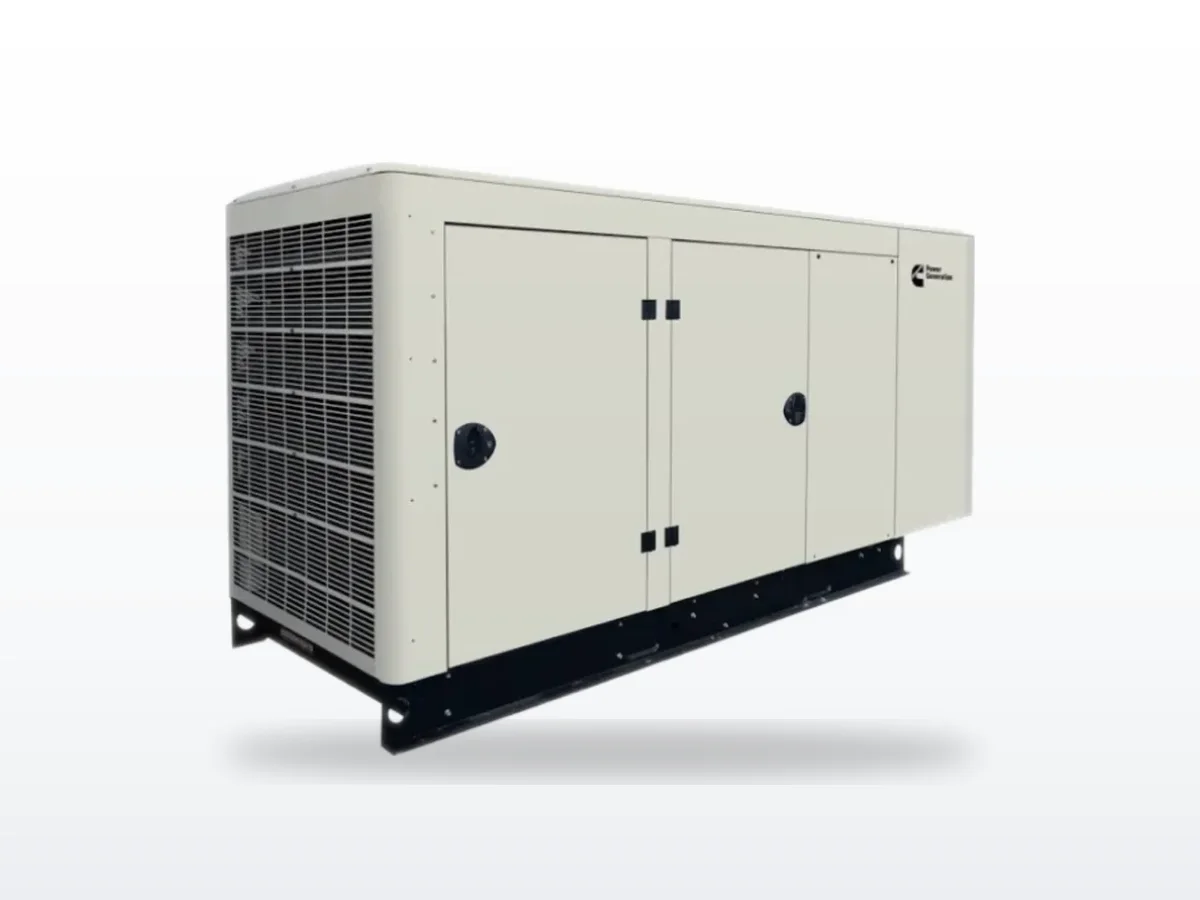
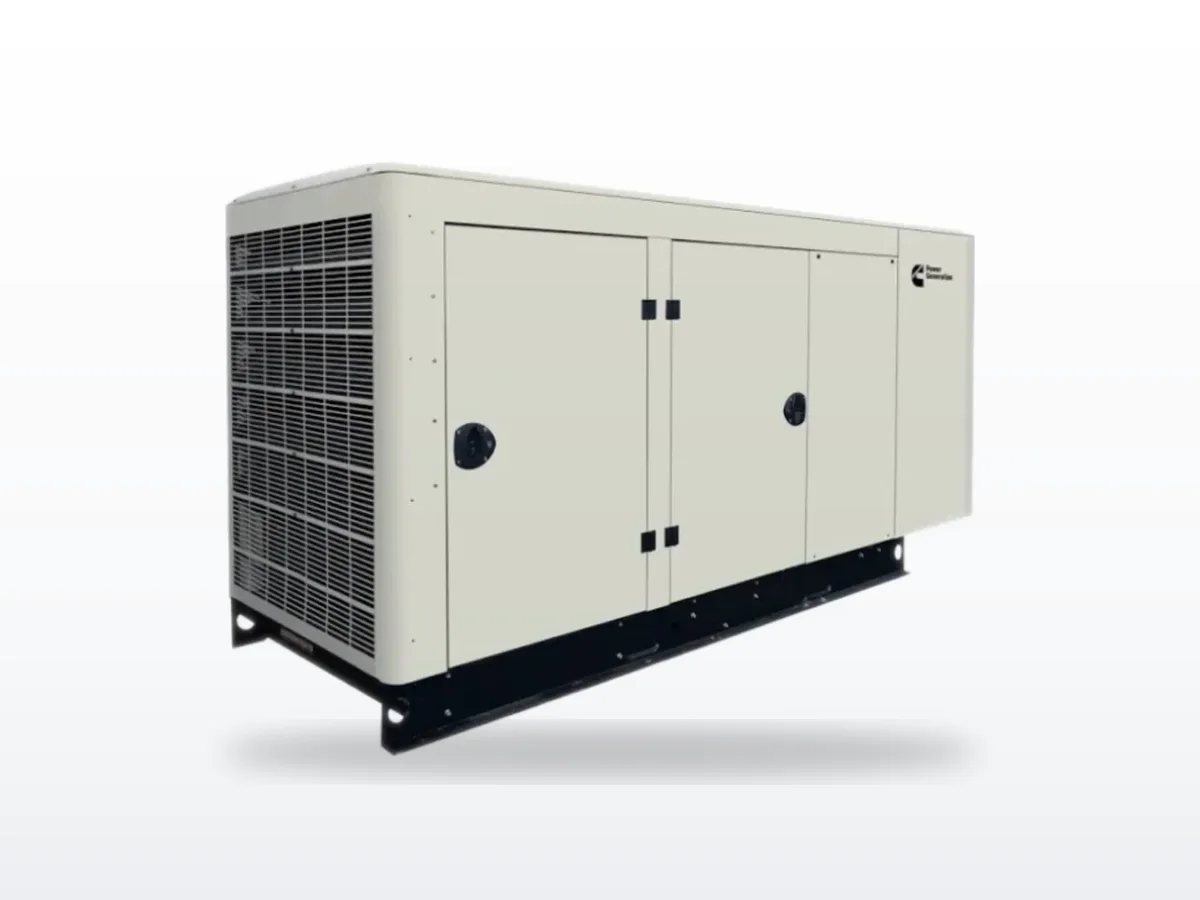
The Cummins C60 N6 is a 60-kilowatt natural gas and propane standby generator built on the QSJ5.9G 5.9-liter inline-6 engine — the same platform family used across the 45-100 kW N6 range. The naturally aspirated gaseous engine delivers straightforward, reliable standby power for small commercial facilities: retail storefronts, restaurants, small offices, and telecom equipment shelters.
The C60 N6 is certified to UL 2200, listed to EPA SI Stationary Emission Regulation (40 CFR Part 60), and is NFPA 110 Level 1 capable when properly accessorized. The PowerCommand 1.1 control provides isochronous governing, automatic remote start/stop, output metering, and NFPA 110 Level 1 compliance capability. The sound-attenuated aluminum enclosure option is wind-rated to 180 mph per ASCE 7-10 and carries IBC Seismic certification.
The open-skid configuration (2489 mm / 98 in. long) and the Level 1 sound-attenuated enclosure (3023 mm / 119 in. long) both share the same 1016 mm (40 in.) width and 1473 mm (58 in.) height.
Technical Specifications#
| Parameter | Value |
|---|---|
| Standby Rating | 60 kW (75 kVA) |
| Frequency | 60 Hz |
| Power Factor | 0.8 |
| Engine Model | QSJ5.9G |
| Displacement | 5.9 liters (359 in³) |
| Configuration | Cast iron, inline-6 |
| Aspiration | Naturally aspirated |
| Rated Speed | 1800 rpm |
| Bore x Stroke | 102.1 mm x 119.9 mm |
| Starting System | 12 VDC, 850 CCA |
| Battery Charging Alternator | 52 amps |
| Lube Oil Filter | Spin-on with relief valve |
| Cooling | Set-mounted radiator, 50 °C ambient |
| Control | PowerCommand 1.1 |
| Open Set Dimensions (L x W x H) | 2489 x 1016 x 1473 mm (98 x 40 x 58 in.) |
| Open Set Weight (wet) | 1,103 kg (2,431 lbs) |
Available voltage configurations:
- 1-phase: 120/240V
- 3-phase: 120/208V, 120/240V, 277/480V, 347/600V
Our Service Experience#
The C60 N6 is a practical fit for commercial standby accounts where a diesel unit would be overkill. The naturally aspirated QSJ5.9G has a simpler maintenance profile than the turbocharged units in the same N6 family — no turbocharger to inspect and no charge air cooler to service. Gas fuel eliminates the annual fuel polishing and filter maintenance that standby diesel units require.
Our focus on these units is spark plug condition (change at 1,500 hours or annually), air/fuel ratio calibration, and battery health. The 12V single-battery starting system is simpler than the 24V systems on larger units, but battery condition remains the most common cause of fail-to-start events — we recommend annual battery load testing and replacement every 3-4 years in commercial standby service.
Fuel inlet pressure must be in the 6-14 in. WC range at the engine connection under operating load. We verify gas supply pressure at commissioning and re-verify any time utility distribution changes occur upstream of the installation.
Frequently Asked Questions#
What engine does the C60 N6 use? The Cummins QSJ5.9G — a 5.9-liter, cast iron inline-6 naturally aspirated spark-ignited engine. Bore is 102.1 mm, stroke is 119.9 mm, and rated speed is 1800 rpm. The 12V starting system uses an 850 CCA battery with a 52-amp charging alternator.
What voltages does the C60 N6 support? Single-phase 120/240V and three-phase 120/208V, 120/240V, 277/480V, and 347/600V. The alternator is reconnectable in the field for voltage adjustment.
What is the advantage of natural gas for a 60 kW commercial standby unit? Natural gas connects to the utility supply — no stored fuel to degrade, no polishing required, and no fuel delivery coordination. For sites that experience infrequent outages lasting hours rather than days, gas is operationally simpler. Propane (LPG) provides the same fuel-flexibility where natural gas is unavailable.
How does the C60 N6 compare to larger C-Series models? The C60 N6 is the naturally aspirated entry point of the C-Series commercial gaseous line. Larger models (C150 N6, C250 N6, C400 N6) use turbocharged engines for higher output and are suited to larger commercial and institutional loads. The C60 N6's naturally aspirated engine is mechanically simpler with fewer maintenance touchpoints.
Is the C60 N6 NFPA 110 compliant? The C60 N6 is NFPA 110 Level 1 capable when equipped with the required accessories (coolant heater, battery charger, compliant ATS). The PowerCommand 1.1 control supports Level 1 compliance. Confirm with your installing contractor that all accessories are properly specified.