Overview#
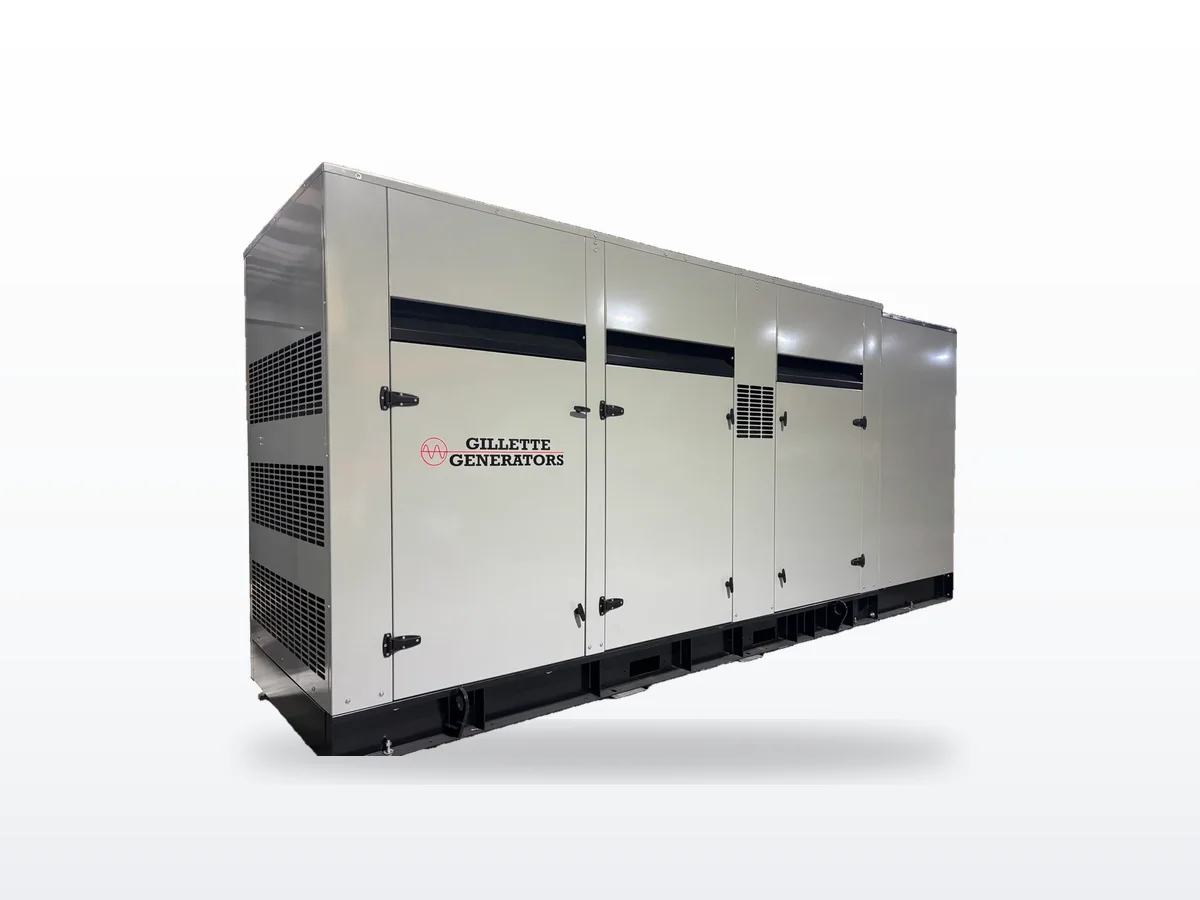
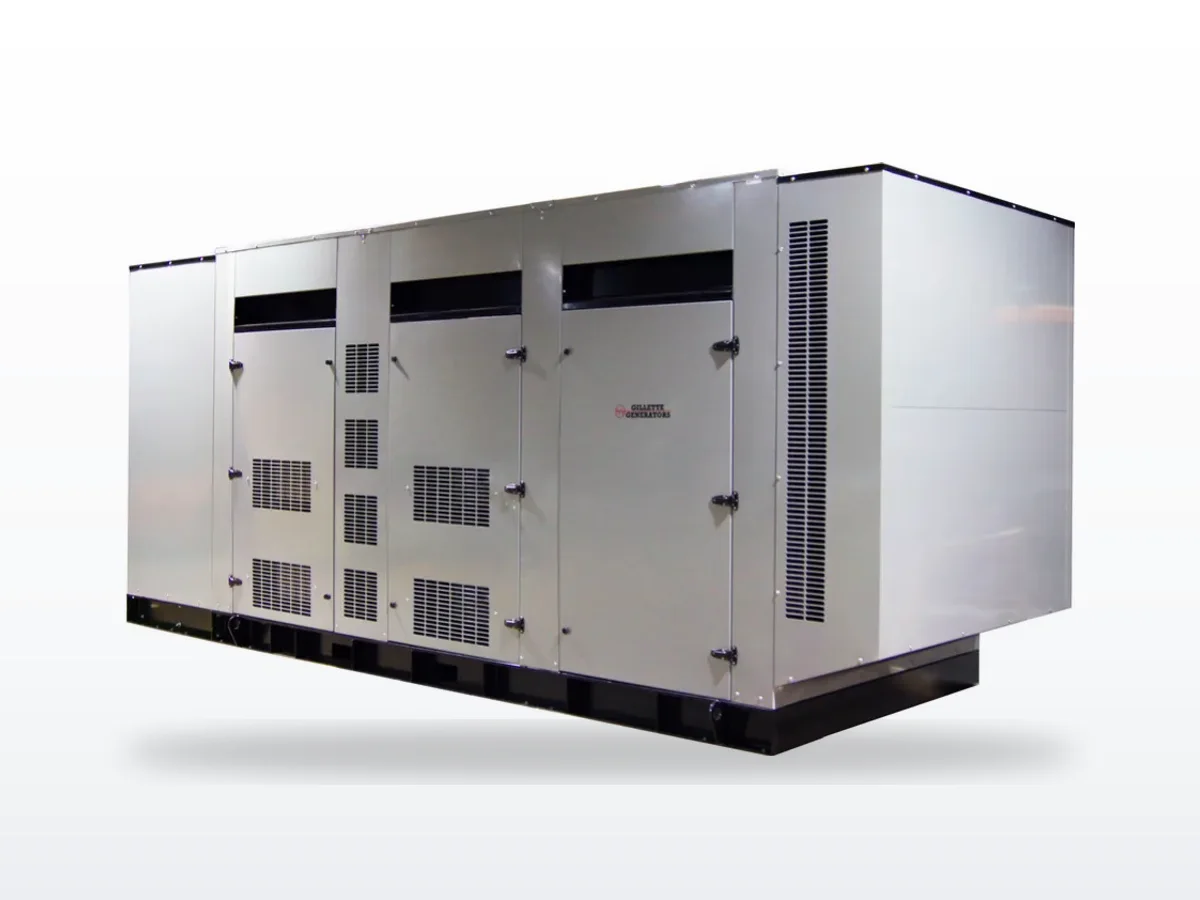
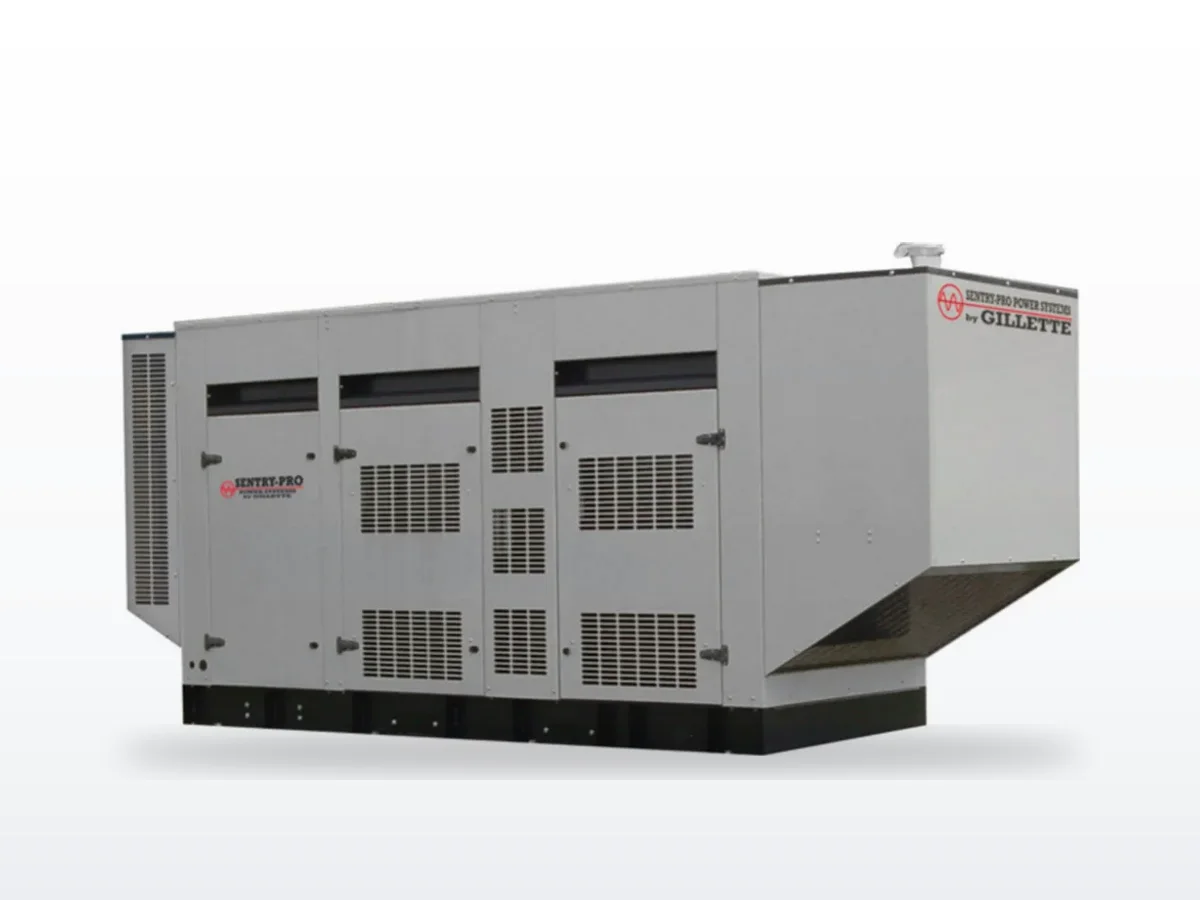
The Gillette SP-3500 is a 350-kilowatt natural gas / 210-kilowatt LPG stationary standby generator built on PSI's 14.6L turbocharged V8. It bridges the 13L inline-6 platform (SP-2500P/3000P) and the 21.9L V12 platform (SP-4000/5000), offering a unique 350 kW NG output point with genuine LPG capability (210 kW) that the 13L models cannot achieve.
Stamford S4L1DE alternator (480V three-phase) or S4L1DF (208/240V), DSE 7420 MKII controller, three-phase only.
The PSI 14.6L V8 — a distinct platform#
The 14.6L V8 is not used in any other SP model — it is unique to the SP-3500. Key specifications:
- 892 cu in / 14.6L V8 — long-stroke configuration (5.04" bore × 5.59" stroke)
- 10.5:1 compression ratio — consistent with the other large PSI turbocharged blocks
- 10 main bearings, precision half-shell — high bearing count for the V8 configuration
- Dual 5" exhaust outlets — two exhaust connections required for installation
- 52" diameter cooling fan — large radiator required for the 125°F (51.6°C) ambient rating
- Mechanical output: 536 bhp (NG) / 322 bhp (LPG) at standby
The standby exhaust temperature is 1,382°F (750°C) — among the highest in the SP lineup — requiring careful exhaust system design for confined installations.
350 kW gas standby — commercial context#
At 350 kW, this unit typically backs up entire medium-large commercial buildings or critical circuits in larger campuses. Applications in our service territory:
- Large hotels (full emergency power for elevators, egress lighting, HVAC, life safety)
- Hospital-adjacent buildings (imaging, clinical support)
- Data center pods (2-4 racks of power-dense compute)
- Industrial facilities with medium-voltage distribution
The SP-3500 is the first SP model requiring dual fuel inlets — confirm gas supply sizing with the utility before design finalization.
Our service experience#
The PSI 14.6L V8 is a well-proven industrial gas engine. V8 architecture means slightly more access complexity than the inline-6 models — rear bank spark plugs require careful scheduling in confined enclosures. At 350 kW, annual load bank testing is critical: a generator this size that has never run at full load will reveal cooling, governor, and fuel system issues that monthly no-load tests miss. We recommend commissioning at 100% rated load for at minimum 2 hours on initial installation.