Overview#
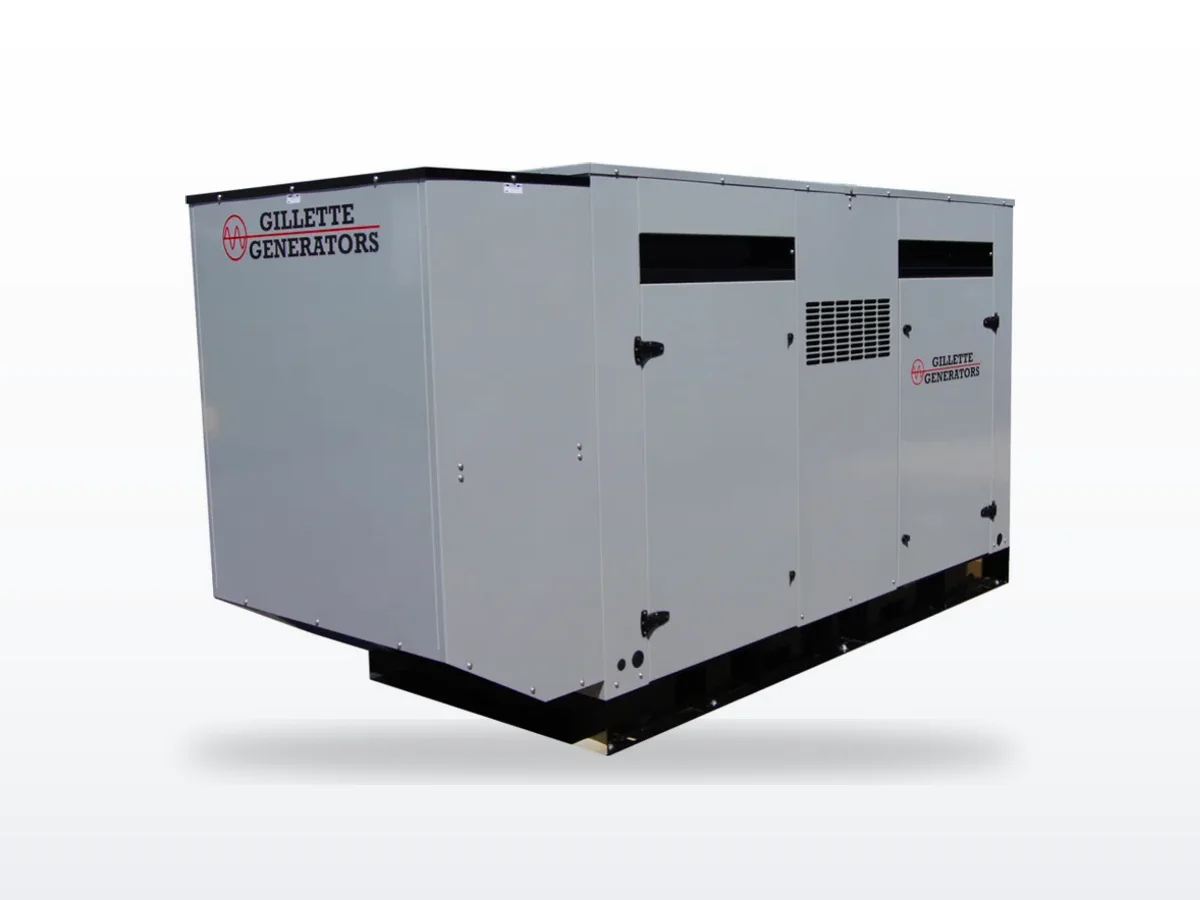
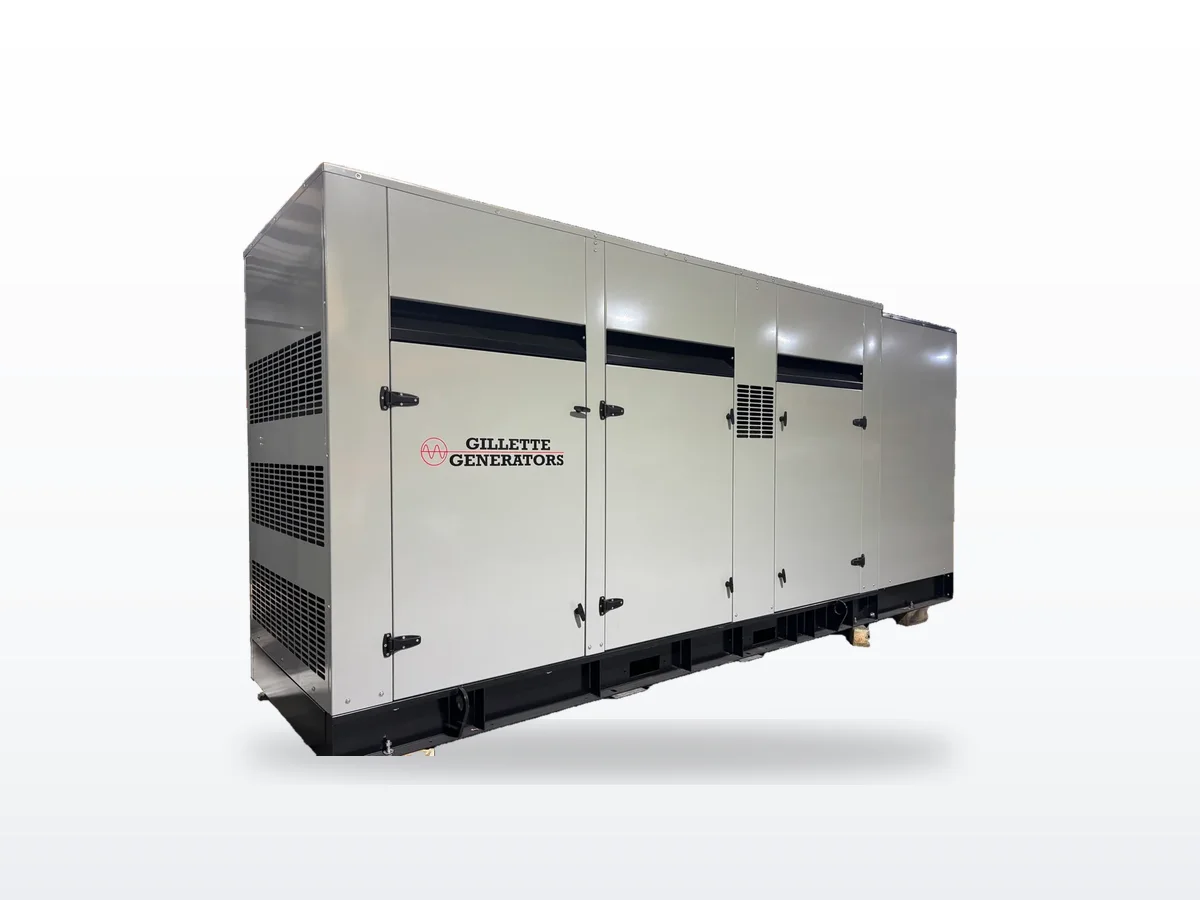
The Gillette SP-2000P is a 200-kilowatt natural gas standby generator — the highest output the PSI 8.8L platform achieves. It uses a high-output (HO) variant of PSI's turbocharged and charge air cooled V8 with a forged steel crankshaft, seven main bearings, and calibration specifically for natural gas (no LPG option). Stamford UCID274J alternator, DSE 7420 MKII controller, three-phase only.
This is a step below Gillette's 13L inline-6 platform (SP-2500P at 250 kW NG) — the SP-2000P extracts maximum output from the 8.8L displacement rather than stepping to a larger engine. The result is a more compact footprint than the 13L units at 200 kW.
The PSI 8.8L HO: maximum output from a familiar platform#
The SP-2000P, SP-1500, and SP-960 all share the PSI 8.8L V8 — each at progressively higher output through different configurations:
| Model | Engine Variant | Standby kW (NG) | Crankshaft | Main Bearings |
|---|---|---|---|---|
| SP-960 | 8.8L naturally aspirated | 96 kW | Nodular iron | 5 |
| SP-1500 | 8.8L TCAC | 150 kW | Nodular iron | 5 |
| SP-2000P | 8.8L TCAC HO | 200 kW | Forged steel | 7 |
The HO variant's forged steel crankshaft and additional main bearings are designed to handle the higher peak cylinder pressures at 316 bhp mechanical output. The 8.5:1 compression ratio is lower than the SP-1500's 10.1:1 — a deliberate calibration to manage combustion temperatures at high output on natural gas.
Natural gas only — practical implications#
At 200 kW, natural gas vapor-withdrawal LPG delivery is not practical for sustained operation. The SP-2000P is calibrated exclusively for natural gas. If your site requires LP capability at this power class, the SP-2500P delivers 165 kW LPG (with 250 kW NG) on a larger engine platform.
Gas service sizing: 2,431,000 BTU/hr at full load requires coordination with your utility — typically a 2" dedicated high-pressure service with pressure regulator.
Our service experience#
The PSI 8.8L turbocharged platform is the engine we see most on mid-size Gillette commercial installations in our territory. The HO variant's forged crankshaft is more robust than the standard block — we've seen fewer crankshaft-related failures on these units. Service intervals are identical to the standard TCAC version: 250-hour oil changes, 1500-hour spark plugs. The larger fuel inlet (2" NPTF) means fuel delivery issues are less common at this power level than on units with undersized connections.