Overview#
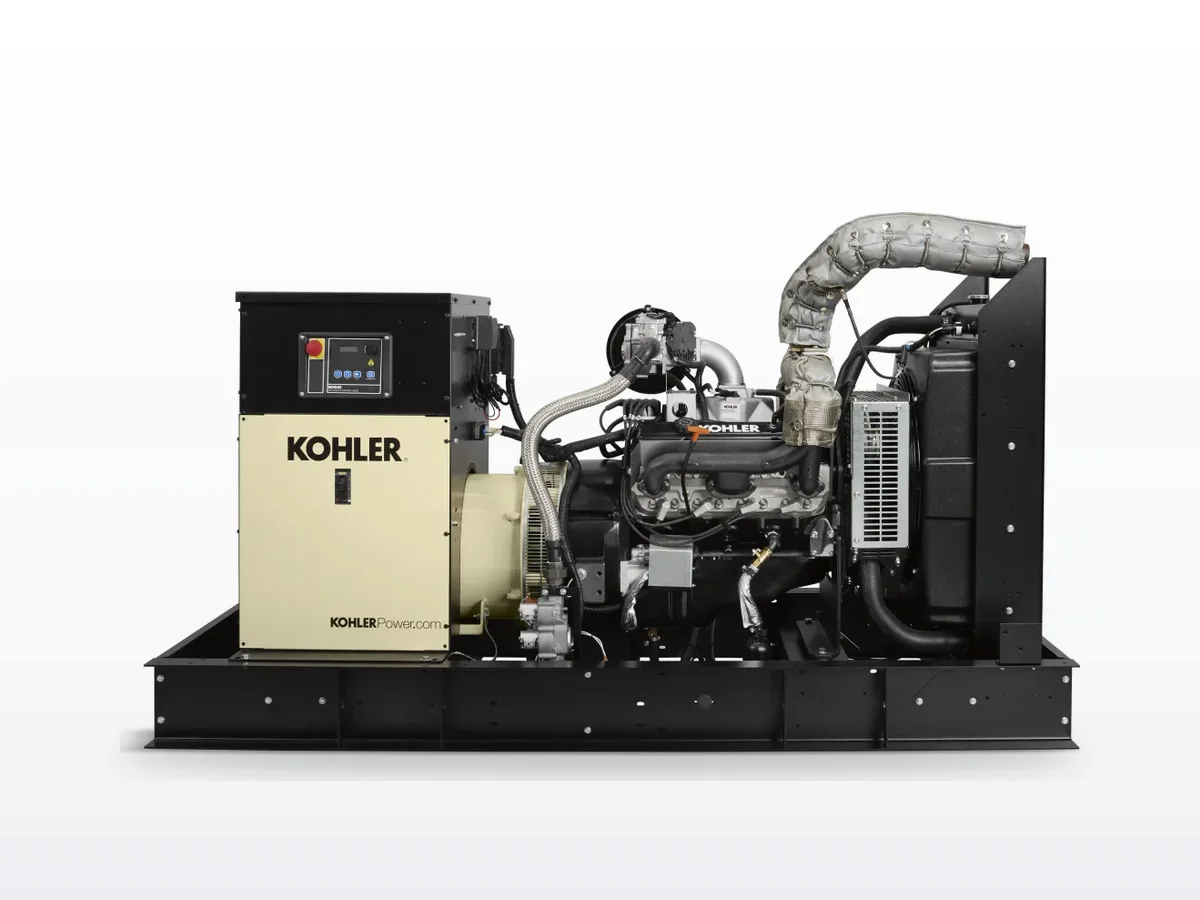
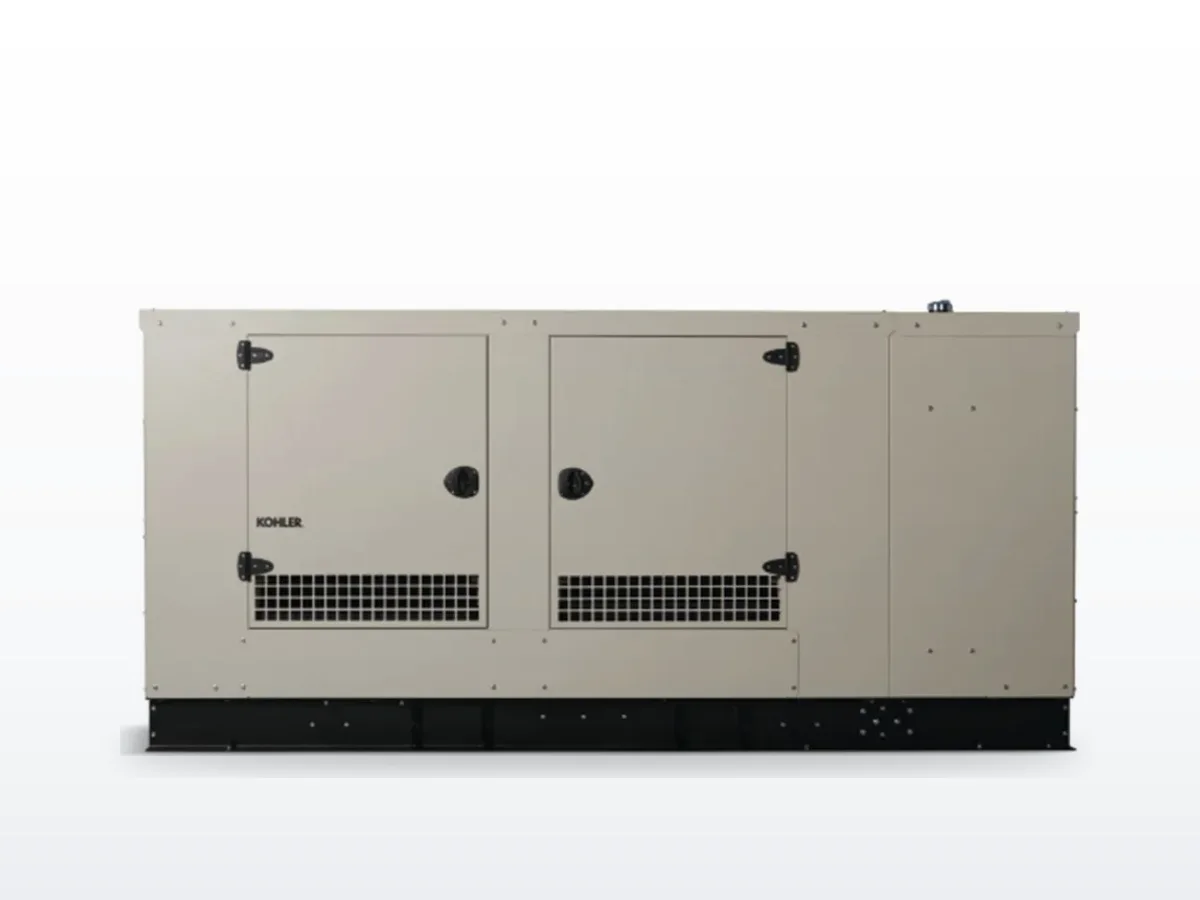
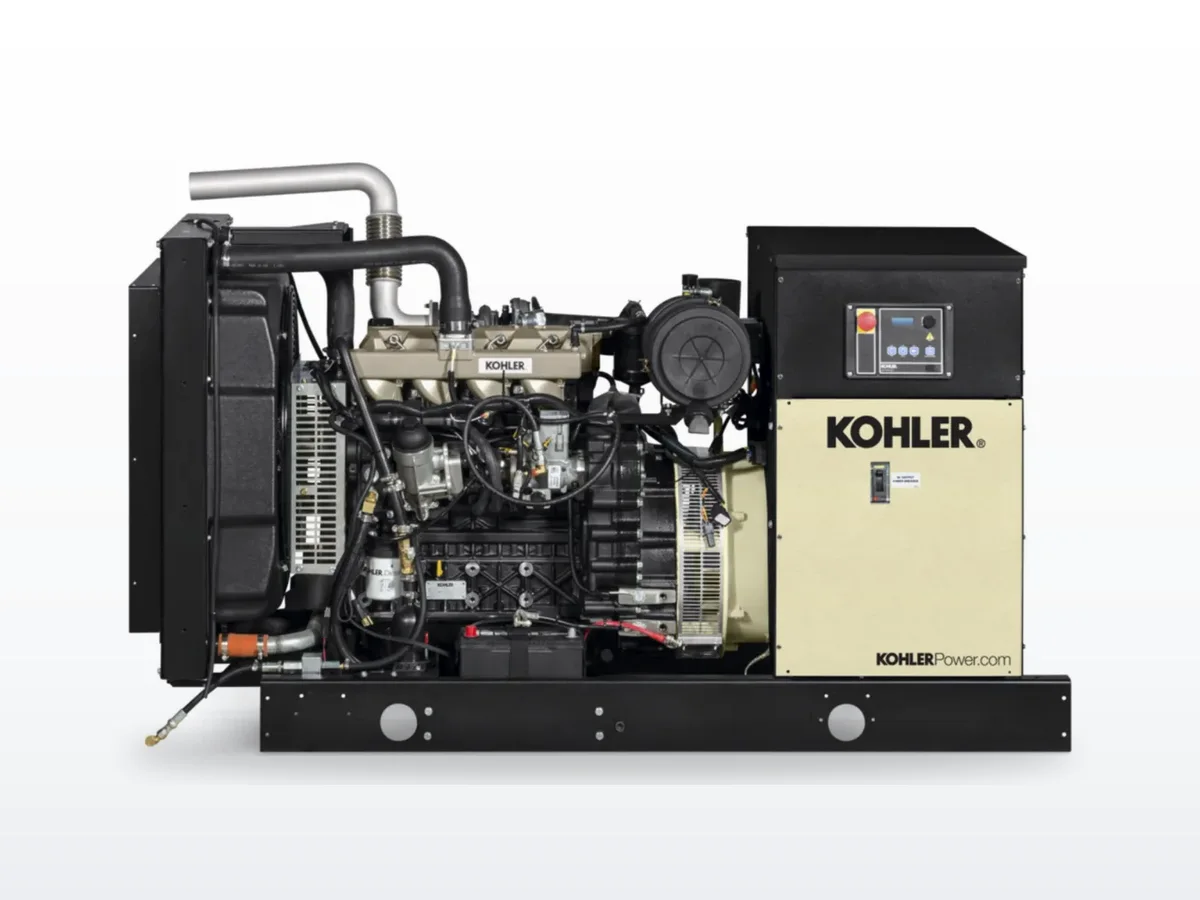
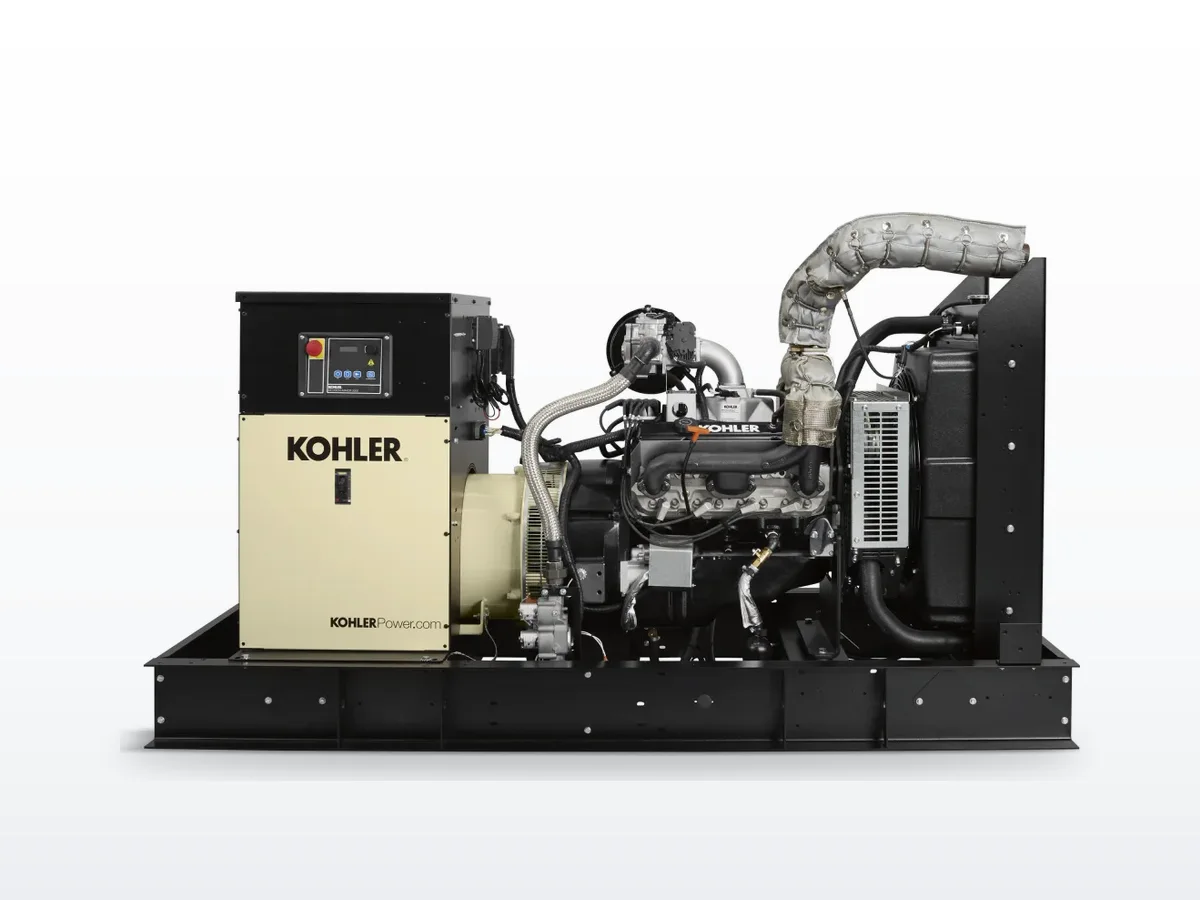
The Kohler KG60 is a 60-kilowatt commercial standby generator built on Kohler's 6.2-liter naturally-aspirated V8 spark-ignition platform, certified to EPA 40 CFR Part 60 Subpart JJJJ for stationary emergency duty. It runs on either natural gas or LP propane with field-selectable fuel switching, and is sized for the light commercial sweet spot: full-service restaurants, multi-tenant retail, small data closets, multi-family residential common loads, telecom huts, and refrigerated storage.
It sits in the lower-middle of Kohler's industrial gaseous lineup. Below it: KG40, KG48. Above: KG80, KG100, KG125, and the larger KG200 / KG300 / KG400 platforms. The KG line is the gaseous-fueled counterpart to Kohler's diesel KD line — same engineering philosophy, different fuel system and emissions architecture.
Why we see this unit a lot#
Three reasons drive KG60 deployments:
- No fuel storage. Natural gas service eliminates the on-site diesel tank, the EPA SPCC paperwork, the annual fuel polishing, and the diesel-degradation risk. For sites where utility gas is reliable, this is a major operational simplification.
- Lower visible emissions. Subpart JJJJ-certified spark-ignition engines produce no visible smoke and significantly lower particulate matter than even Tier 4 Final diesel. Important for sound-and-air sensitive sites (hotels, hospitals, schools, urban infill).
- Footprint. At 60 kW with a sound-attenuated enclosure, the KG60 fits in spaces that won't accommodate a 100+ kW diesel skid with day tank. Useful for retrofits.
The tradeoff: gaseous fuel pressure delivery becomes the single point of failure. Earthquake gas-shutoff valves, pipeline integrity, and utility uptime all matter more than they would for a diesel unit with on-site storage.
Sizing guidance#
A bare 60 kW nameplate is misleading without context. Real sizing considerations:
- Motor starting: large compressors and elevators draw 4-6× full-load current at startup. A 60 kW genset will start a single 7.5 HP motor without issue but may struggle with simultaneous starts.
- Power factor: the KG60's 75 kVA rating at 0.8 PF assumes mixed inductive load. Heavily reactive loads (lots of fluorescent ballasts, large motors without VFDs) will shave usable kW.
- Altitude / temperature derate: above 1000 ft elevation or 25°C ambient, output derates per Kohler's curve. Coastal California sites usually clear without derate; foothill / Sierra sites may need to size up.
- Future load growth: if your facility expects 15-20% load growth in the next 5 years, the KG80 or KG100 is often the better long-term spec.
Engine and drivetrain#
The Kohler KG6208 6.2L V8 is built for stationary emergency duty: long service intervals, hardened ignition, and Subpart JJJJ-compliant air-fuel control. Always source parts through authorized Kohler/Rehlko channels and reference TP-7098 / TP-7118 for the part numbers that apply to your specific build — the Kohler service catalog supersedes any third-party cross-reference.
The alternator is a brushless, 4-pole, Class H rotating-field unit with rare-earth permanent magnet (PMG) excitation, using Kohler's Fast-Response excitation system. The PMG sustains short-circuit current up to 300% of rated for up to 10 seconds, which keeps voltage regulation stable into nonlinear loads (UPS rectifiers, VFDs) and lets downstream breakers trip without collapsing the alternator field.
The standard controller is the Kohler APM402, with the APM603 available for paralleling and advanced load management. Both speak Modbus and integrate with most BMS / SCADA platforms via the optional gateway accessory.
Service in the real world#
The factory interval is 250 hours / 12 months for oil. In typical standby duty (~50 hours/year of exercise + occasional outage runtime), the 12-month calendar interval governs — you'll change oil every spring before the unit accumulates 250 hours.
The most common service event we see on KG60 platforms in years 3-7 is spark plug replacement and ignition coil inspection. A misfire under load that wouldn't show up during a no-load monthly exercise will show up the first hour of an actual outage, exactly when you don't want it. Plan for full ignition refresh every 1,500 hours regardless of how the engine sounds at idle.
The other recurring item is coolant. Kohler specifies extended-life coolant good for 5 years / 4,000 hours, but coolant pH drifts and requires annual testing. We've seen sites with 7-year-old original coolant develop pinhole leaks in the radiator core that could have been prevented with a $30 test strip.
NFPA 110 considerations#
For Level 1 (life-safety) emergency systems, the KG60 is acceptable when configured with the NFPA 110 option package, which adds:
- Battery charger output monitoring with low-voltage alarm
- Run-fail / not-in-auto remote contacts
- Audible/visual local alarm panel
- Fuel pressure / supply integrity monitoring
- On-site engine diagnostics maintained for at least 5 years
The gaseous-fuel question for NFPA 110 is local-AHJ-dependent. NFPA 110 §5.1.3 permits gaseous on-site fuel supplies where the fuel source is reliable and protected, but some California AHJs interpret this conservatively for hospital and life-safety occupancies. Always confirm with the AHJ before specifying gaseous for Level 1 service — for some occupancies, only diesel will pass review.
How it compares#
Comparable units in the 60-80 kW commercial gaseous bracket include the Generac SG080 and the Cummins C60 N6. The KG60 vs SG080 vs C60 N6 decision typically comes down to (a) which dealer is local with parts and service, (b) which controller integrates with your existing BMS, and (c) install-cost differences driven by enclosure size and local trades. Confirm current OEM specs against each manufacturer's spec sheet before locking a decision.
When NOT to spec the KG60#
Honest reasons to choose a different unit:
- Mission-critical IT load: if you're protecting a tier III+ data center, plan around diesel. Gaseous units are excellent for tier I/II and edge sites; for tier III+, the regulatory and AHJ pressure typically favors diesel.
- Heavy motor starting on day one: for a single-genset site that needs to cold-start a 25+ HP motor, look at the KG100 or KG125. Doable on the KG60 with a soft-start, but cleaner with more headroom.
- Sites with unreliable gas service: historic gas-supply outages or seismic-shutoff exposure (Bay Area especially) make a diesel + gas hybrid attractive. The KG60 has a bi-fuel option but the diesel pilot fuel adds storage requirements that erase part of the gaseous advantage.
- Locations needing CARB Level 0 marks: for the most stringent Air District filings, current diesel Tier 4 Final units are sometimes a better paper match than Subpart JJJJ gaseous, depending on jurisdiction.
Our service experience#
We service KG-series units across coastal California — Monterey, Santa Cruz, San Benito, and inland Santa Clara / San Jose. The KG60 is one of the most-deployed gaseous standby gensets in our service territory, particularly in restaurant chains, urban hotels, and Class B office buildings where on-site diesel storage is impractical.
Common service patterns we see:
- Year 1-2: punch-list issues from commissioning (gas pressure, controller programming, exercise schedule)
- Year 3-5: first ignition refresh, coolant test/replace, battery replacement
- Year 6-8: sensor and connector cleanup (Bay Area marine air is tough on plug-and-play harnesses)
- Year 10+: plan for top-end inspection and depending on runtime, partial overhaul
We stock common KG60 parts (filters, plugs, coolant, batteries) and can typically respond to outage-related calls within 4 hours in our primary service area.