Overview#
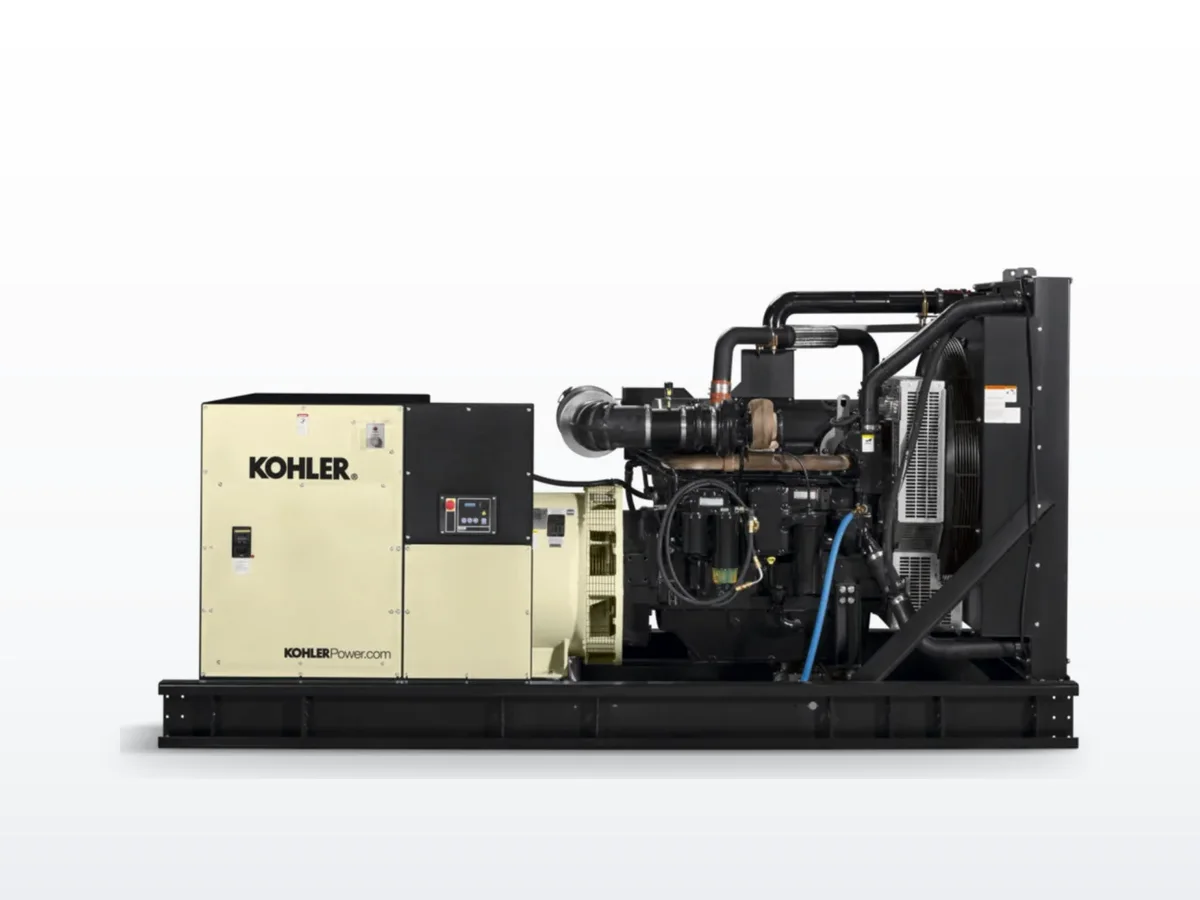
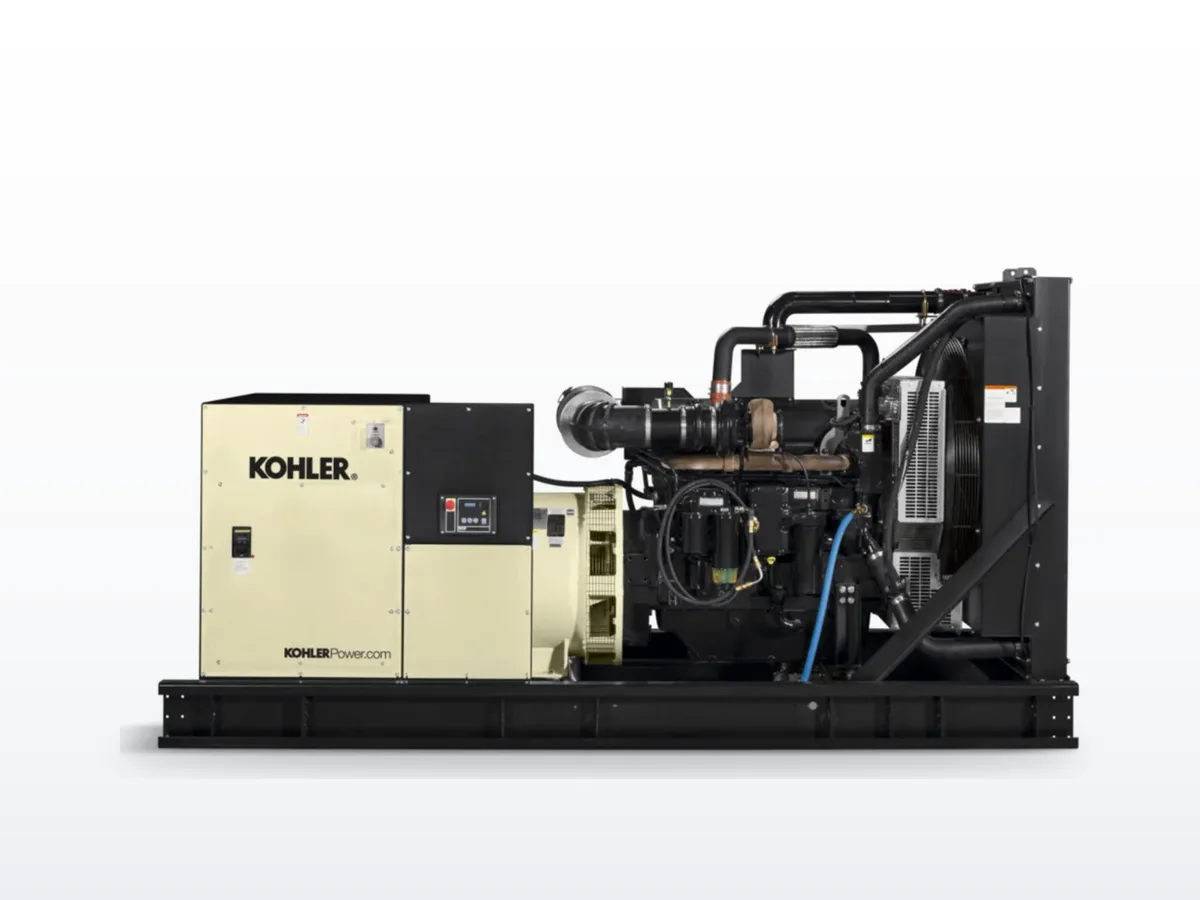
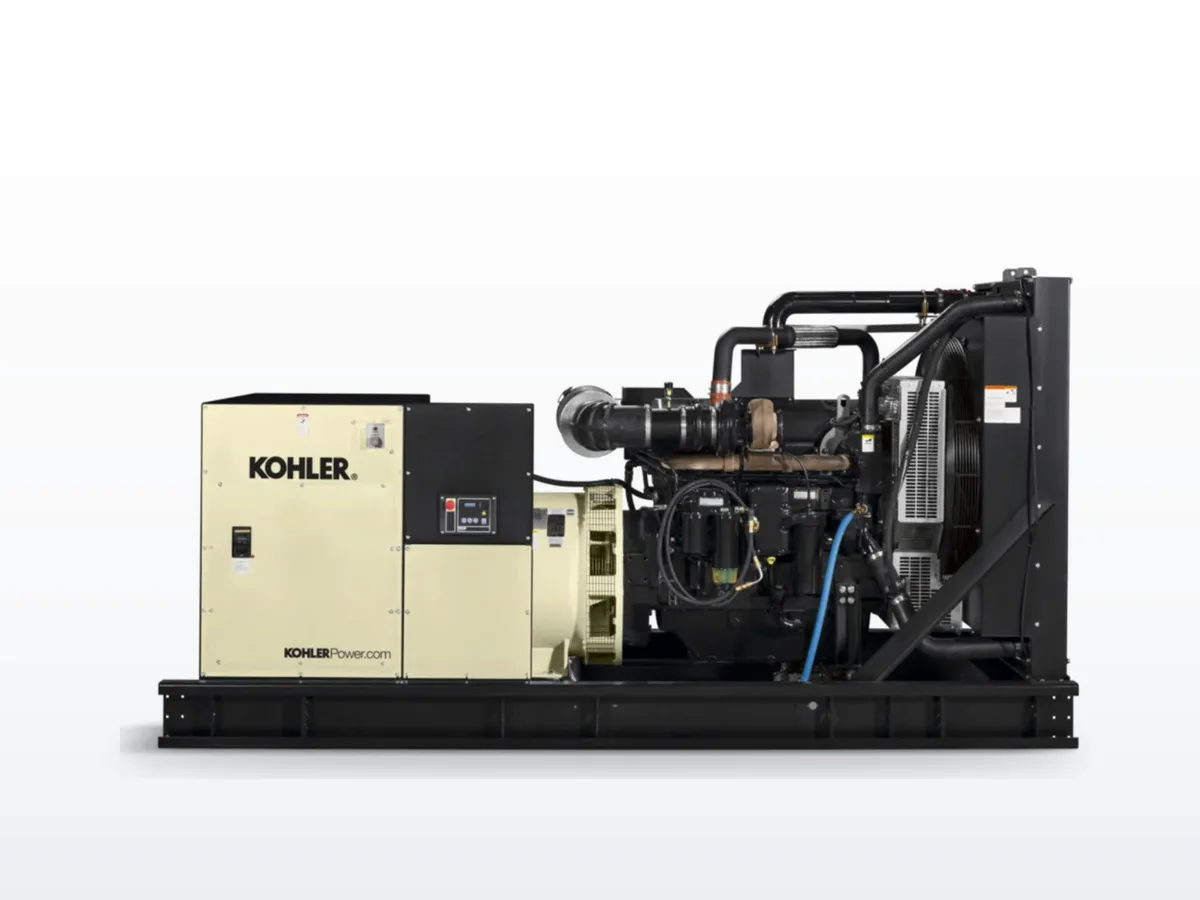
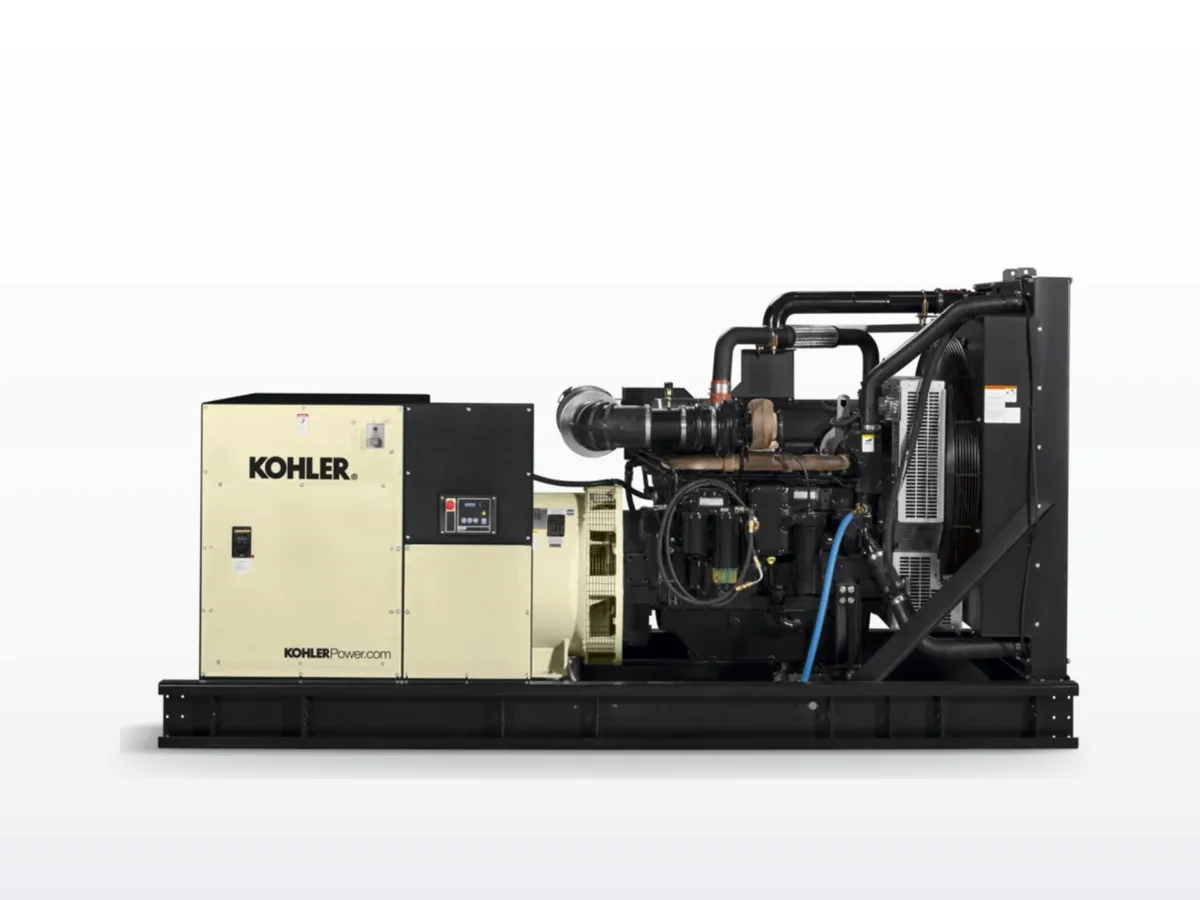
The Kohler 500REOZJC is a 500-kilowatt standby (455 kW prime) diesel commercial standby generator — the class of machine that protects hospitals, data centers, and high-rises. Per spec sheet G5-622, it uses the John Deere 6135HFG75, a 13.5 L PowerTech E inline-6 turbocharged charge-air-cooled diesel at 1800 RPM, EPA Tier 2 (stationary emergency).
The 500REOZJC is UL 2200 listed and meets NFPA 110 Level 1 requirements when equipped with the appropriate accessories. It supports 120/208V, 277/480V, and 347/600V configurations — the 600V option being uncommon in this power class and typically used in Canadian installations. Paralleling capability with appropriate controller configurations supports N+1 redundancy designs; a common topology is two 500REOZJC units in parallel for 1 MW with full redundancy, used at Tier III data centers and large hospitals.
Approved for HVO/Renewable Diesel fuels compliant with EN15940/ASTM D975, with up to 4% higher volumetric consumption than #2 ULSD.
The John Deere 6135 platform#
The 6135 is one of the larger John Deere gen-drive engines and is purpose-tuned for stationary standby duty. The 6135HFG75 is a Tier 2 stationary-emergency-standby variant; sibling 6135 variants (HFG84, HF485) target other tier and prime/standby splits. The 6135 platform benefits from John Deere's broad commercial parts network and factory-trained service infrastructure, which materially shortens unplanned-repair windows.
Emissions tier — what to verify per project#
Tier classification on a 500 kW class diesel depends on duty (emergency standby vs. prime/non-emergency), the specific air district, and the model code. The published 500REOZJC is Tier 2. Where Tier 4 Final is required (e.g., prime-power duty, certain California air districts), a different model and engine package is needed — do not assume "500 kW Kohler" maps to a single tier. Confirm with the Kohler/Rehlko spec sheet for the exact model on the project.
Specifications#
| Spec | Value |
|---|---|
| Standby Power | 500 kW |
| Prime Power | 455 kW |
| Voltage options | 120/208V, 277/480V, 347/600V |
| Frequency | 60 Hz |
| Engine | John Deere 6135HFG75 |
| Engine type | 4-cycle turbocharged, charge air-cooled |
| Cylinders | 6 inline |
| Displacement | 13.5 L (824 cu. in.) |
| Compression ratio | 16.0:1 |
| Rated RPM | 1,800 |
| Fuel | Diesel (#2 / HVO / RD) |
| Cooling | Liquid (radiator) |
| Emissions tier | EPA Tier 2 stationary emergency |
| Fuel consumption (100% standby load) | 35.5 gph |
| Fuel consumption (75% standby load) | 27.6 gph |
| Overall dimensions | 142.9" x 56.1" x 76.2" |
| Operating weight | 8,560 lb |
Service & Maintenance#
| Service | Interval |
|---|---|
| Oil change | Every 500 hours or 12 months |
| Fuel filter replacement | Every 500 hours |
| Coolant flush | Every 5 years |
| Load bank test | Annually (NFPA 110 requirement) |
Oil pan capacity is 40.0 L (42.3 qt) dry, 42.0 L (44.4 qt) with filter. Single cartridge oil filter with water-cooled oil cooler. Secondary fuel filter: 2 microns at 98% efficiency; primary fuel filter: 10 microns with water separator.
Common Failure Modes#
Fuel quality (algae/water contamination) is the leading service issue. Diesel stored in day tanks without biocide treatment develops microbial growth that clogs filters and fouls injectors. Quarterly fuel polishing is standard for NFPA 110 Level 1 accounts.
Starting battery degradation — the 500REOZJC uses two 925 CCA 12V batteries in 24V series configuration. Slow crank or failed 10-second exercise start is the primary symptom. Annual battery condition testing is required.
Coolant system maintenance — block heater failures cause cold-start issues and can lead to failed exercise tests. Block heater element condition should be checked at each annual inspection.
Turbocharger wear presents as reduced power and excessive smoke under load. The John Deere 6135 turbocharger is accessible for field inspection and replacement with strong parts availability through the John Deere network.
Our service experience#
The 500 kW class is our top-tier commercial service. These installations have strict requirements (NFPA 110 Level 1), formal preventive maintenance programs, and monthly exercise/reporting obligations. The John Deere 6135 platform has a broad parts and service network, which materially shortens unplanned-repair windows. PowerGen services 500REOZJC installations at hospitals, data centers, and high-rise buildings throughout Northern California and the Central Valley.
FAQ#
Q: What engine is in the Kohler 500REOZJC? A: Per spec sheet G5-622, the 500REOZJC uses a John Deere 6135HFG75 — a 13.5 L turbocharged charge-air-cooled inline-6 PowerTech E diesel at 1800 RPM, rated for stationary emergency standby duty under EPA Tier 2.
Q: Is the 500REOZJC EPA Tier 4? A: No. The 500REOZJC as published is EPA Tier 2 (stationary emergency standby). If a project requires Tier 4 Final, confirm the model designation with Kohler/Rehlko — do not assume "500 kW Kohler" maps to a single tier.
Q: How much fuel does a 500 kW generator consume? A: Per spec sheet G5-622, the 500REOZJC consumes 35.5 gph at 100% standby load and 27.6 gph at 75% load. Use these values when sizing day tanks for NFPA 110 required runtime.
Q: Can the 500REOZJC be paralleled? A: Yes — paralleling is supported with the appropriate Kohler controller configuration (APM603 or Decision-Maker 6000). A common topology is two 500 kW units for 1 MW with N+1 redundancy, used at hospitals and Tier III data centers.