Overview#
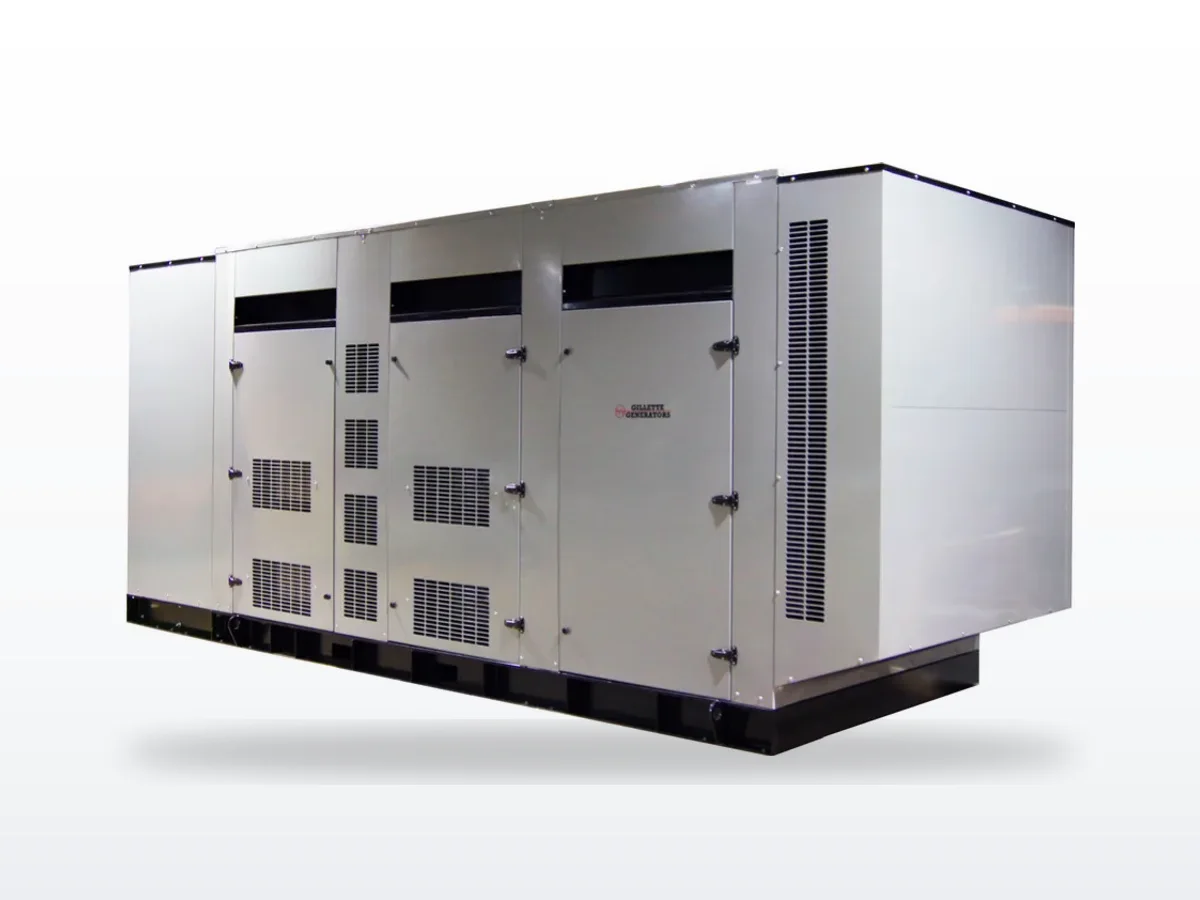
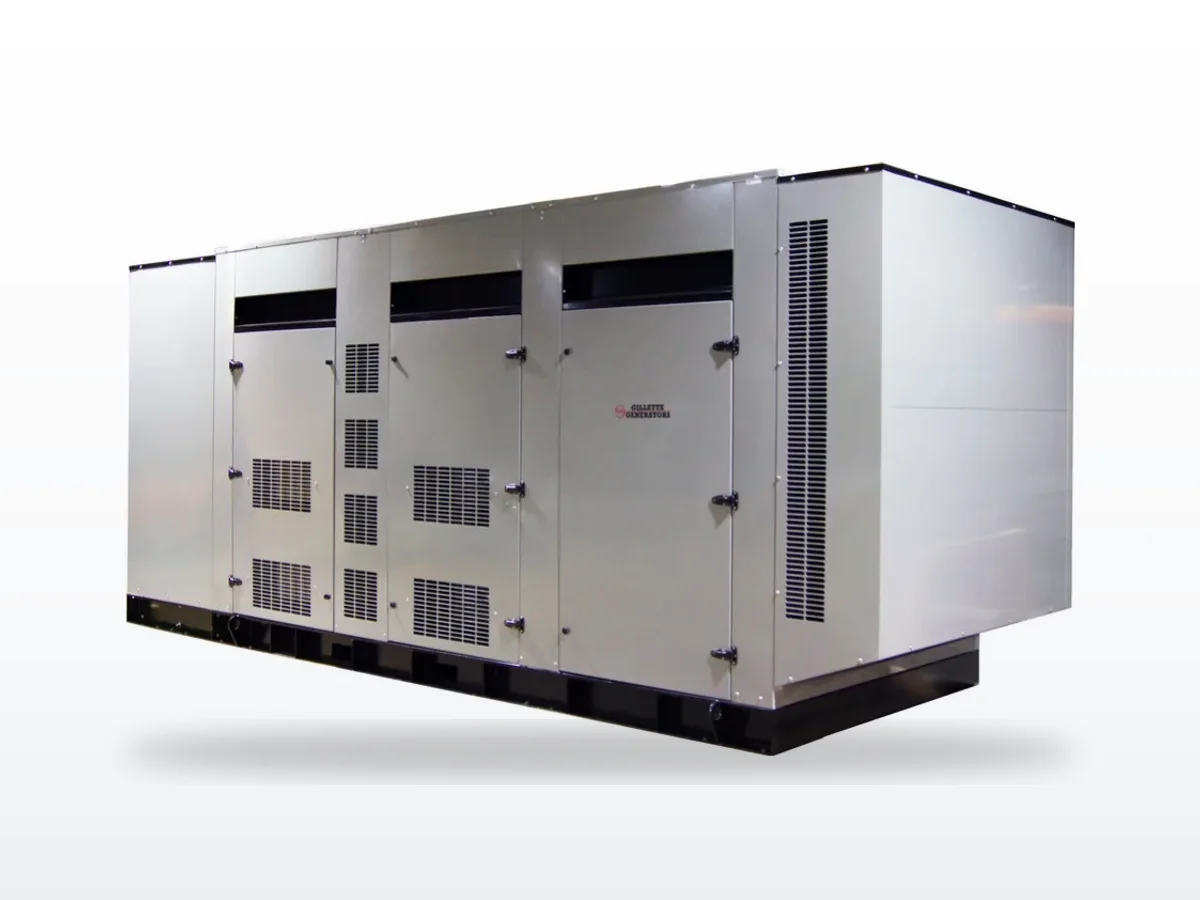
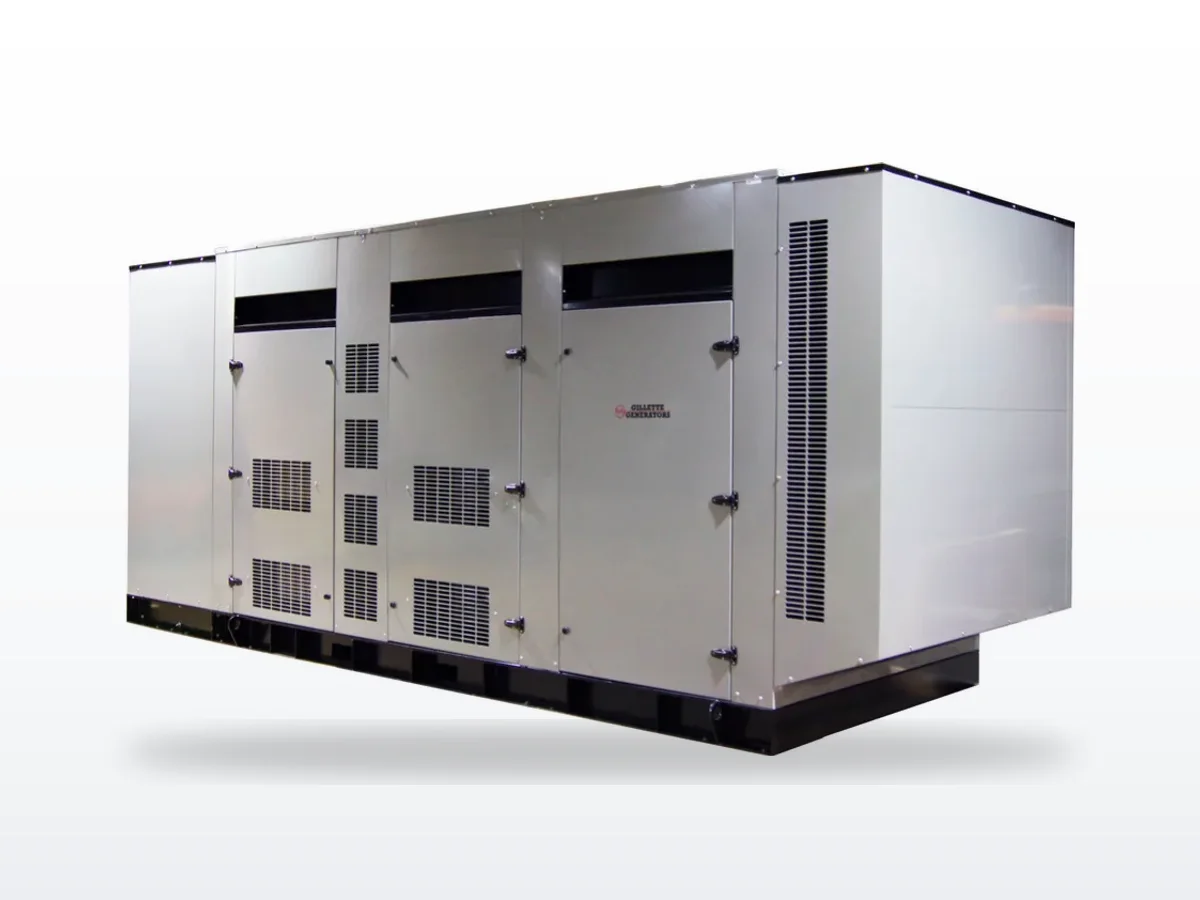
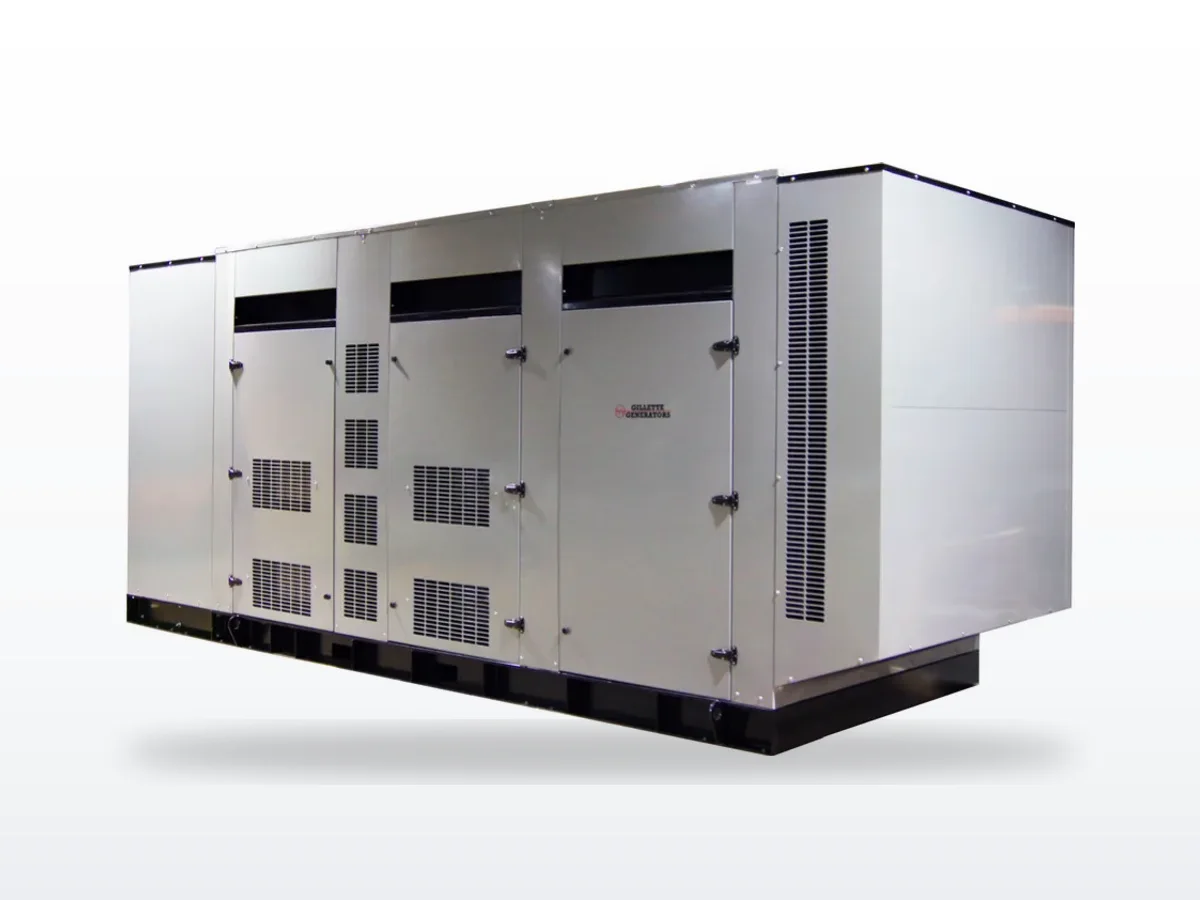
The Gillette SP-5000 is a 500-kilowatt natural gas / 300-kilowatt LPG stationary standby generator — the maximum output of the PSI 21.9L V12 platform. It shares the physical footprint with the SP-4000 but extracts 100 kW more NG output through PSI's high-output (HO) calibration. Stamford HCI534 alternator (larger frame than SP-4000's S4L1 series), DSE 7420 MKII controller, three-phase only.
At 500 kW, this is a large commercial or institutional standby unit: full-building backup for hospitals, large hotels, data center pods, and industrial facilities.
SP-4000 vs SP-5000: same engine, two output tiers#
The SP-4000 and SP-5000 are the best illustration of how PSI extracts different output levels from the same displacement:
| Spec | SP-4000 | SP-5000 |
|---|---|---|
| Engine | 21.9L V12 TCAC | 21.9L V12 TCAC HO |
| NG standby kW | 400 | 500 |
| LPG standby kW | 300 | 300 |
| Mechanical output (NG) | 684 bhp | 764 bhp |
| Open footprint | 168 x 82 x 92 in | 168 x 82 x 92 in |
| Open weight | 9,550 lbs | 10,225 lbs |
| Alternator frame | Stamford S4L1 | Stamford HCI534 |
The HCI534 alternator step-up is significant — the larger frame handles the higher current demands at 500 kW and provides greater motor starting kVA, which matters for facilities with large HVAC compressors or elevator motors on the standby bus.
Fuel efficiency at the 500 kW tier#
An interesting data point from the SP-5000 spec sheet: full-load NG consumption is 5,346,000 BTU/hr vs. 5,916,000 BTU/hr for the SP-4000. The HO calibration delivers 25% more output with 10% less fuel consumption — a meaningful efficiency gain that results from optimized combustion at the higher output state rather than simply pushing more fuel through the same calibration.
Our service experience#
The PSI 21.9L V12 at 500 kW is a well-understood engine for large commercial standby applications. Ignition maintenance is the dominant service consideration — 12-cylinder ignition service requires 12 spark plugs, 12 wires, and distributor inspection. We schedule this as a standalone service event at 1,500 hours separate from routine oil service. Annual load bank testing at full rated load is essential — at 500 kW, part-load operation during monthly tests does not sufficiently exercise the turbochargers or reveal cooling system limitations.