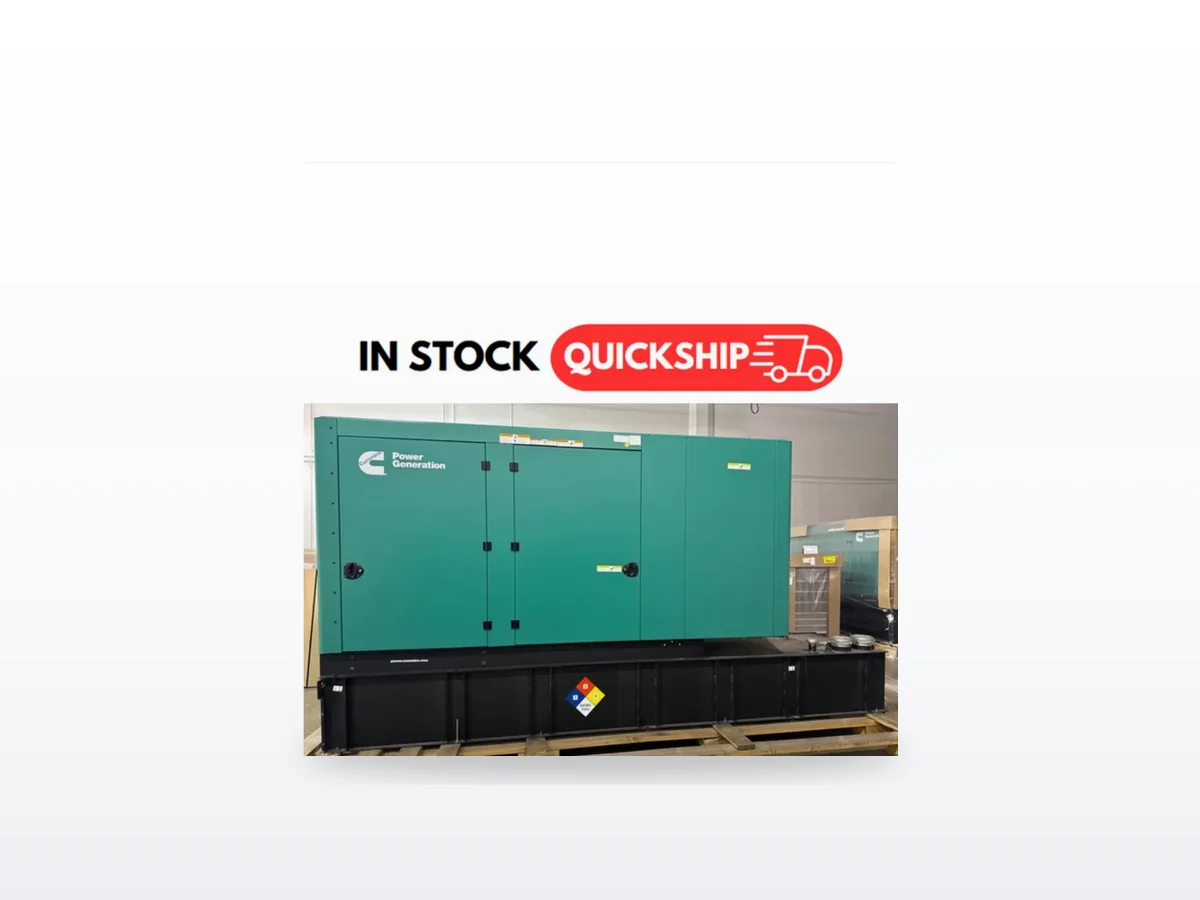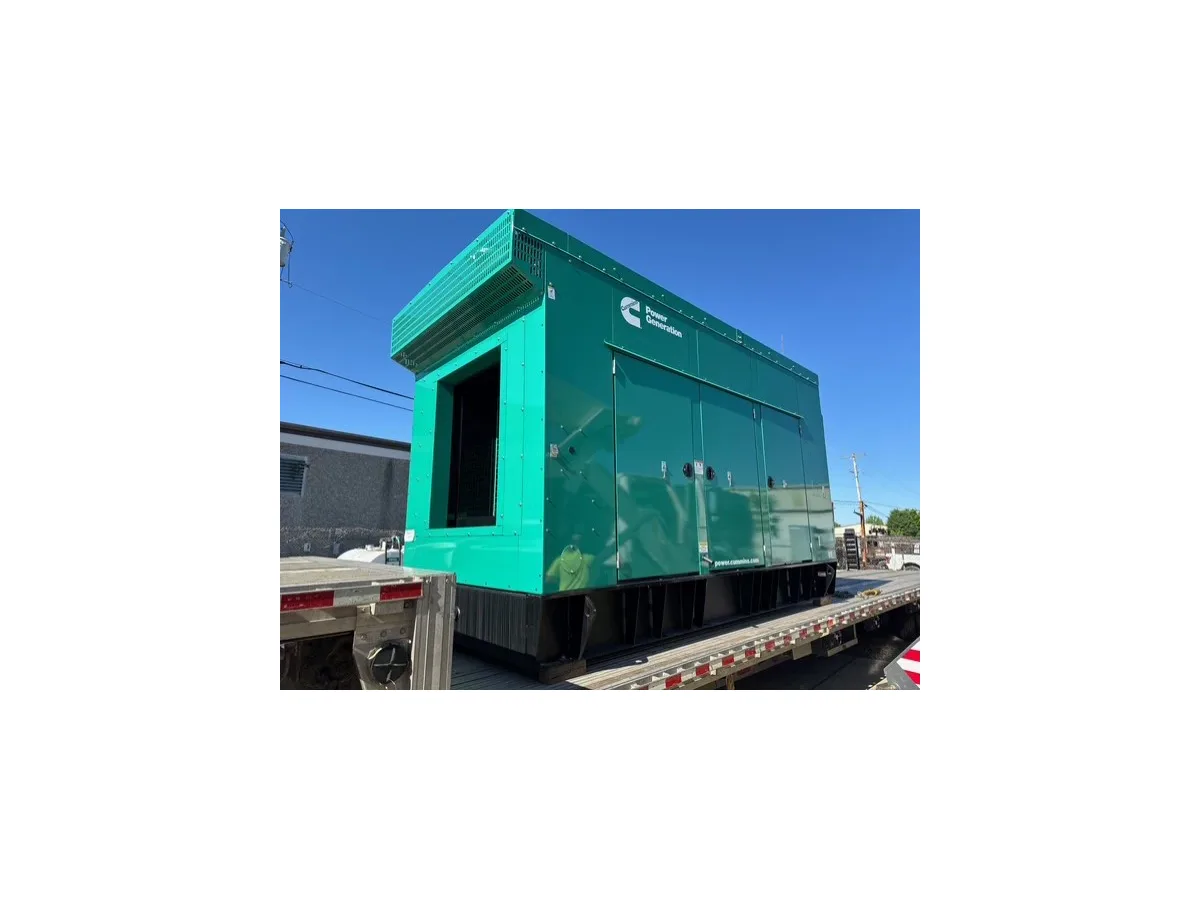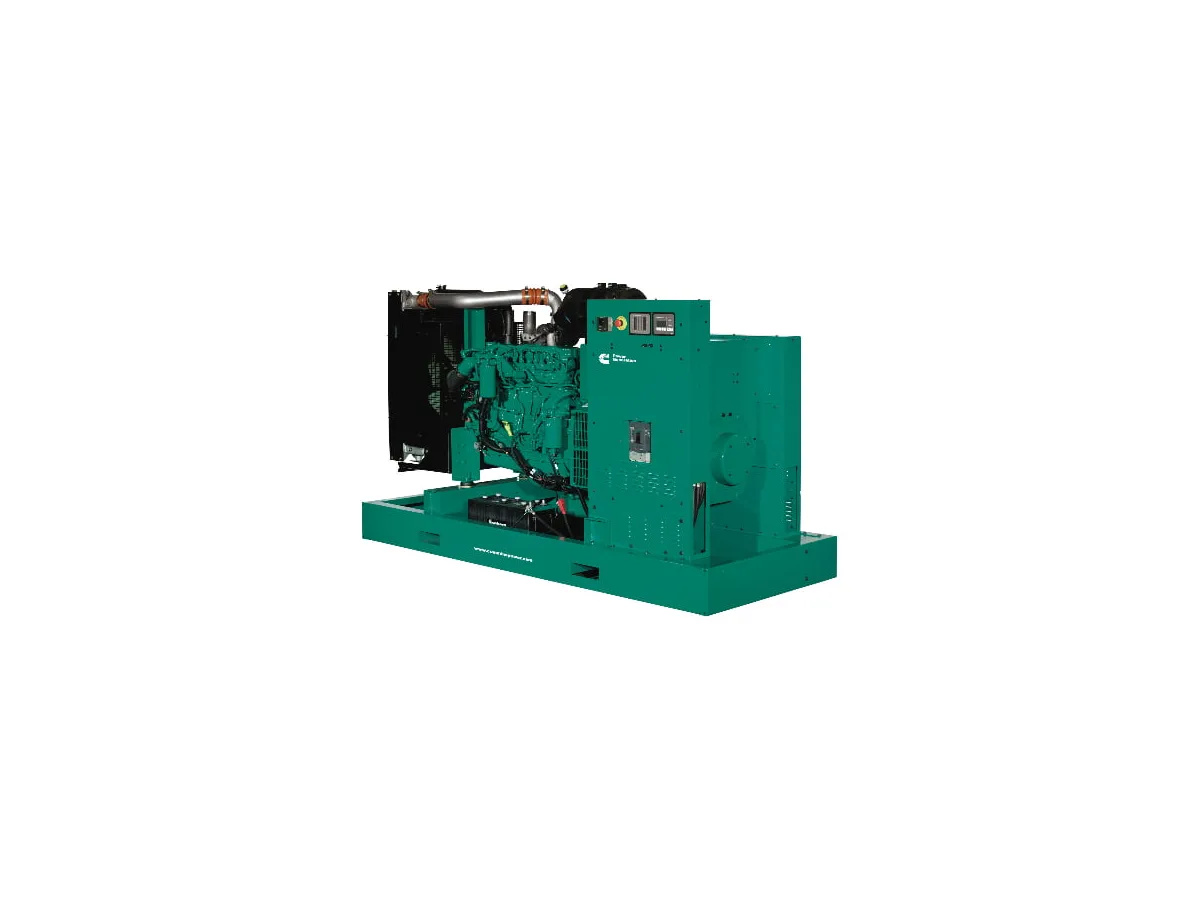
Overview#
The Cummins QSL9-G7 is a 300-kilowatt standby diesel generator built on the QSL9 8.8-liter inline-6 — a heavy-duty industrial diesel platform featuring Bosch high-pressure common rail fuel injection, a 24-valve cylinder head design, and a Holset HX40 wastegated turbocharger. At 300 kW standby and 275 kW prime (60 Hz), the QSL9 covers medium commercial buildings, hospital non-critical branches, campus standby applications, and telecom facilities.
The QSL9's 24-valve design (four valves per cylinder) provides increased power with faster transient response and better fuel economy than the predecessor platforms it replaced. The Bosch HPCR common rail enables advanced diagnostics and programming while the integrated block design eliminates external hoses to reduce potential leak points. The Tier 3 rating without aftertreatment means no diesel exhaust fluid requirements and no particulate filter regeneration, keeping the maintenance profile simple.
Engine dry weight is only 940 kg — significantly lighter than V12/V16 platforms at higher power levels, which simplifies installation.
Technical Specifications#
| Parameter | Value |
|---|---|
| Standby Rating | 300 kWe (375 kVA) |
| Prime Rating | 275 kWe (344 kVA) |
| Continuous Rating | 230 kWe (288 kVA) |
| Frequency | 60 Hz |
| Engine Model | QSL9-G7 |
| Displacement | 8.8 liters (543 in³) |
| Configuration | Cast iron, inline-6 |
| Aspiration | Turbocharged and aftercooled (air-air) |
| Rated Speed | 1800 rpm |
| Starting Voltage | 24V |
| Battery Charging Alternator | 70 amps |
| Lube Oil Capacity | 31.7 liters |
| Coolant Capacity | 36 liters |
| Limiting Ambient Temp (60 Hz) | 50 °C |
| Engine Length | 2157 mm |
| Engine Width | 1126 mm |
| Engine Height | 1562 mm |
| Engine Dry Weight | 940 kg |
| Flywheel | SAE 1/18 |
Fuel consumption at 1800 rpm (60 Hz):
| Power Level | Load % | L/hr |
|---|---|---|
| Standby | 100 | 89 |
| Prime | 100 | 80 |
| Prime | 75 | 66 |
| Prime | 50 | 48 |
| Prime | 25 | 24 |
| Continuous | 100 | 73 |
Our Service Experience#
The QSL9 is a workhorse platform for commercial and institutional accounts in the 300 kW range. The 8.8L inline-6 is well-proven and parts are readily available through Cummins' service network. The Bosch HPCR system provides excellent diagnostics — fault codes and injection data are accessible through Cummins InPower service tool.
Our maintenance focus for the QSL9: fuel quality and filter health for standby units (HPCR injectors are sensitive to fuel contamination), Holset HX40 turbocharger inspection for wastegate function and bearing condition, and annual load bank testing to verify full-rated output. The Tier 3 rating without aftertreatment keeps the maintenance profile clean — no DEF system, no DPF regeneration cycles to manage.
Frequently Asked Questions#
What are the QSL9-G7 power ratings at 60 Hz? Standby (ESP): 300 kWe / 375 kVA. Prime (PRP): 275 kWe / 344 kVA. Continuous (COP): 230 kWe / 288 kVA. Gross engine standby output is 346 kWm (464 BHP) at 1800 rpm.
What fuel injection system does the QSL9-G7 use? Bosch High Pressure Common Rail (HPCR) with integrated electronic engine controls, providing advanced diagnostics and programming options.
What turbocharger does the QSL9-G7 use? Holset HX40 wastegated turbocharger with 24-valve cylinder head (four valves per cylinder). Wastegated design optimizes transient response.
What are the engine dimensions and weight? Engine only: 2157 mm long x 1126 mm wide x 1562 mm tall, dry weight 940 kg. Lube oil capacity 31.7 liters, coolant capacity 36 liters.
How does the QSL9 differ from Tier 4 platforms? The QSL9 is Tier 3 certified without aftertreatment (no DPF, no SCR, no diesel exhaust fluid). This means simpler maintenance with no filter regeneration cycles, no DEF system to maintain, and no risk of aftertreatment system failure during standby operation. For stationary emergency applications, Tier 3 compliance is typically sufficient.
FAQ#
What is the standby rating of the Cummins QSL9?#
The Cummins QSL9-G7 is rated at 300 kW standby / 375 kVA at 0.8 power factor, 60 Hz, 1800 rpm. Prime rating is 275 kW / 344 kVA. Continuous rating is 230 kW / 288 kVA.
What engine does the Cummins QSL9 use?#
The QSL9 uses the Cummins QSL9-G7 — an 8.8-liter, inline-6-cylinder, turbocharged and aftercooled diesel with a Bosch High Pressure Common Rail (HPCR) fuel system and Holset HX40 wastegated turbocharger. It is EPA Tier 3 / EU Stage IIIA compliant. The 24-valve cylinder head (four valves per cylinder) provides improved airflow and transient response.
What are the service intervals for the Cummins QSL9?#
Oil and filter changes are due at 500 hours or 12 months. Fuel filter replacement is scheduled at 500-hour intervals. Air filter replacement is due at 1,000-hour intervals. Coolant change is recommended at 6,000 hours or 5 years. Annual load bank testing is recommended. Major overhaul interval is 20,000 hours under standard standby duty.
Is the Cummins QSL9 EPA compliant?#
Yes. The QSL9-G7 is EPA Tier 3 / EU Stage IIIA certified. Tier 3 applies to stationary emergency standby applications — no diesel particulate filter or diesel exhaust fluid is required, keeping the maintenance profile simple.
Can the Cummins QSL9 be paralleled?#
Yes. The QSL9 with PowerCommand controls supports genset-to-genset paralleling with isochronous load sharing. It is a common building block for 600–1200 kW paralleling arrays. Consult a Cummins distributor for specific paralleling control configurations.
What fuel type does the Cummins QSL9 use?#
The QSL9-G7 runs on diesel fuel. The Bosch HPCR system is compatible with ultra-low sulphur diesel (ULSD). Confirm biodiesel blend compatibility with your Cummins distributor.
What is the warranty on the Cummins QSL9?#
Standard Cummins warranty for new generator sets is 2 years or 2,000 hours for standby applications, whichever comes first. Extended warranty options are available through Cummins authorized dealers.