Series Overview#
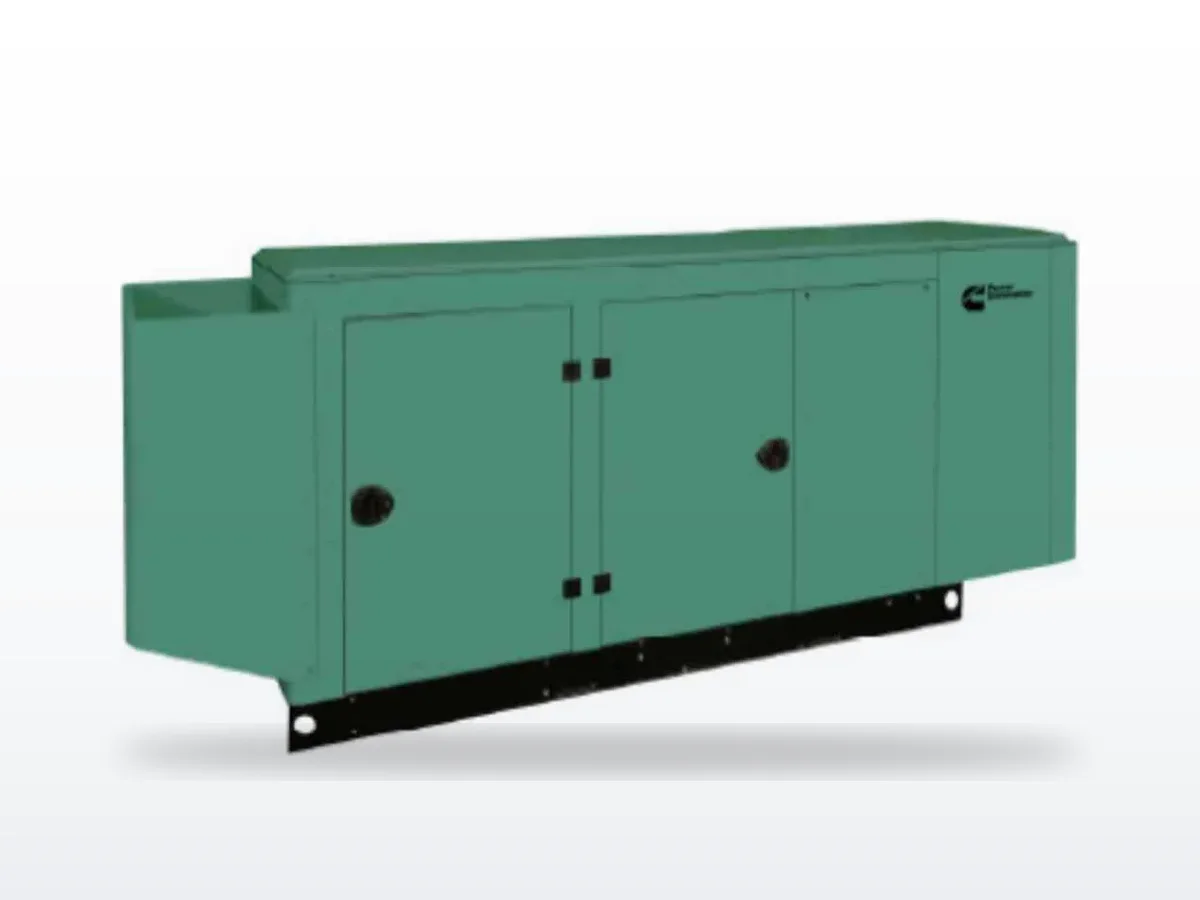
The Cummins mid-range diesel series covers 200 to 300 kW across two models built on some of the most field-proven engine platforms in the global diesel industry: the QSB7 at 200 kW standby and the QSL9 at 300 kW standby. Both are Tier 3 emissions certified, both are available in single-phase and three-phase configurations, and both use Cummins' standard commercial generator architecture — liquid-cooled inline-6 engine, Cummins alternator, and PowerCommand controls — providing single-manufacturer system integration across the complete drivetrain.
The QSB7 (C200 D6 designation in the commercial series) is a 6.7-liter inline-6 turbocharged diesel with one of the most extensive global installed bases of any mid-range diesel engine platform. The service technician familiarity, parts availability, and institutional knowledge around the QSB7 platform are unmatched in its output class — a practical advantage for facilities in any region of North America or globally. The QSL9 steps up to an 8.8-liter inline-6 with a 24-valve cylinder head design and Bosch high-pressure common rail fuel injection, providing higher power density and more sophisticated electronic fuel management than the QSB7 at a 50% higher output.
Both models cover a broad application spectrum — telecom is the most consistently documented application across both, reflecting the critical infrastructure sector's preference for proven, well-supported platforms with predictable long-term service economics. Commercial, healthcare, educational, and municipal applications appear across both models as well, confirming the 200–300 kW range as a practical bracket for a wide variety of commercial standby requirements.
How to Choose#
QSB7 (200 kW) vs QSL9 (300 kW): The first decision is output: if your load calculation results in a design load comfortably below 200 kW, both models provide margin. If design loads approach 200–250 kW, specify the QSL9 at 300 kW for adequate standby headroom. At this output level, load growth and future equipment additions are a practical consideration — verify that design loads account for planned equipment additions over the facility's lifecycle.
Platform familiarity: The QSB7 is one of the most serviced mid-range diesel platforms in the industry. If your region has limited specialized service infrastructure, or if you prefer the widest possible independent service options in addition to Cummins' dealer network, the QSB7's global installed base works in its favor. The QSL9 with Bosch HPCR is well-supported by Cummins dealers but requires HPCR-qualified technicians for fuel system service.
Voltage selection: Both models support 120/208V and 277/480V three-phase. The QSL9 additionally supports 346/600V. For Canadian installations or facilities with 600V three-phase distribution, the QSL9 is the appropriate choice.
Cold climate installations: Both models are documented for block heater failure as a minor failure mode — critical for cold climate standby applications. Specify block heater wattage appropriate for your design ambient temperature and ensure the heater is on a monitored circuit. The QSB7's wide global deployment includes significant cold-climate field history.
Telecom applications: Both models are well-suited for telecom central offices, cell tower base stations, and telecommunications infrastructure that require 10-second load acceptance, regulated voltage and frequency output, and reliable long-term standby performance. Confirm NFPA 110 Type 10 compliance requirements with your Cummins dealer for your specific telecom application.
Common Applications#
-
Telecom infrastructure: Both QSB7 and QSL9 are documented for telecom applications — the most consistent application tag in this series. Cell tower sites, central offices, and telecommunications equipment shelters that need 200–300 kW of reliable diesel standby specify these platforms for their proven reliability and widespread service network.
-
Commercial and retail standby: Commercial buildings and retail centers in the 200–300 kW essential load range specify QSB7 or QSL9 based on load size. The Tier 3 compliance on both models is relevant in California and other air district jurisdictions.
-
Healthcare facilities: Hospital non-critical branches, medical office buildings, and healthcare campuses with 200–300 kW standby requirements specify these platforms, particularly where Tier 3 emissions compliance is required.
-
Education and municipal: School districts, government facilities, and municipal buildings with essential load requirements in the 200–300 kW range specify QSB7 or QSL9 for their long service life, low maintenance frequency, and Cummins support infrastructure.
-
Campus and industrial: Small industrial plants and campus facilities with 200–300 kW standby requirements specify these platforms as cost-effective, well-supported commercial diesel solutions.
Service & Maintenance#
Both models share consistent service intervals: oil changes every 500 hours or 12 months, fuel filter replacement every 500 hours, coolant changes every 6,000 hours, and air filter service every 1,000 hours. These intervals are straightforward to track and consistent with Cummins' broader commercial diesel lineup.
Five failure modes are documented across the two-model series. Fuel quality degradation (standby degradation) causing filter clogging and injector fouling is the most common standby-duty issue — implement annual fuel sampling and polishing to prevent field failures on units with infrequent load testing schedules. Battery (24V) degradation causing slow crank and failed start is the most common cause of failed-start events during actual outages; the documented threshold is failure to meet the 10-second start requirement. Turbocharger wear at approximately 12,000–15,000 hours produces reduced power, oil in the intake manifold, and characteristic turbo whine on both platforms. Block heater element failure causes cold-start issues on units in low-temperature environments — inspect and test the block heater at each annual service visit.
The QSL9's Bosch HPCR fuel system is a specific maintenance item at approximately 15,000 hours: hard starting, rough running, and fuel pressure fault codes indicate high-pressure common rail injector or pump wear. HPCR service requires specialized tooling and qualified technicians — confirm Cummins dealer HPCR service capability in your region. The Holset HX40 wastegated turbocharger on the QSL9 develops power loss and wastegate rattle at approximately 12,000 hours — plan turbocharger inspection at or before this threshold.
Application Guidance#
The Cummins QSB7 (200 kW) and QSL9 (300 kW) mid-range diesel generators are purpose-built for commercial and institutional standby in the 200–300 kW band — telecom infrastructure, healthcare facilities, municipal buildings, education campuses, and retail and commercial properties — in markets where Tier 3 emissions compliance is required and a well-supported, deeply familiar engine platform is a priority for service continuity. The QSB7's global installed base is the broadest in its output class; for facilities in any region of North America where independent service options (not just Cummins dealers) matter, the QSB7 is the easiest mid-range diesel to get serviced anywhere. The QSL9's 346/600V support makes it the specific choice for Canadian facilities with 600V three-phase distribution.
These are standby-duty platforms — they are not appropriate for prime power or high-runtime applications. For continuous or prime power in the 200–300 kW diesel range with Tier 4 Final compliance, evaluate the Gillette T4D Series (T4D-2000 at 200 kW, T4D-2500/3000 at 250–300 kW). For applications in the same 200–300 kW standby range where natural gas is available and preferred over diesel, the Cummins C-Series Commercial Gaseous (C200 N6 at 200 kW, C250 N6 at 250 kW) covers the same facility types. Above 300 kW on diesel, the Gillette SPVD Series (starting at 250 kW) and the D6 Commercial Diesel series extend the range with similar commercial diesel standby capability.