
Series Overview#
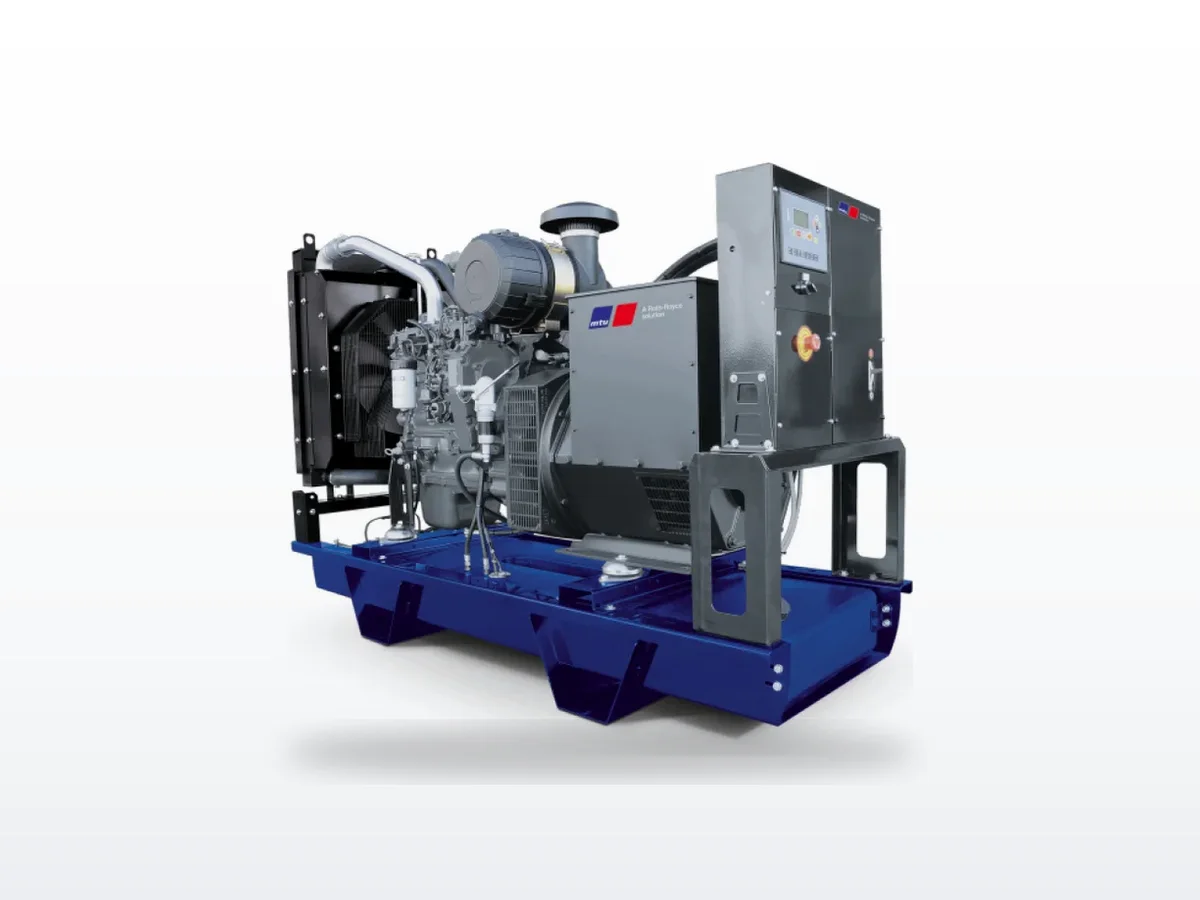
The MTU 6R0225 Series is a single-model line: the DS400, rated at 400 kW standby (500 kVA) at 60 Hz. It is powered by a John Deere 6135HFG84 engine — a 13.5-liter, inline six-cylinder turbocharged and aftercooled diesel producing up to 460 kWm at 1,800 RPM. EPA Tier 3 and SCAQMD certified for stationary emergency operation, the DS400 is available in three-phase configurations from 208V through 600V. MTU provides the full generator system packaging — enclosure, alternator, and control system — around the John Deere engine, combining MTU's system engineering and service capabilities with the broad John Deere dealer and parts network for engine support.
The 6R0225 designation places this model in MTU's mid-range lineup, below the proprietary MTU-engined platforms in the 12V1600 (750–900 kW) and Series 4000 (1,250–2,500 kW) families. For facilities with standby requirements in the 350–400 kW range who want MTU's system packaging and certification with the serviceability of the John Deere 6135 platform, the DS400 is the appropriate specification.
How to Choose#
The 6R0225 Series contains a single model. The key decision variables are:
Power requirement: At 400 kW standby, the DS400 is appropriate when the load study produces a requirement between 350 and 400 kW. If the requirement is below 300 kW, the 6R0150 Series (250–300 kW) is the more right-sized option. If the requirement exceeds 400 kW, the next MTU option is the 12V1600 DS750 at 750 kW.
Emissions tier: Tier 3 certification is below the current Tier 4 Final standard. In jurisdictions where Tier 4 Final is required for new installations, the DS400's Tier 3 certification may not meet the AHJ requirements. Confirm emissions tier requirements before specifying.
Service network: The John Deere 6135 engine has a well-established service and parts network through John Deere dealers independent of MTU's own service infrastructure. For facilities in areas with limited MTU service coverage but strong John Deere dealer presence, this dual service network provides a practical advantage.
Common Applications#
- Commercial standby: Large office buildings, retail centers, hotels, and commercial facilities with standby requirements in the 350–400 kW range. The DS400's three-phase voltage options from 208V through 600V cover the full range of commercial service configurations.
- Healthcare: Hospitals and medical centers with essential electrical system standby requirements at 400 kW. The John Deere 6135 platform's proven reliability in generator service supports the demanding NFPA 110 test requirements healthcare facilities must meet.
- Data centers: Mid-size data centers and enterprise facilities with a single-unit backup requirement at 400 kW. The MTU control system and packaging provides the system-level reliability expected for data center critical infrastructure.
- High-rise and municipal: Building standby for high-rise residential and office towers, and government/municipal facilities with three-phase standby requirements at the 400 kW class.
Service & Maintenance#
The DS400 follows the standard MTU service schedule: oil and fuel filter changes every 500 hours or 12 months, air filter service every 500 hours. Two specific failure modes are documented for this platform:
John Deere fuel injector wear: Nozzle tip wear from extended standby low-load cycles is the primary moderate-severity failure mode, documented at approximately 10,000 hours. Standby generators that spend most of their hours at light load during weekly exercise cycles accelerate injector tip wear relative to units that see higher average load. Injector condition assessment at 10,000 hours is the appropriate preventive measure.
Cooling hose seepage: Seeping at clamp connections from thermal cycling is documented at approximately 5,000 hours. Inspect hose clamps and hose condition at each oil change and re-torque any loose clamps.
Battery bank capacity testing under cold-crank load should be performed annually, with the full bank replaced proactively at 48 months. This is the universal MTU standby generator preventive maintenance requirement regardless of platform.
Application Guidance#
The MTU 6R0225 DS400 is purpose-built for the 400 kW diesel standby class — a single-model product that fits facilities with load studies producing standby requirements between 350 and 400 kW that want MTU system packaging and certification combined with the broad serviceability of the John Deere 6135 engine platform. The John Deere 6135 13.5L inline-six is one of the most widely supported large diesel engines in North America through John Deere's agricultural and construction dealer network, providing engine-level parts and service access in markets where MTU's own service infrastructure is limited. The DS400 is three-phase only across a full voltage range (208V–600V), making it directly compatible with most commercial distribution configurations. Tier 3 and SCAQMD certification positions it for California South Coast AQMD and other SCAQMD-regulated air basins where Tier 3 is the governing standard for stationary emergency generators.
This series is not appropriate when Tier 4 Final is required — neither the DS400 nor any other MTU 6R0225 model can meet that standard; the Kohler REOZ Tier 4 Final models at 125–150 kW J4 variants and the CAT C-Series Tier 3 C13 at 350 kW are alternative paths when emissions tier is a hard requirement. For load studies below 350 kW, the MTU 6R0150 Series (250–300 kW) is more right-sized. Above 400 kW, the next MTU option is the 12V1600 DS750 — a significant jump to 750 kW; for requirements between 400 and 750 kW, Kohler REOZ commercial standby models in the 400–500 kW range or CAT C-Series at the C15 (500 kW) fill that gap.