Series Overview#
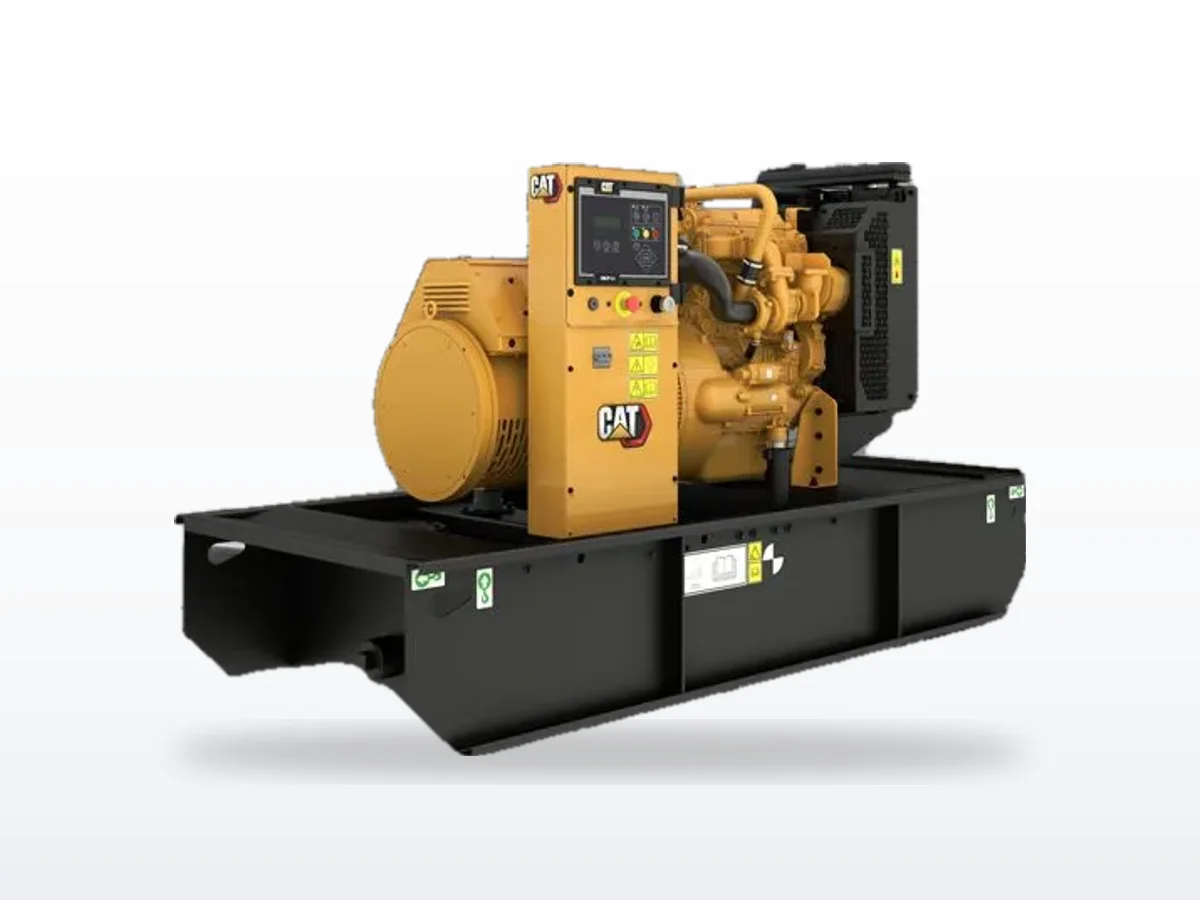
The Cat C-Series is Caterpillar's widest-range diesel generator product line, covering 45 to 1,500 kW across ten models: the C3.3, C4.4, C7, C9, C13, C15, C18, C27, C32, and C32B. The series uses inline-4 and inline-6 ACERT engines at the smaller end, stepping up to V-12 architectures for the C27, C32, and C32B. This range makes the C-Series the most commonly specified Caterpillar platform for commercial standby power — it occupies the segment where most hospitals, campus buildings, high-rises, retail developments, and commercial facilities actually buy.
Two emissions tiers are represented within the series. The C7.1 (200 kW), C9 (250 kW), and C13 (350 kW) carry Tier 3 emissions certification, which provides an operational advantage in California and other jurisdictions where air quality management districts regulate stationary emergency engines more strictly than federal standards require. The remaining models — C15 through C32B — are Tier 2 certified, which meets federal NFPA 110 and EPA requirements for stationary emergency use.
The C-Series benefits from Caterpillar's ACERT technology across the lineup: common rail electronic fuel injection, charge air management, and precise combustion control produce reliable power output with predictable fuel consumption curves. Voltage options span single-phase and three-phase configurations from 120/208V through 4,160V medium voltage on the C32B — covering the full range from small commercial facilities to industrial installations requiring medium-voltage integration.
How to Choose#
Output by segment: Below 200 kW, the C3.3 (45 kW) and C4.4 (80 kW) serve small commercial and telecom applications. The C7 (200 kW) and C9 (250 kW) cover medium commercial buildings, retail centers, and small campuses. The C13 (350 kW) and C15 (500 kW) serve hospitals and larger commercial facilities. The C18 (600 kW) is Caterpillar's highest-output inline-6 model. Above 600 kW, the C27 (800 kW), C32 (1,000 kW), and C32B (1,500 kW) use V-12 architectures for larger commercial and industrial applications.
Tier 3 vs Tier 2: If your project is in California or a jurisdiction requiring Tier 3 compliance, the C7.1, C9, or C13 are the appropriate choices. For Tier 2-adequate installations, the C15 through C32B offer higher output with equivalent reliability.
Medium voltage: The C32B is the only C-Series model with documented medium-voltage output options (2,400V, 4,160V) in addition to standard low-voltage configurations. All other C-Series models are primarily low-voltage platforms.
Paralleling: The C27, C32, and C32B are documented for paralleling configurations. Two C32 units in parallel deliver 2,000 kW with N+1 capability, which is a cost-effective alternative to a single 3500 Series unit at that capacity.
The C32B vs the 3512C: At 1,500 kW standby, the C32B and 3512C overlap directly. The C32B uses newer EUI injection with ADEM A5 controls and Caterpillar's latest Energy Control System. The 3512C uses the 51.8-liter V-12 with ATAAC and older ADEM controls. The C32B has a more modern platform; the 3512C has deeper legacy support in the field.
Common Applications#
-
Commercial standby: The C-Series is the primary Caterpillar platform for commercial buildings, retail centers, and office properties. The C7 through C18 range covers the majority of commercial standby requirements (200–600 kW), with broad voltage flexibility and compact footprints for constrained mechanical rooms.
-
Hospital and healthcare: The C13, C15, and C18 appear most frequently in hospital applications. Tier 3 compliance on the C13 helps in air district jurisdictions, while the C15 and C18 balance high output with inline-6 compactness versus a V-12 footprint.
-
Campus and university: Multi-building campus installations that need 400–1,000 kW of backup per building specify C15, C18, C27, or C32 depending on building load. The paralleling capability of the C27/C32/C32B supports campus-wide redundancy architectures.
-
Telecom and data center: The C3.3 through C13 range is documented for telecom infrastructure. Data center applications at smaller scale (under 500 kW) specify C15 or C18; larger data center pods use C32 or C32B, potentially in paralleling configurations.
-
High-rise and large commercial: High-rise buildings with large life-safety and elevator loads specify the C27 or C32 for the combination of output, single-engine simplicity, and space efficiency relative to multiple smaller units.
Service & Maintenance#
All ten C-Series models share identical service intervals: oil changes every 500 hours or 12 months, fuel filter replacement every 500 hours, coolant changes every 6,000 hours, and air filter service every 1,000 hours. This consistency simplifies fleet maintenance for operators with multiple C-Series units across a portfolio of buildings.
Three failure modes recur across the C-Series field population. Fuel quality degradation — injector fouling, filter clogging, and hard starting — is the most widespread issue (documented across 3 or more model types). Standby generators that test monthly but rarely run full load accumulate fuel degradation over 12–18 month intervals; implement annual fuel sampling and polishing to prevent field failures. Turbocharger wear at 12,000–18,000 hours causes progressive power loss and excessive exhaust smoke; the V-12 models (C27, C32, C32B) with their higher output and operating pressures see turbocharger wear at the lower end of this range. Battery failure on the 12V or 24V starting systems is the most common cause of failed-start events during actual outages — replace batteries on a defined schedule (typically every 3–4 years) rather than waiting for a failure.
The MEUI injectors on the C32 are documented with a wear pattern at approximately 15,000 hours that produces rough running, smoke, and power imbalance between cylinder banks. Inspect injectors at major service intervals when runtime hours approach this threshold.
Application Guidance#
The CAT C-Series is purpose-built for the broadest range of commercial diesel standby applications — 45 to 1,500 kW across ten models covering commercial buildings, hospitals, high-rise, retail, campus, data center, and industrial uses. The series' primary strength is Caterpillar's North American dealer network: C-Series generators can be serviced by any Cat dealer, which is a material advantage over MTU, Kohler, or Cummins for facilities in markets where independent service access matters more than OEM-specific technical differentiation. The Tier 3 certification on the C7.1, C9, and C13 models is a genuine competitive advantage for California air basin projects — it is cleaner than Tier 2 and meets SCAQMD and similar district requirements that prevent specification of older Tier 2 platforms. The C32B at 1,500 kW with medium-voltage output (2,400V and 4,160V) and ADEM A5 controls is the most modern platform at the top of the series, directly competitive with the Kohler 2000REOZMD and MTU 12V1600 DS900 for large commercial and data center applications.
This series is not appropriate for gaseous fuel requirements — the C-Series is diesel-only across all ten models. For natural gas or propane standby in the 200–512 kW range, the CAT DG Series and CAT G-Series are the appropriate CAT alternatives. For requirements above 1,500 kW on diesel, the CAT 3500 Series large diesel covers 1,000–3,000 kW. Buyers comparing the C-Series against Kohler REOZ commercial standby (10–510 kW) and MTU 6R0150/6R0225/12V1600 in the same power bands should evaluate alternator THD performance, controller ecosystem compatibility with existing ATS infrastructure, and local dealer service depth as the primary differentiators — CAT's broader dealer network is typically decisive for facilities that value independent service access.