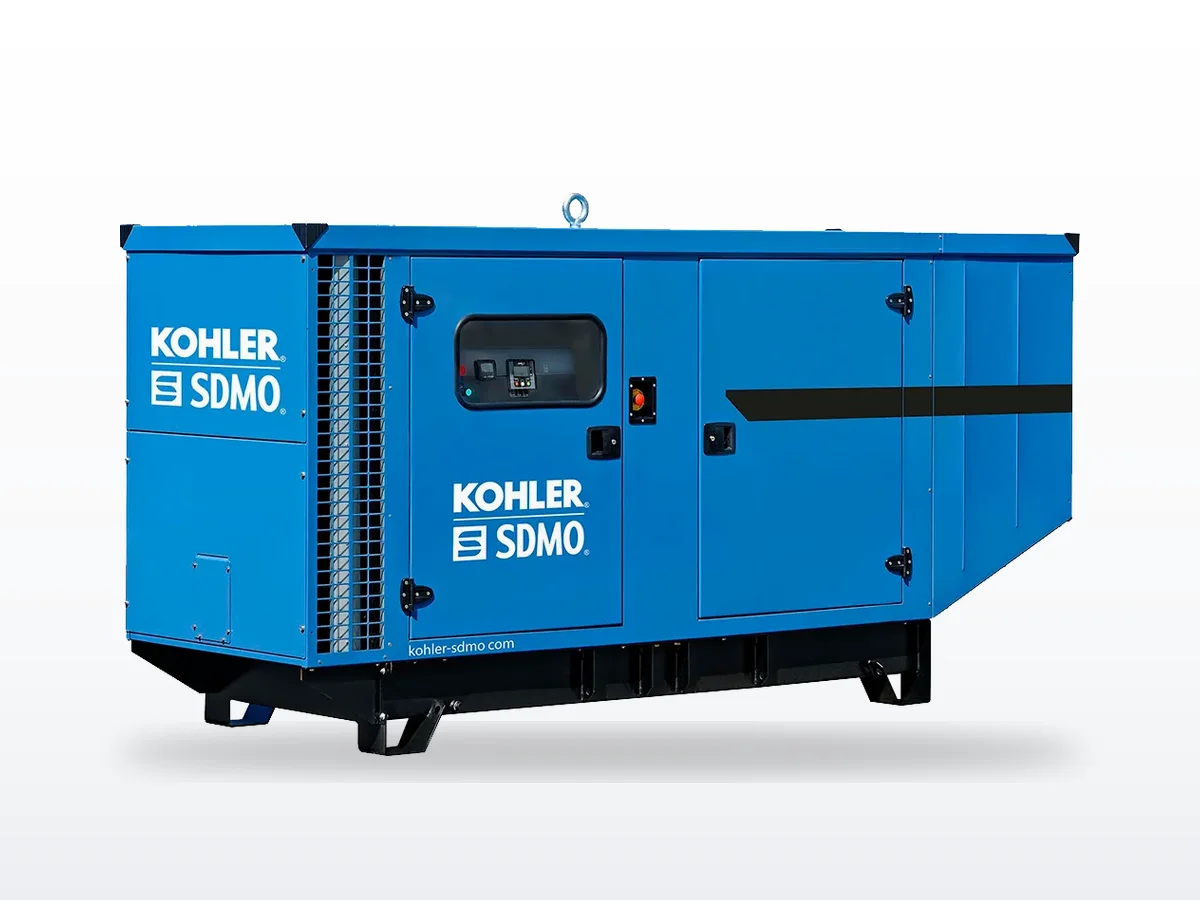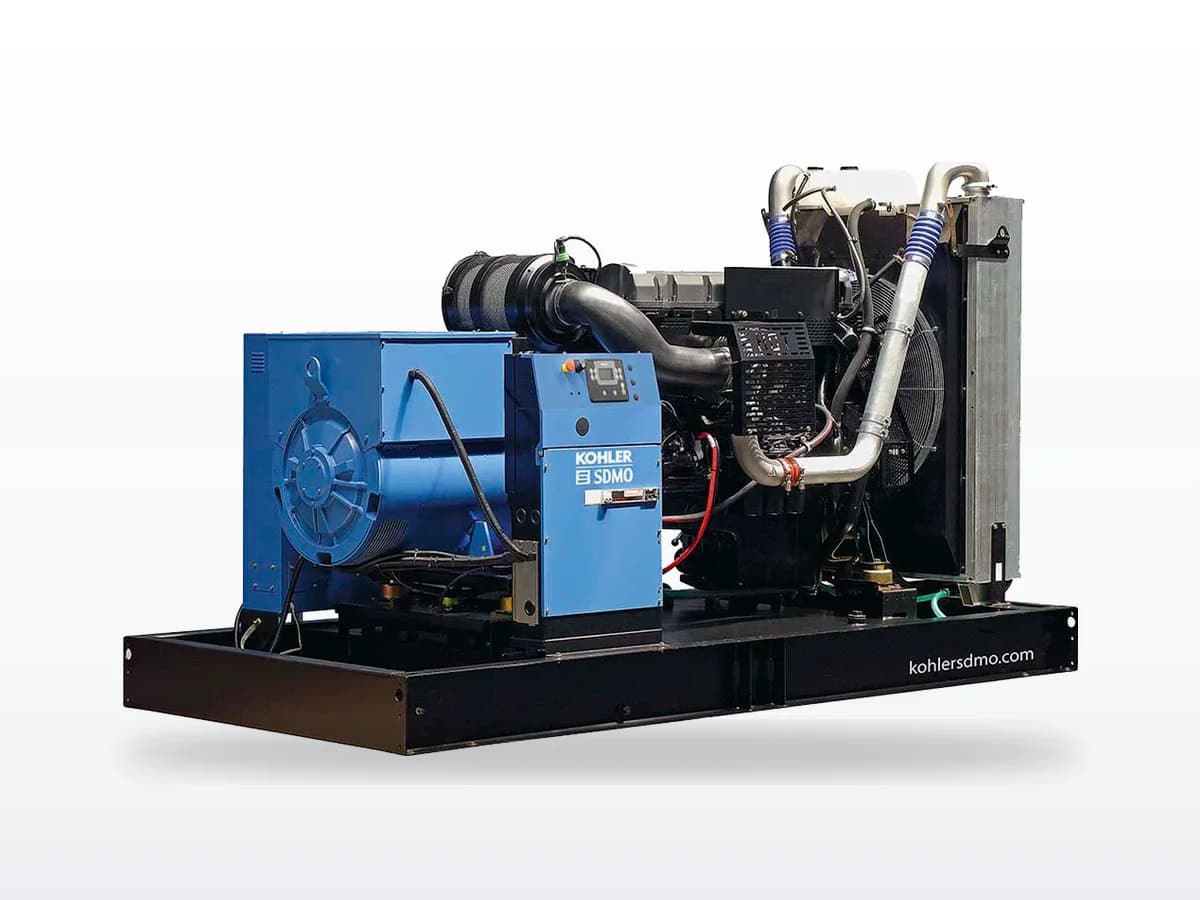
SDMO (Kohler-SDMO) Generators
Kohler's global genset brand — John Deere, Doosan, and Volvo engines in a multi-platform lineup from 6 to 3,300 kW
Why buyers choose SDMO
- Multi-engine platform — John Deere (J-Series), Doosan (D-Series), Volvo (V-Series) options
- Kohler Group backing — global parts and service network via Kohler-SDMO
- Competitive pricing — typically 10-20% below Kohler-branded equivalents
- Broad range — 6 kW to 3,300 kW covering residential through industrial
Who SDMO is for
International projects, multi-engine standardization, and buyers wanting Kohler service access without the Kohler premium.
What to consider before specifying SDMO
- Low brand recognition in North America — stronger in Europe, Middle East, Africa
- Documentation and tech support primarily oriented toward non-US markets
- Limited US dealer density compared to Cummins, Generac, or Cat
SDMO Industries, now operating as Kohler-SDMO, is one of the three largest generator set manufacturers globally alongside Caterpillar and Cummins. Founded in Brest, France in 1966 and acquired by Kohler in 2005, SDMO produces over 40,000 generator sets per year with power ratings spanning 1 kW portable units to 3,300 kW industrial installations. Manufacturing is distributed across four countries — the primary plant in Brest, France, plus facilities in Spain, India, and Brazil — giving SDMO a global production footprint that most competitors cannot match outside of Caterpillar. The company's defining characteristic is engine-agnosticism: unlike Cat (which uses its own engines) or Cummins (which uses Cummins engines), SDMO sources from multiple engine OEMs and lets the application dictate the engine choice.
The model naming system makes the engine source transparent: J-prefix means John Deere (40-275 kW), D-prefix means Doosan (150-700 kW), V-prefix means Volvo Penta (275-700 kW), M-prefix means Mitsubishi (400-2,500 kW), and K-prefix means Kohler KDI (10-40 kW). Product lines are organized into three tiers. The residential Resa and Technic series cover home standby needs under 20 kW. The commercial Pacific and Atlantic series target mid-range standby and prime power applications from 20 kW to roughly 500 kW. The industrial X-series handles heavy-duty power up to 3,300 kW for data centers, mining, and utility-scale projects. SDMO also has a strong presence in the rental fleet market, manufacturing ruggedized units with features like forklift pockets, bunded fuel tanks, and quick-connect panels designed for frequent deployment and transport.
In North America, SDMO competes primarily in the 100-800 kW commercial standby market, where their pricing is typically 5-15% below Cummins and Cat for equivalent power ratings. The 2005 Kohler acquisition brought access to Kohler's 800+ North American dealers and service centers, and the combined Kohler-SDMO portfolio gives specifying engineers unusual flexibility — Kohler-branded units for domestic projects where the brand carries weight, and SDMO-branded units where the multi-engine strategy or European engineering heritage is the selling point. Kohler Co. was itself acquired by Platinum Equity in 2024, with the power division rebranding to Rehlko, though SDMO's engineering operations in Brest and its manufacturing network remain unchanged. For facility managers already standardized on Kohler controls, SDMO offers a natural expansion path into larger power ratings and multi-engine configurations that Kohler's own product line does not cover.
Frequently asked questions
- What does SDMO stand for?
- SDMO stands for Societe de Distribution de Materiel et d'Outillage (Company for the Distribution of Equipment and Tools). Founded in 1966 in Brest, France, SDMO was acquired by Kohler in 2005 and now operates as Kohler-SDMO under the Kohler Co. umbrella (owned by Platinum Equity since 2024).
- How do SDMO model numbers work?
- SDMO uses a letter prefix to identify the engine brand: J = John Deere, D = Doosan, V = Volvo Penta, M = Mitsubishi, K = Kohler KDI. The number indicates kVA rating. For example, J200 = John Deere engine, 200 kVA; V550 = Volvo Penta engine, 550 kVA.
- What are SDMO's main product lines?
- SDMO organizes products into three tiers: residential (Resa and Technic series, typically under 20 kW), commercial (Pacific and Atlantic series for mid-range standby and prime power), and industrial (X-series for heavy-duty applications up to 3,300 kW). SDMO also builds purpose-built rental fleet units with ruggedized enclosures and forklift pockets designed for frequent transport.
- Is SDMO available in North America?
- Yes, SDMO has been expanding in North America through Kohler's dealer network since the 2005 acquisition. Their units are particularly competitive in the 100-800 kW range, often price-competitive with Cummins while offering a wider choice of engine platforms. Availability varies by region — stronger on the East Coast and in the Southeast.
- How does the Kohler acquisition affect SDMO products?
- Kohler acquired SDMO in 2005, combining SDMO's European manufacturing scale and multi-engine platform strategy with Kohler Power Systems' North American dealer network and brand recognition. SDMO retained its engineering center in Brest, France, and its engine-agnostic approach. The combined entity offers global coverage — Kohler-branded units dominate in North America, while SDMO-branded units lead in Europe, Africa, and the Middle East.
Key specs at a glance
- Power range
- 70–440 kW standby
- Fuel types
- diesel
- Engine OEMs
- Doosan, John Deere, Volvo Penta
- Alternator OEMs
- Phase options
- 3-phase
- Models in library
- 6
SDMO (Kohler-SDMO) Product Families
sdmo
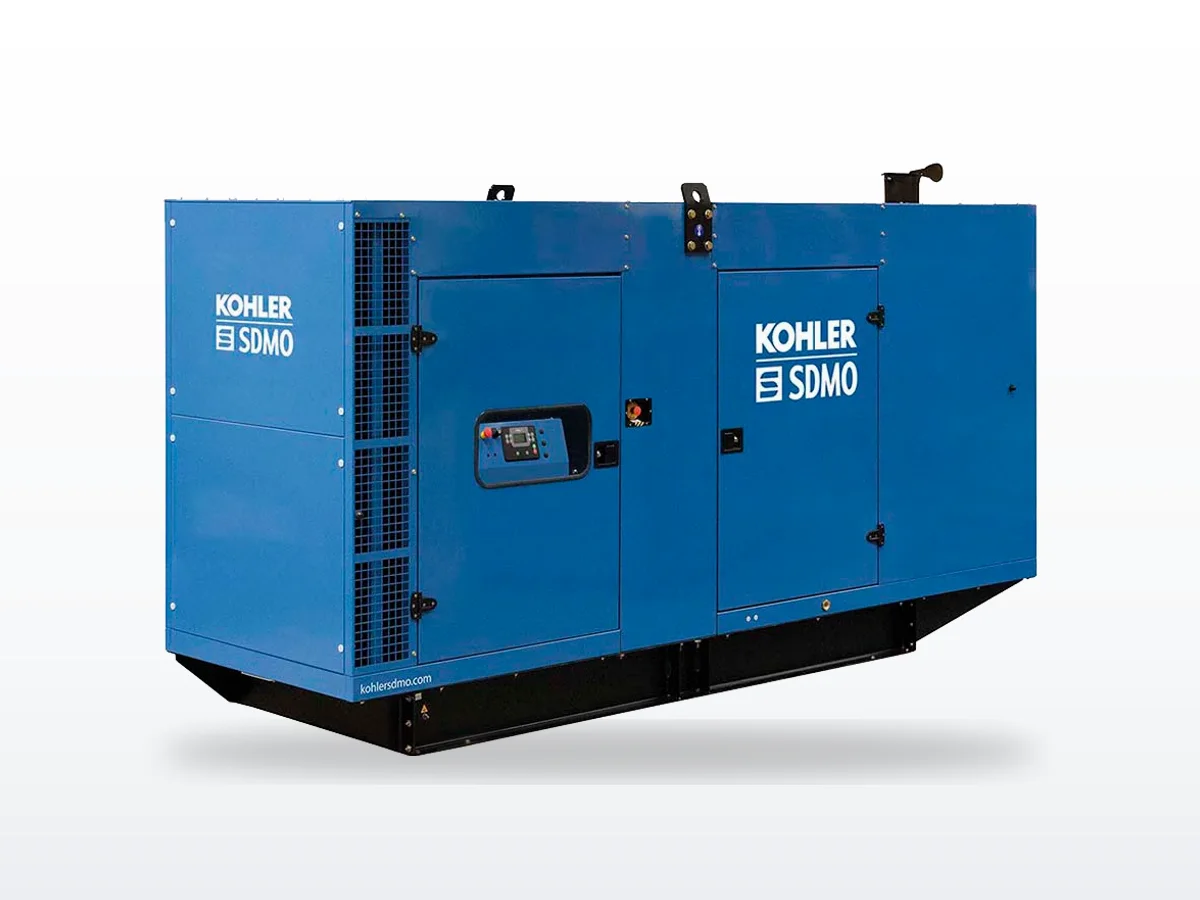
SDMO D-Series (Doosan)
Doosan-powered diesel gensets from 150 to 700 kW
150–700 kW
sdmo
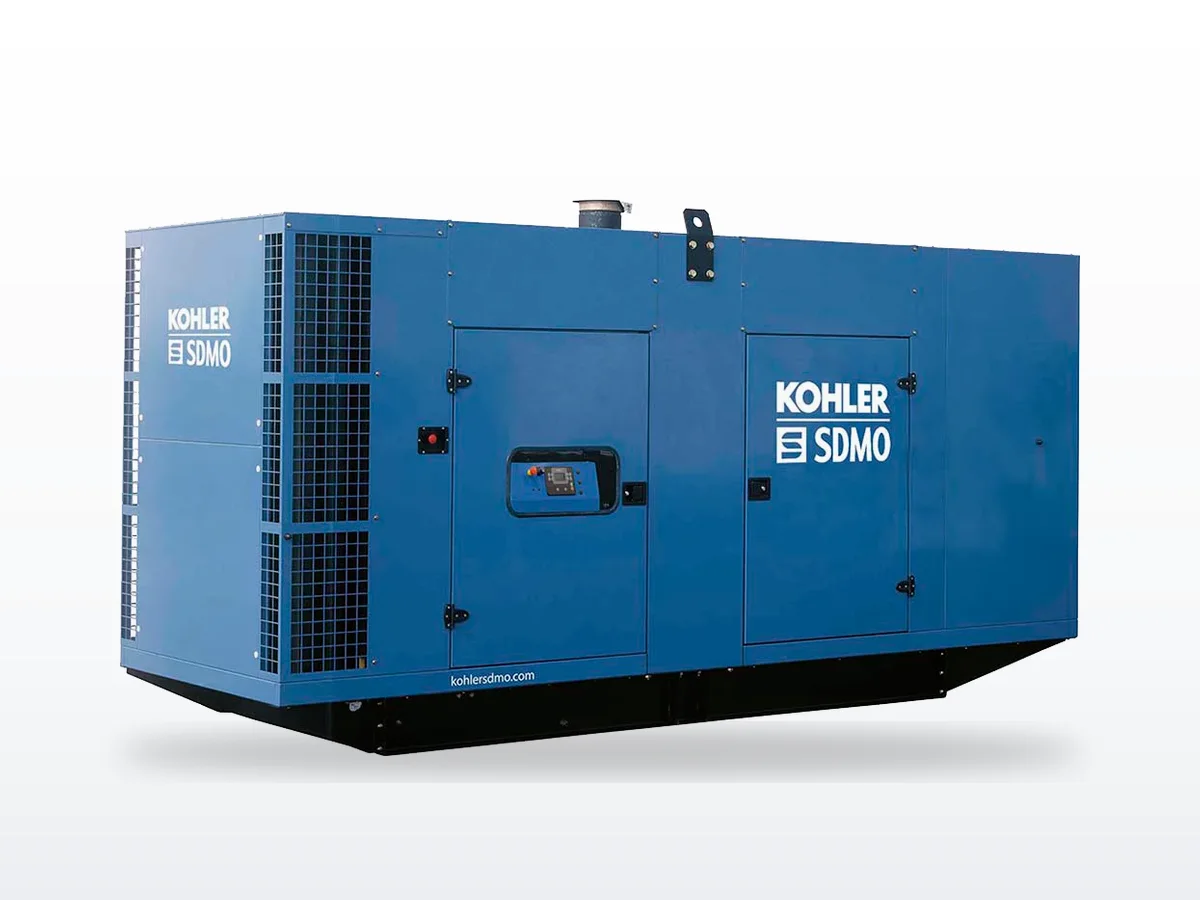
SDMO V-Series (Volvo Penta)
Volvo Penta-powered diesel gensets from 275 to 700 kW
275–700 kW
sdmo
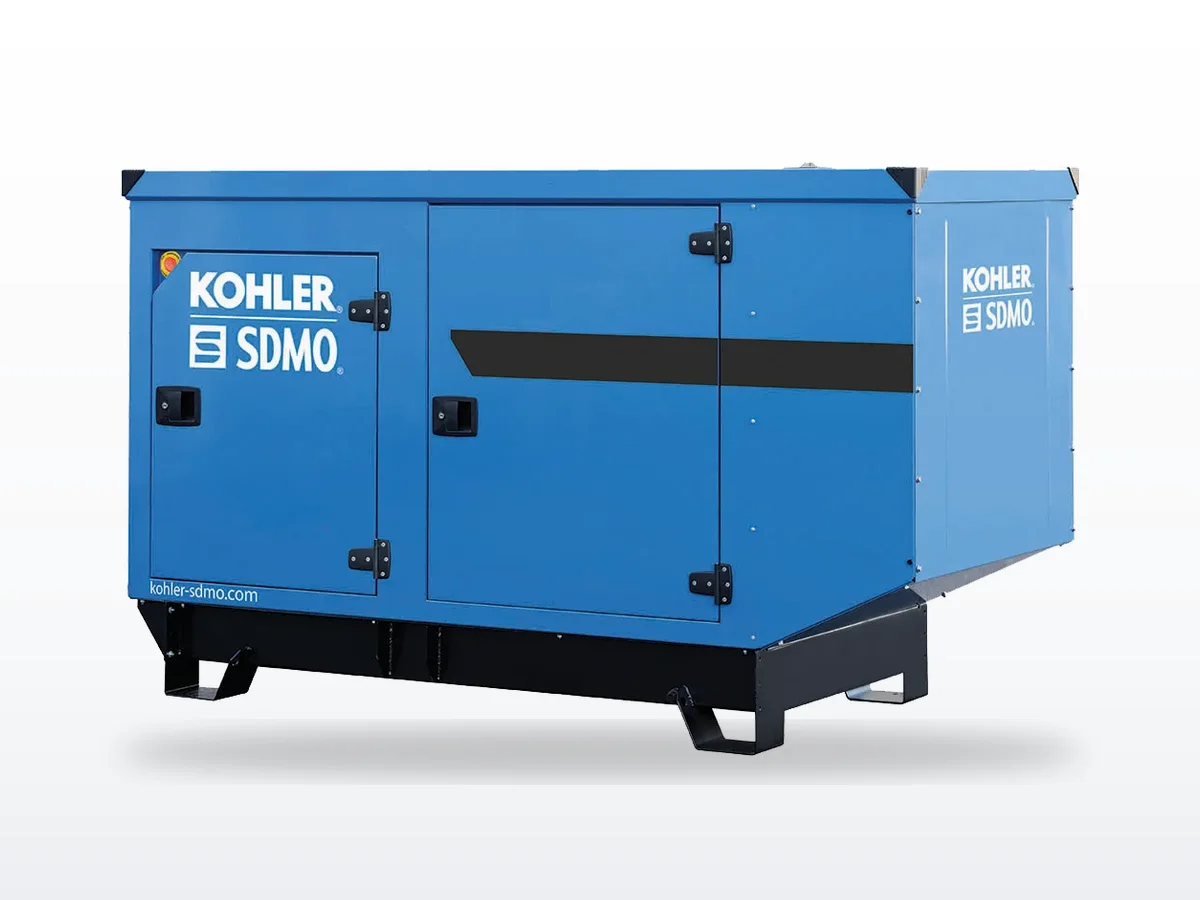
SDMO J-Series (John Deere)
John Deere-powered diesel gensets from 33 to 275 kW
33–275 kW
SDMO (Kohler-SDMO) Units For Sale1
Industries & Services
Our Services
Application Engineering
Not sure if SDMO (Kohler-SDMO) is right for your project?
Our engineers spec across 19 brands and 600+ models — diesel, gaseous, portable, and prime power — with no single-brand obligation.
Need help with SDMO?
Our application engineers help size, spec, and source backup power for commercial, industrial, and mission-critical sites.