Series Overview#
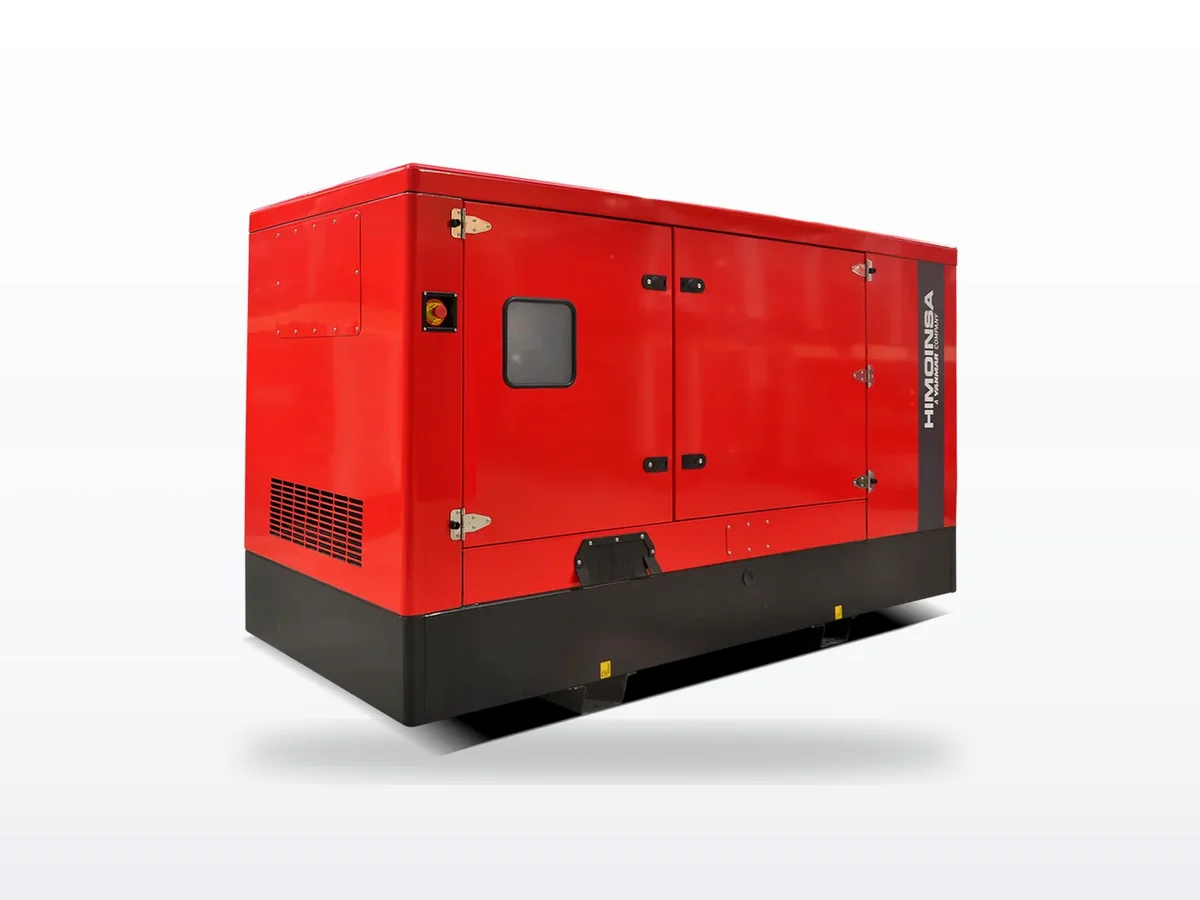
The Hipower HGM Series is the company's compact stationary natural gas lineup, covering 53 to 150 kW across six models. All units carry EPA Stationary Spark Ignition and CARB certification, making them the standard Hipower option for California permit-by-rule in the small-to-mid commercial standby segment. The series is built in Olathe, Kansas with in-house enclosures and controls, and supports both single-phase and three-phase output across 120/208V, 120/240V, and 277/480V — a breadth of electrical service compatibility that simplifies specification for the mixed-service-voltage landscape of commercial buildings.
The HGM fills the compact commercial natural gas standby segment: buildings with established gas service that want to eliminate on-site diesel storage, SPCC compliance obligations, and fuel delivery scheduling. At 53–150 kW, diesel storage at equivalent output would require a 250–500 gallon tank with SPCC plan and periodic fuel testing — costs the HGM's gas supply model eliminates entirely. The 1,000-hour oil change interval (versus 250–500 hours for comparable diesel units) reduces service costs for low-utilization standby installations.
Above 150 kW, the HNG series (159–400 kW) continues stationary gas coverage with a three-phase-only design; the HNI series covers 30–1,000 kW across a broader 17-model lineup. The HGM is the compact entry series — simpler, smaller, and optimized for light and mid commercial applications.
How to Choose#
By standby output: Select the model that provides 10–15% headroom above the facility's calculated standby load. The six HGM models step from 53 kW (HGM-55) through 150 kW (HGM-150) in increments that correspond to common commercial load breakpoints. The HGM-55 and HGM-65 serve small commercial buildings; the HGM-80 and HGM-100 cover mid-light commercial; the HGM-120 and HGM-150 serve the upper end of the light-commercial and small-medical segments.
Single-phase vs. three-phase: All HGM models are available in both single-phase and three-phase configurations. Single-phase 120/240V is appropriate for smaller commercial buildings with single-phase service; three-phase at 120/208V or 277/480V covers the majority of mid-commercial buildings. Confirm the electrical service before selecting a phase configuration.
Voltage: The HGM supports 120/208V, 120/240V, and 277/480V — note that 347/600V is not available in this series. If a Canadian installation or US 600V distribution is required, step up to the HNG series.
CARB compliance: The full HGM range is CARB certified, enabling permit-by-rule in most California air districts for commercial standby. Confirm the applicable district's permit-by-rule kW threshold.
Common Applications#
- Commercial standby: All six HGM models are rated for commercial standby. Small office buildings, retail spaces, neighborhood medical clinics, and small hospitality operations with established gas service and no appetite for diesel storage are the core market.
- Light-commercial: All six models carry light-commercial ratings. Restaurants, small professional offices, and retail anchors in the 53–150 kW range where natural gas is on-site and the compact HGM footprint fits constrained equipment spaces are typical deployments.
Service & Maintenance#
All six HGM models share: oil change at 1,000 hours or 12 months; air filter at 500 hours; spark plug replacement at 1,000 hours. The 1,000-hour oil interval and spark plug cadence define the HGM's low-maintenance character relative to diesel units in the same output class.
Three failure modes recur across the HGM fleet. Spark plug erosion from natural gas combustion is present on all six models — replace all plugs at the 1,000-hour interval without deferral. Ignition module misfires (documented on 4 of 6 models) appear under low-load and full-load conditions; diagnose with per-cylinder coil output testing before replacing the module. Gas pressure regulators drift from utility supply fluctuations on 4 of 6 models — test regulator output pressure at each service event and verify it remains within the engine's specified range. Regulator drift is a subtle issue that often manifests as reduced output or rough running rather than an obvious fault code.
Application Guidance#
The Hipower HGM Series is purpose-built for small-to-mid commercial natural gas standby at 53 to 150 kW — the segment where diesel storage at equivalent output requires a 250–500 gallon tank, an SPCC compliance plan, and ongoing fuel management that most commercial building owners would rather avoid. The CARB certification across all six models enables permit-by-rule in most California air districts, making the HGM the natural first specification for California commercial standby in this size class where gas service is available. The 1,000-hour oil interval and dual-fuel (natural gas and LPG) capability further reduce operational overhead compared to diesel alternatives.
The HGM is not appropriate where standby output exceeds 150 kW — above that threshold, the Hipower HNG Series (159–400 kW, PSI-powered, three-phase) picks up the stationary gas coverage, and the Hipower HNI Series (30–1,000 kW) provides the broadest natural gas range with single-phase availability in the lower models. Where the application requires diesel (no gas service available, outdoor generator with fuel tank, or emergency-only with unlimited run-on diesel), the Hipower HFW Series covers the equivalent 60–150 kW range on Tier 4 Final FPT diesel. For competing gas standby in this output class, the Cummins C Series Commercial Gaseous and Generac SG Series are the primary Big 4 alternatives.