Series Overview#
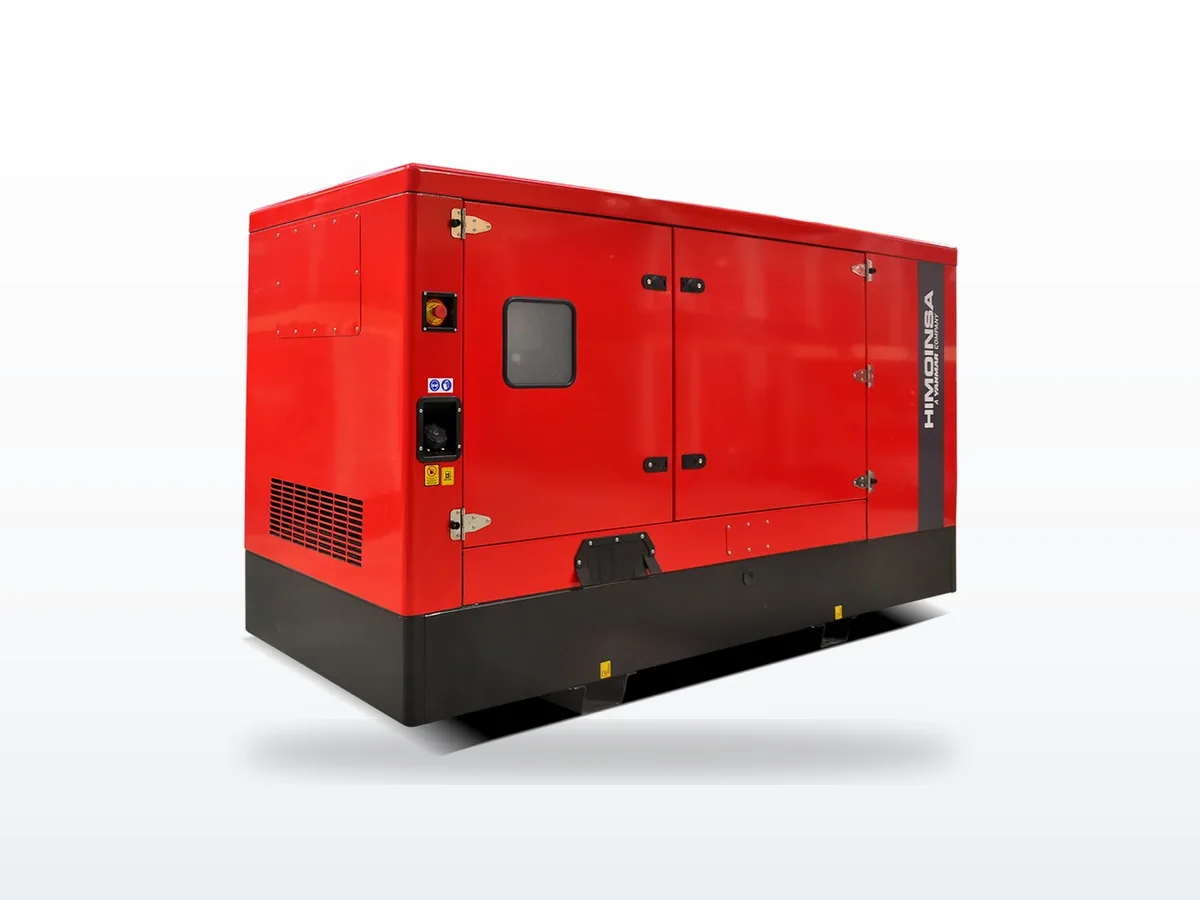
The Hipower HFW Series is the company's Tier 4 Final stationary diesel lineup, spanning 60 to 350 kW across 12 models on FPT Industrial (Iveco) engines with Stamford alternators. All models carry EPA Tier 4 Final and CARB certification, making the HFW the correct-compliance option for new diesel standby installations in California and all regulated states. The series covers the same kW range as the older Tier 3 HJW series (John Deere), but with current emissions certification and a 500-hour oil-change interval versus the HJW's 250-hour cadence.
The engine platform steps through four FPT families across the 60–350 kW range. The N45 four-cylinder serves the 60–90 kW models; the N67 six-cylinder covers 100–160 kW; the C87 8.7-liter six-cylinder handles 180–250 kW; and the C13 12.9-liter six-cylinder powers the top two models at 300 and 350 kW. Each transition brings additional displacement and thermal headroom for the corresponding output class. All 12 models use Stamford alternators — a consistent choice across the Hipower stationary lineup that simplifies parts stocking and service training.
Hipower builds the HFW at its 515,000 sq ft facility in Olathe, Kansas with vertically integrated enclosures, fuel tanks, and controls. The series covers 120/208V, 120/240V, 277/480V, and 347/600V, with single-phase availability on smaller models and three-phase across the full range.
How to Choose#
By FPT engine family: The N45-powered 60–90 kW range (HFW-60, HFW-80, HFW-90) is the compact commercial tier — single-phase and three-phase output available; 120/208V and 120/240V alongside 277/480V. The N67-powered 100–160 kW range (HFW-100, HFW-130, HFW-160) covers mid-commercial applications with the step to six-cylinder architecture. The C87-powered 180–250 kW range (HFW-180, HFW-200, HFW-230, HFW-250) adds the C87's displacement for commercial and industrial applications at 180–250 kW; 347/600V becomes available at this range. The C13-powered 300–350 kW range (HFW-300, HFW-350) uses the largest FPT stationary inline-6 and targets large commercial, data center, and industrial standby.
Single-phase availability: Models at 60–160 kW support single-phase 120/240V. Above 160 kW, the HFW is three-phase only. Confirm whether the installation requires single-phase output before selecting.
Tier 4 Final requirement: For new installations in California, the HFW is the appropriate choice over the Tier 3 HJW. For replacement projects in existing HJW installations, evaluate whether the Tier 4 certification is required for the permit amendment.
Common Applications#
- Commercial standby: All 12 models are rated for commercial standby. The HFW series is the current-generation Tier 4 Final option for office buildings, retail, medical offices, and commercial mixed-use developments requiring code-compliant new standby installations in California and regulated states.
- Industrial standby (8/12 models rated): The mid-to-upper models (HFW-180 through HFW-350) are rated for industrial standby — manufacturing, food processing, distribution, and critical facilities where 180–350 kW of Tier 4 Final diesel backup is required.
- Light-commercial (4/12 models rated): The compact N45-powered models (HFW-60, HFW-80, HFW-90) and the smaller N67 models serve light-commercial applications where the compact footprint and single-phase output are practical advantages.
Service & Maintenance#
All 12 HFW models share: oil change at 500 hours or 12 months; fuel filter and air filter at 500 hours. The 500-hour oil interval is twice as long as the HJW's 250-hour John Deere interval — a material advantage for low-utilization standby units that accumulate hours slowly.
Three failure modes are consistent across all 12 HFW models. FPT fuel injectors on these turbocharged units develop combustion roughness and visible smoke at high loads when deposits accumulate at the injector nozzle; service specification is clean or replace injectors at 10,000 hours, but units operated heavily below 30% load may show symptoms earlier. Coolant system freeze plugs are subject to corrosion in extended standby installations — inspect during annual service and replace at first sign of oxidation. Starting batteries in standby lose capacity over time; float-charge continuously and test annually, replacing the battery before measured capacity falls below 80% of specification.
Application Guidance#
The Hipower HFW Series is the correct specification for new diesel standby installations in California and all EPA-regulated states requiring Tier 4 Final compliance, spanning 60 to 350 kW on FPT Industrial engines. It is purpose-built for commercial and industrial standby — office buildings, retail centers, industrial facilities, and medical offices — where current emissions certification is a permit requirement, and the 500-hour oil-change interval reduces service cost compared to shorter-interval competitors in the same class. The 347/600V option from 180 kW upward makes the HFW usable in Canadian installations without a separate step-up transformer.
The HFW is not the right choice where Tier 4 Final is not required — the older Hipower HJW Series on John Deere engines covers the same 55–410 kW range at Tier 3 with a lower capital cost, appropriate for replacement projects or jurisdictions without Tier 4 mandates. Above 350 kW, the HFW has no FPT-powered successor — step to the Hipower HDI Series (Volvo-powered 400–600 kW, Tier 3) or the Hipower HMW Series (MTU-powered 270–2,230 kW, Tier 4 Final with full mission-critical certifications) depending on whether Tier 4 compliance is still needed at larger outputs. For comparable Tier 4 Final stationary diesel in a competing brand, the Kohler REOZ Series and Generac SD Series serve the same commercial standby market.