
Series Overview#
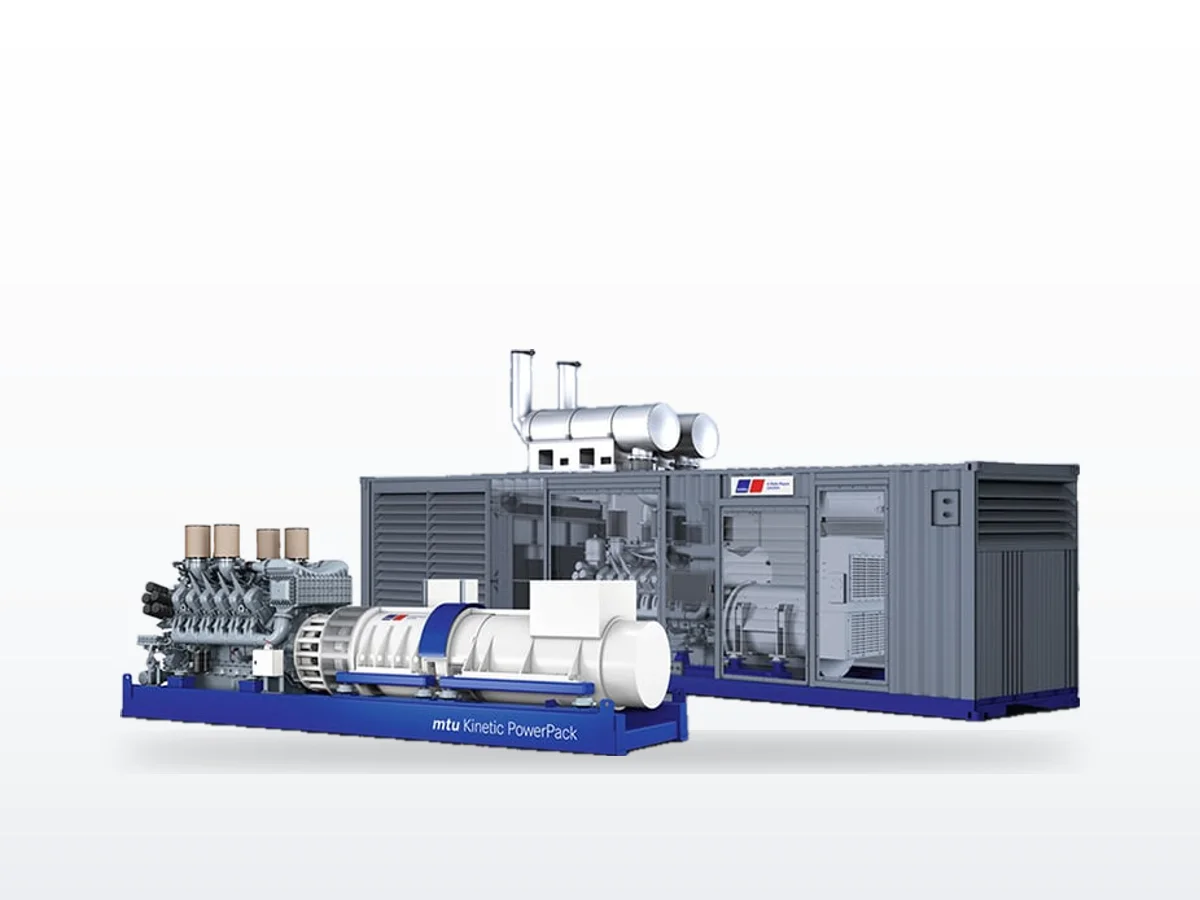
The MTU 10V1600 Series consists of a single model — the DS500 at 500 kW standby (450 kW prime) — built on the MTU 10V1600G80S, a 17.5-liter, 10-cylinder V-configuration turbocharged and charge-air-cooled diesel engine with common rail fuel injection. The V10 adds two cylinders to the 8V1600's V8 platform while maintaining the same 122mm bore and 150mm stroke, delivering 561 kWm (752 bhp) gross at 1,800 RPM.
The 10V1600 carries EPA Tier 2 certification — reflecting the model's introduction timing before Tier 3 mandates for this displacement class. For stationary emergency standby applications, Tier 2 is generally acceptable, but verify with the local air quality district, particularly in California SCAQMD jurisdictions. The ADEC (Advanced Diesel Engine Control) electronic isochronous governor provides plus or minus 0.25% speed regulation, and PMG excitation is standard on the 570-frame alternator, delivering up to 300% short-circuit current capability.
The DS500 is available in all standard North American voltages from 208V to 600V three-phase. Standard equipment includes a unit-mounted radiator rated for 50 degrees C ambient, 24V electric start (1,050 CCA), and the MTU digital control panel with CANBus ECU communications and NFPA 110 compatibility. The prime rating of 450 kW makes this unit appropriate for prime or continuous duty as well as standby applications.
Common Applications#
- Data center standby: The 500 kW class is a common building block for N+1 redundant data center standby configurations. The PMG alternator with 300% short-circuit current capability supports motor-starting and UPS transfer loads, and the ADEC governor's tight frequency regulation meets IT equipment requirements. The 50 degrees C radiator rating accommodates warmer machine room designs.
- Industrial standby: Manufacturing plants, process facilities, and large distribution centers with critical three-phase loads between 400 and 500 kW. The 20,000-hour overhaul interval keeps long-term maintenance costs manageable.
- Commercial standby (large): Major commercial campuses, large hotels, and convention centers with standby requirements that exceed the 350 kW 8V1600 but fall below the 750 kW threshold where the 12V1600 becomes appropriate.
- Municipal and infrastructure: Water treatment plants, government complexes, and public safety facilities requiring 500 kW standby with NFPA 110 compliance.
Service & Maintenance#
The 10V1600 Series shares the same service intervals as all MTU 1600-series platforms: oil and filter changes every 500 hours, with major overhaul at 20,000 hours.
Common rail fuel injectors: At 500 kW and higher specific output than the 8V1600, fuel system cleanliness is paramount. Injector failure causes power loss and increased fuel consumption. Use only OEM-specified Diesel #2 with low sulfur content. Check injector return flow at each major service interval — this provides a quantitative measure of injector condition before power loss becomes apparent during operation.
ADEC engine controller: Same ADEC platform as the 8V1600, with the same susceptibility to connector corrosion in humid environments. Annual connector inspection and dielectric grease application on all ECU harness connectors is recommended. The ADEC provides comprehensive fault logging — review the fault history at each service event.
Turbocharger: At the higher specific output of the V10, turbocharger health becomes a higher-priority service item. Oil contamination from the crankcase ventilation system or bearing wear causes blue smoke and power loss. Monitor engine oil consumption at each service interval — a sustained increase in oil consumption is often the first indicator of turbocharger bearing wear.
Fuel storage: 33.1 gph at full load means fuel logistics matter. A 1,000-gallon base tank provides approximately 30 hours at full load. Most data center installations specify 72-hour fuel storage — approximately 2,400 gallons for this unit. Size the tank and delivery schedule based on the facility's longest anticipated outage duration plus 25% reserve.
Application Guidance#
The MTU 10V1600 DS500 sits at the midpoint of the 1600-series lineup — between the 8V1600 DS350 at 350 kW and the 12V1600 Series at 750–900 kW. At 500 kW from 17.5 liters, the 10V1600 offers good power density, and the PMG alternator with 300% short-circuit capability makes it well suited to motor-heavy and UPS-loaded facilities.
The Tier 2 certification is a consideration in jurisdictions with strict emissions requirements. Sites in SCAQMD or similar districts should verify acceptability with the local authority having jurisdiction. For installations requiring Tier 3 at 500 kW, alternative platforms from competing manufacturers may be necessary — though for stationary emergency standby, Tier 2 is broadly accepted.
Above 500 kW, the MTU 12V1600 Series covers 750–900 kW, and the MTU Series 2000 DS1000 picks up at 1,000 kW. Below 500 kW, the MTU 8V1600 DS350 provides 350 kW on the smaller V8 variant. Sites considering natural gas at 500 kW should evaluate the MTU 12V0265 GS500 — same power output without diesel fuel storage, though the gas unit is substantially larger and heavier. Buyers comparing the DS500 against the CAT C-Series (C15 at 500 kW) or Cummins QSK Series should weigh the MTU power density and PMG alternator advantages against the broader CAT and Cummins dealer coverage and the Tier 3 certifications available on those platforms.