Series Overview#
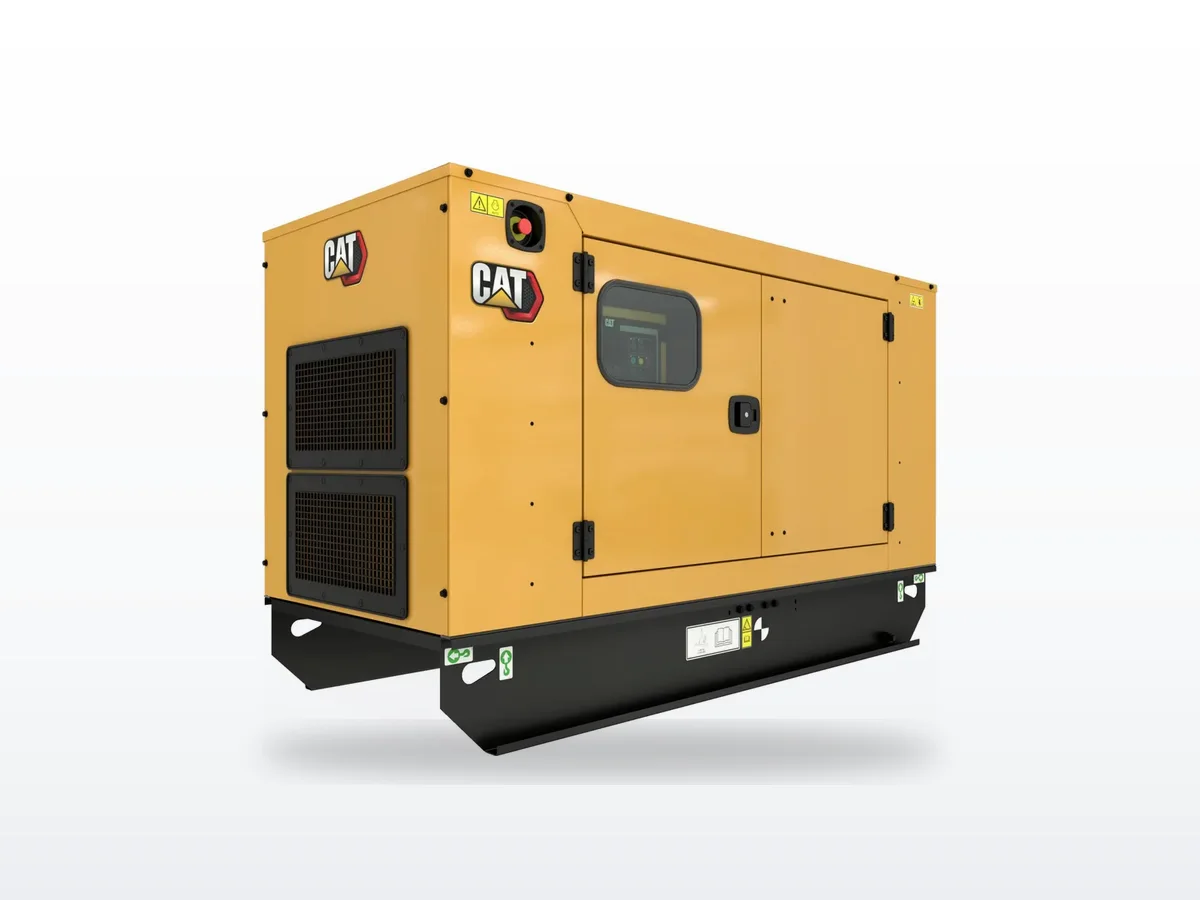
The Cat D-Series is Caterpillar's most compact diesel generator platform, currently represented by the D20 — a 20-kilowatt standby generator powered by the Cat C2.2 naturally aspirated inline-4 engine. At just 20 kW, the D20 occupies a specific niche in Caterpillar's lineup: commercial and light commercial applications that need reliable diesel standby power in the smallest possible footprint with current Interim Tier 4 emissions compliance.
The C2.2 engine in the D20 is naturally aspirated (no turbocharger), which simplifies the service profile compared to the turbocharged engines that dominate the rest of the Cat diesel lineup. Fewer components mean less to maintain and fewer potential failure points for a unit that sits in standby for months between load tests. The platform is available in both single-phase and three-phase configurations, covering 208/120V, 240/120V, 277/480V, and 346/600V — the standard voltage configurations for small commercial distribution panels.
For buyers evaluating the D-Series, the primary value proposition is CAT brand quality, dealer support, and emissions compliance in a 20 kW package. The Interim Tier 4 certification is an advantage in jurisdictions where older Tier 1 or unrated small diesel generators face operational restrictions. The Cat dealer network's parts availability and service technician density provide the same support infrastructure that makes larger Cat platforms attractive, scaled down to the compact commercial market.
How to Choose#
D-Series vs C-Series at 45 kW: If your load calculation yields 20 kW or less, the D20 is the appropriate platform. If loads are variable or likely to grow beyond 20 kW, the C3.3 at 45 kW is a better choice — its turbocharged engine provides more headroom and the C-Series has a broader installed base with more field support resources.
Single-phase vs three-phase: The D20 supports both single-phase (240/120V) and three-phase (208/120V, 277/480V, 346/600V) configurations. Small retail locations and single-tenant offices often use single-phase distribution; multi-tenant commercial buildings and facilities with three-phase HVAC or equipment require three-phase output. Confirm your distribution panel voltage before specifying.
Emissions compliance: The Interim Tier 4 certification on the D20 provides better emissions performance than pre-Tier 4 small diesels and meets EPA standards for stationary emergency use. In California or other air district jurisdictions, verify that the specific unit meets local air district operational requirements beyond federal standards.
Cold climate applications: If the installation is in a cold climate, confirm block heater availability and specify the appropriate heater wattage for your design ambient temperature. Block heater element failure is a documented failure mode that causes cold-start issues — ensure the heater is on a supervised circuit with function monitoring.
Common Applications#
-
Small commercial standby: Retail storefronts, small restaurants, and branch offices that need reliable power for point-of-sale systems, refrigeration, and basic lighting during utility outages specify the D20 for its compact footprint and CAT reliability.
-
Essential power applications: Facilities with specific essential power requirements — security systems, communication infrastructure, access control — that do not require large load capacity but need reliable diesel standby specify the D20 for its dependable starting and run characteristics.
-
Retail locations: Retail environments with refrigerated cases, lighting, and POS systems that total under 20 kW of critical load frequently specify the D20 as the most cost-efficient way to maintain operations during outages.
-
Small office standby: Office spaces with computers, lighting, and basic HVAC controls for under 20 kW of essential load specify the D20 for its minimal footprint and straightforward installation requirements.
Service & Maintenance#
The Cat D-Series requires oil changes every 500 hours or 12 months, fuel filter replacement every 500 hours, and air filter service every 1,000 hours. Because the D20 typically sees very low annual runtime in pure standby service, the calendar-based intervals (12 months) are the more common trigger than the hour-based intervals. Track both time and hours and service at whichever threshold comes first.
Three failure modes are documented on the D-Series. Battery degradation leading to slow crank or failed start is the most frequent issue — at 20 kW with a small engine, the starting current demand is lower than larger platforms, but the battery still degrades over time in standby service and must be replaced on schedule. Fuel quality degradation causing injector fouling and hard starting after extended standby periods is the second documented failure mode; run monthly load tests at meaningful load and implement fuel testing on an annual basis to detect degradation before it causes a field failure. Block heater element failure causing cold-start issues is the third failure mode — inspect the block heater element and verify circuit function at each annual service visit.
The naturally aspirated C2.2 engine has no turbocharger to service, which simplifies the maintenance checklist relative to larger turbocharged Cat platforms. This is a genuine advantage for facilities with limited maintenance resources — the D20 requires no turbocharger inspection, no charge air cooler service, and no boost pressure monitoring.
Application Guidance#
The CAT D-Series fills a specific 20 kW niche in Caterpillar's lineup — compact diesel standby for small commercial locations (retail storefronts, small offices, essential power panels) that require CAT brand quality, Interim Tier 4 emissions compliance, and dealer support network in the smallest possible footprint. It is well-suited to single-phase or small three-phase commercial loads where the total critical load is firmly at or below 20 kW.
This series is not appropriate for loads above 20 kW or for life-safety applications requiring the larger load capacity that NFPA 99/110 typically demands at hospital scale. For commercial standby from 45 kW upward, the CAT C-Series (starting at 45 kW with the C3.3) is the next step. For broader commercial and industrial diesel coverage across the 10–1,500 kW range with multiple engine platform options, see the Generac SD Series. For small-commercial applications where diesel fuel storage is a constraint, the Generac SG Series offers gaseous fuel alternatives starting at 35 kW.