Series Overview#
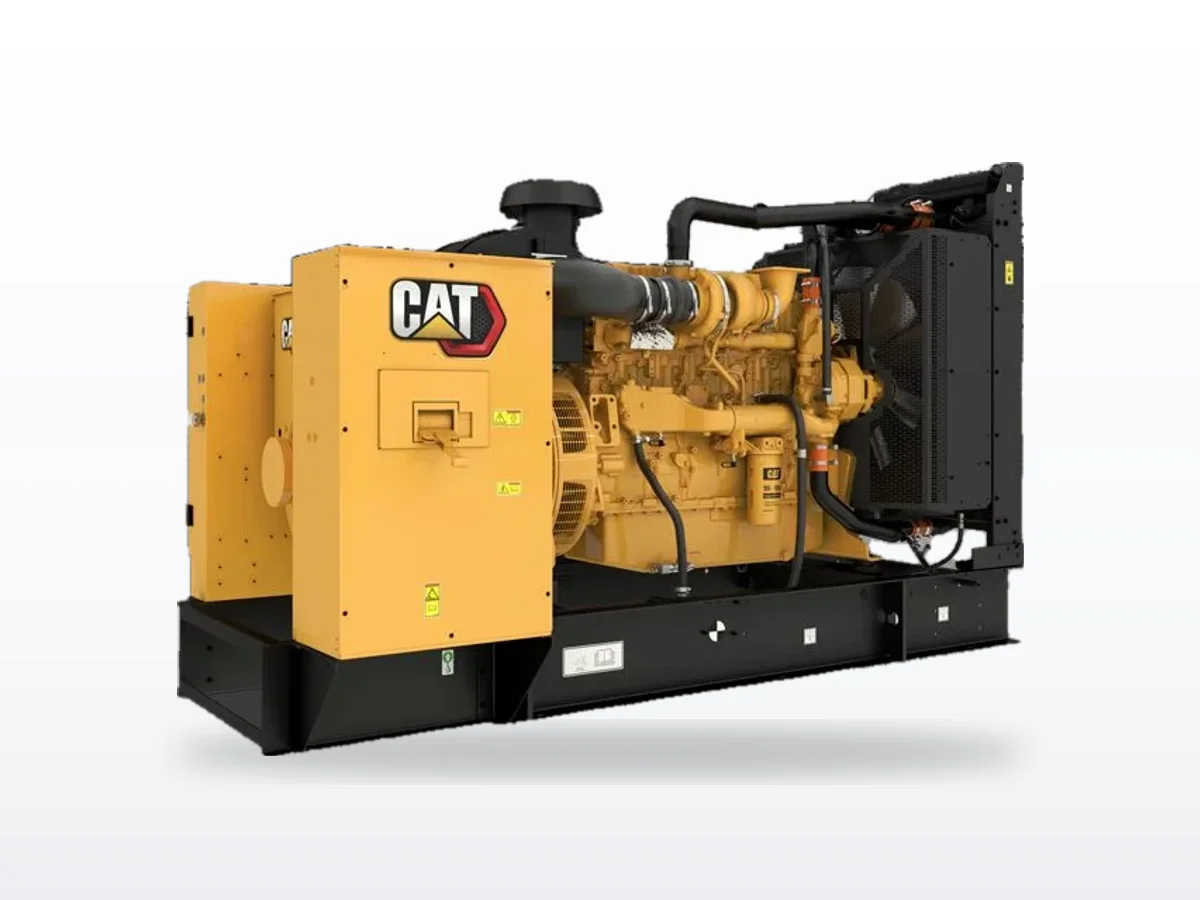
The Cat 3400 Series comprises two legacy diesel generator platforms: the 3406 and 3412, spanning 350 to 720 kW standby. Both are built on Caterpillar engine architectures that accumulated enormous field populations across trucking, marine, and industrial applications — the 3406C TA inline-6 and the 3412C TA V-12 — giving these generator sets one of the most established parts and service ecosystems in the industry despite being out of production as new units.
The 3406 covers 275–400 ekW across 50 and 60 Hz configurations using the 14.64-liter inline-6 3406C TA engine. The 3412 steps up to 680–900 kVA using the 27.02-liter V-12 3412C TA engine. Both platforms serve commercial standby, industrial, and campus applications where legacy infrastructure must be maintained, or where a used unit's cost advantage justifies specifying an older platform over a new C-Series or 3500 Series generator.
Neither the 3406 nor the 3412 carries a current EPA emissions tier designation — they predate the modern tier framework. This means they are acceptable for emergency standby use in most jurisdictions but may face restrictions in California air districts or other regions with strict non-emergency engine operating hour limits. Verify local air district requirements before deploying 3400 Series units in jurisdictions with stringent stationary engine regulations.
How to Choose#
Output requirement: The 3406 (350 kW standby) covers the 300–400 kW range that is now served by the Cat C15 in current production. If your load requirement is at or below 400 kW, and you are considering a used 3406, also evaluate the used C15 and C18 market — these offer more modern emissions compliance and electronic controls for comparable or overlapping output.
The 3412 at 720 kW: The 3412 targets the 600–720 kW class that the Cat C18 (600 kW) and C27 (800 kW) currently occupy. For new installations, the C18 or C27 are the appropriate choices. The 3412 is primarily relevant for facilities already operating these units and seeking replacement engines or parts, or buyers specifically targeting the used equipment market.
Voltage flexibility: The 3406 supports 120/208V, 277/480V, and 346/600V — standard low-voltage configurations. The 3412 adds 208V and 4,160V medium-voltage options, making it more versatile for industrial distribution systems that operate at medium voltage.
Paralleling: The 3412 is documented for paralleling applications. Campus installations with multiple 3412 units can parallel them for combined capacity and N+1 redundancy, and this configuration remains viable as long as the control systems are compatible.
Service history scrutiny: When evaluating any 3400 Series unit for acquisition, request complete maintenance records. Prioritize units with documented oil change intervals at or below 500 hours, evidence of fuel filter replacement, and coolant change history. The platform's age means that deferred maintenance is more common than on newer equipment.
Common Applications#
-
Industrial facilities: Both the 3406 and 3412 appear in industrial applications where rugged engine architecture and deep service knowledge outweigh the advantage of modern emissions compliance. Heavy manufacturing, water treatment, and municipal utilities continue to operate 3400 Series units in well-maintained plant environments.
-
Campus standby: University and institutional campuses often have 3400 Series units as installed base equipment from construction in the 1980s–1990s. Many remain operational with appropriate maintenance and serve as cost-effective backup to newer primary generators.
-
Commercial and municipal standby: The 3406 was a common specification for commercial buildings, government facilities, and municipal infrastructure in its production era. These units frequently appear in facility portfolios alongside more modern equipment.
-
Large hospital backup: The 3412 at 720 kW was specified for large hospital applications requiring significant backup capacity from a single generator. Hospitals that have operated these units for decades often maintain them alongside newer units as part of diversified backup strategies.
Service & Maintenance#
The Cat 3400 Series uses the same service interval structure as other Caterpillar diesel platforms: oil changes every 500 hours or 12 months, fuel filter replacement every 500 hours, coolant changes every 6,000 hours, and air filter service every 1,000 hours. These are conservative intervals appropriate for the platform's age and should be followed precisely — deferring service on legacy equipment accelerates wear and increases failure risk.
Two failure modes are documented consistently across both 3400 Series models. Fuel quality degradation is the primary standby-duty concern: diesel stored in tanks for extended periods degrades through oxidation and microbial growth, causing injector fouling, filter clogging, and hard starting. Annual fuel sampling and polishing is essential for standby units tested infrequently. Turbocharger wear is the second documented failure mode — power loss and excessive smoke under load at 12,000–18,000 hours are the typical symptoms. Plan turbocharger inspection and rebuilding as a life-cycle maintenance item on high-hour units.
On the 3406 platform, also monitor battery health carefully. The 3406 uses a 24V starting system, and battery degradation is the most common cause of failed starts during actual outages. Given the age of many 3400 Series installations, starting system inspection should be a priority at every annual service. For the 3412, the cooling system — water pumps, hoses, and thermostat — deserves particular attention on high-hour units, as coolant system wear becomes more prevalent beyond 12,000 operating hours.
Application Guidance#
The CAT 3400 Series — the 3406C (350 kW) and 3412C (720 kW) — is the right choice for facilities already operating these legacy platforms that need replacement engines, overhauled units, or parts support, and for buyers targeting the used equipment market where a well-maintained 3400 Series unit with documented service history represents compelling value relative to new C-Series pricing. The 3406C's production volume across trucking, marine, and stationary power applications created one of the strongest aftermarket parts ecosystems of any diesel engine platform — independent suppliers, rebuild specialists, and used parts sources are broadly available. The 3412C provides 720 kW from a V-12 architecture that was a standard hospital and campus specification in its production era and remains viable indefinitely with proper maintenance.
New installations should not specify the 3400 Series. Neither the 3406 nor the 3412 carries a current EPA emissions tier designation, which creates regulatory risk in California air districts and other jurisdictions with strict non-emergency engine hour limits. For new installations in the 350–720 kW class, the CAT 3500 Series Large Diesel (1,000–3,000 kW) or Blue Star Volvo Penta Diesel Standby (100–700 kW) are the correct current-production alternatives with documented emissions tiers. For portable or mobile applications in the 350–616 kW range, the Atlas Copco QAS Series provides Tier 4 Final portable coverage that the 3400 Series cannot match.